German Rough-haired PointerCharacteristics, history, training and care
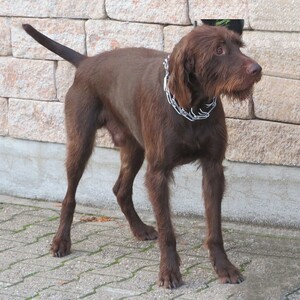
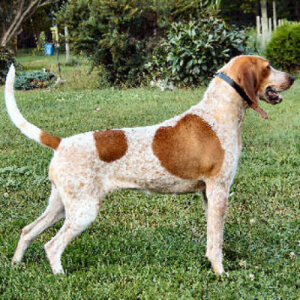
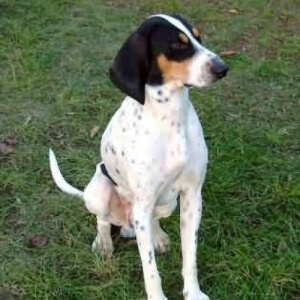
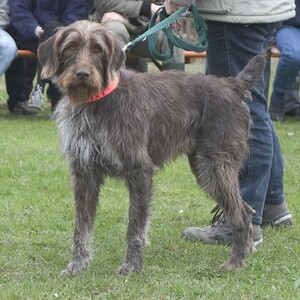
German Rough-haired Pointer. · Alephalpha / Wikimedia Commons, CC BY-SA 3.0. Cropped and resized.
The German Rough-haired Pointer (Deutsch Stichelhaar) is, according to the FCI standard, the oldest German rough-haired pointing dog. It has a bristly coat, a moderate beard and pronounced eyebrows that give it a stern look. It is balanced, calm, resilient and brave, but self-controlled, neither shy nor aggressive.
Quick facts
| Common name | German Rough-haired Pointer (Deutsch Stichelhaar) |
| Scientific name | Canis lupus familiaris |
| Country of origin | Germany |
| Official recognition | FCI, definitively since 24 August 1961 (group 7, continental pointing dogs, with working trial; standard no. 232) |
| Lifespan | No published data for the breed; pointers usually live 12–14 years |
| Size (males) | 60–70 cm at the withers |
| Size (females) | 58–68 cm at the withers |
| Coat type | Bristly, harsh, about 4 cm long; moderate beard and pronounced eyebrows |
| Common colours | Brown, brown roan or light roan, with or without brown patches |
| Energy level | High |
| Suited to an apartment? | No |
| Temperament | Balanced, calm, resilient, brave, self-controlled |
| Tendency to aggression | Low |
| Good with children | Good |
| Good with other animals | Good with dogs; strong hunting instinct |
| Genetic predispositions | No breed-specific diseases are known |
- Primary category:Dog breeds
- Explore this animal's categories:
History and origin
The FCI standard says the Deutsch Stichelhaar is the oldest German rough-haired pointing dog. In 1888 the cynologist Hans von Kadisch proved that it was the rough-haired variety of the old German partridge dog and not just a variety of the shorthaired pointer. The breed was not created anew, but rebuilt from the few dogs that remained.
In 1892 the “Club Stichelhaar” was founded, renamed “Verein Deutsch Stichelhaar” in 1976. From the start, the club followed the principle of pure breeding and refused any crossing with the English pointing breeds. Wikipedia says the breed has never been as popular as the other German pointers and is rarely seen outside Germany.
How the breed developed
- Early 19th century – Several types of rough-haired pointer exist in Germany.
- Mid-19th century – The breed is close to disappearing.
- 1888 – Hans von Kadisch shows that it is a separate breed.
- 1892 – The Club Stichelhaar is founded.
- 24 August 1961 – The FCI recognises the breed.
- 1976 – The club becomes the Verein Deutsch Stichelhaar.
Breed rating
| Feature | Stars |
|---|---|
| Training and intelligence | ★★★★☆ |
| Easy to train | ★★★★☆ |
| Intelligence | ★★★★☆ |
| Independence | ★★★★☆ |
| Stubbornness | ★★★☆☆ |
| Behaviour and temperament | ★★★★☆ |
| Affectionate with family | ★★★★☆ |
| Friendly with children | ★★★★☆ |
| Good with other dogs | ★★★★☆ |
| Good with cats and other animals | ★★☆☆☆ |
| Loyalty | ★★★★★ |
| Tendency to be aggressive | ★☆☆☆☆ |
| Tendency to bark | ★★★☆☆ |
| Needs and care | ★★★★☆ |
| Shedding | ★★☆☆☆ |
| Needs frequent grooming | ★★☆☆☆ |
| Activity and lifestyle | ★★★★☆ |
| Energy level | ★★★★☆ |
| Daily exercise needs | ★★★★★ |
| Suited to apartment life | ★☆☆☆☆ |
| Health and longevity | ★★★★☆ |
| Life expectancy | ★★★★☆ |
| Predisposition to genetic diseases | ★★☆☆☆ |
| Working abilities and uses | ★★★★☆ |
| Good hunting dog | ★★★★★ |
| Good companion dog | ★★★☆☆ |
Indicative rating: 5 stars means the highest level. The breed has no AKC profile; the rating is based on the FCI standard (“balanced, calm, resilient, brave, but self-controlled”).
Physical characteristics
The standard describes it as a strong, medium to large pointing dog with a bristly, harsh coat and a moderate beard. Wikipedia says it looks robust without being too heavy.
General appearance
The pronounced eyebrows give it a stern look. Wikipedia says it differs from the German Wirehaired Pointer mainly in the head, which is heavier and broader, with hanging ears and especially long eyebrows.
| Feature | German Rough-haired Pointer |
|---|---|
| Size | Large |
| Height at the withers | males: 60–70 cm; females: 58–68 cm |
| Coat | Bristly, harsh, about 4 cm long |
| Head | Broad, with a moderate beard |
| Eyebrows | Pronounced, long |
| Ears | Hanging |
The standard accepts brown, with or without a white patch on the chest, brown roan, with or without brown patches, and light roan, with or without brown patches.
Training and socialisation
The standard describes it as balanced, calm, resilient, brave, but self-controlled, neither shy nor aggressive. Its temperament is calm and steady.
It is a working pointing dog that needs an owner who hunts or offers it a similar activity. It learns well with patience and rewards.
Tips for effective training
- Give it work in the field. It is a hunting dog.
- Use rewards. It is calm and learns with patience.
- Work on pointing and retrieving. These are its core talents.
- Be consistent. Clear rules help it use its energy.
Activity needs and lifestyle
It is a hardy pointing dog that needs a lot of exercise every day and chances to work in the field.
| Activity | How often | Why it matters |
|---|---|---|
| Long walks in nature | daily | Energy and stamina |
| Fieldwork | several times a week | Hunting instinct |
| Retrieving, including from water | weekly | A talent for retrieving |
Tips for a balanced life
- It is best suited to hunters.
- The harsh coat protects it well in undergrowth.
- The yard must be well fenced.
Care and health
Coat and skin care
The harsh, bristly coat should be brushed once a week, and the dead hair hand-stripped a few times a year. The beard should be cleaned after meals.
Common health problems
There are no published health studies for the breed and no known breed-specific diseases. As with any large, active dog, it is worth watching for:
| Condition | Description | Common symptoms |
|---|---|---|
| Hip dysplasia | The hip joint forms incorrectly and, over time, arthritis develops | Limping, difficulty getting up or jumping, hip pain |
| Gastric dilatation-volvulus (bloat) | The stomach fills with gas and may twist; this is a veterinary emergency | Swollen belly, trying to vomit without success, drooling, restlessness |
Other care
- Check the ears after every outing.
- Check for ticks after hunting.
- Trim the nails if they do not wear down on their own.
Diet and nutrition
An active pointing dog needs a lot of energy during the hunting season. Adjust the portion to its workload and weight.
Tips for a healthy diet
The table gives a starting estimate, calculated with the formula from the Merck Veterinary Manual. The first two calorie columns show the calories per day for a healthy adult dog. The last column shows what this means in dry food with 3,500–4,000 kcal per kilogram.
| Dog's weight | Calories per day (neutered) | Calories per day (not neutered) | Dry food per day (approximate) |
|---|---|---|---|
| 25 kg | 1,250 kcal | 1,410 kcal | 310–400 g |
| 30 kg | 1,440 kcal | 1,620 kcal | 360–460 g |
| 35 kg | 1,610 kcal | 1,810 kcal | 400–520 g |
- Split the food into two meals a day to reduce the risk of bloat.
- Increase the portion on hunting days.
- A dog is at the right weight when you can feel its ribs under the coat without pressing hard.
Foods to avoid
Some human foods are dangerous for dogs: chocolate, coffee, grapes and raisins, onions, garlic, xylitol (a sweetener used in chewing gum), macadamia nuts and alcohol.
Reproduction and development
Physical and emotional maturity
In dogs, sexual maturity usually comes between 6 and 12 months, but in large breeds it can be delayed until about two years. The body also reaches its adult form later than in small breeds.
Mating and pregnancy
Pregnancy lasts about 63 days, counted from ovulation. Mating a female on her first heat is not recommended. The FCI standard requires that only healthy dogs of typical breed appearance are used for breeding.
Caring for the puppies
In large breeds, a litter has around 7 puppies on average. Socialisation starts in the first weeks: gentle handling, everyday noises and new people.
Interesting facts
- The oldest German rough-haired pointer. That is how the FCI standard describes it.
- No English blood. The club refused crossings with the English pointing breeds.
- A stern look. The pronounced eyebrows give it an almost menacing look.
- “Stichelhaar”. The name refers to the bristly, harsh hair.
- Rare. Wikipedia says it is rarely seen outside Germany.
Frequently asked questions
How does it differ from the German Wirehaired Pointer?
Mainly in the head: the Stichelhaar has a heavier, broader head and longer eyebrows.
How big does it get?
Males measure 60–70 cm and females 58–68 cm at the withers.
What colour is it?
Brown, brown roan or light roan, with or without brown patches.
Is it a family dog?
It is calm and balanced, but it is first and foremost a hunting dog.