Basset Fauve de BretagneCharacteristics, history, training and care
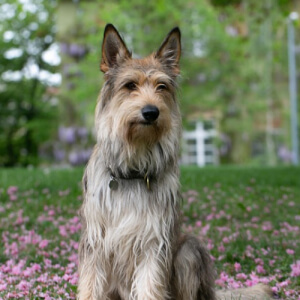
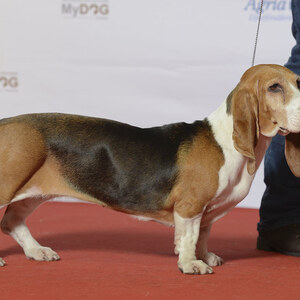
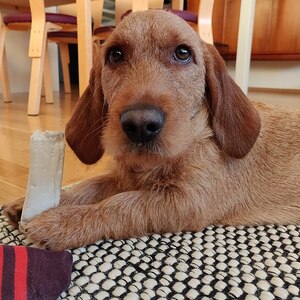
Basset Fauve de Bretagne. · Trogain / Wikimedia Commons, CC BY-SA 4.0. Cropped and resized.
The Basset Fauve de Bretagne is a small, stocky dog from Brittany, in north-western France, with a harsh red coat. It is a passionate rabbit hunter, but also a cheerful companion, friendly with children and other dogs. It has plenty of energy and a nose that can carry it away.
Quick facts
| Common name | Basset Fauve de Bretagne (fawn Brittany basset) |
| Scientific name | Canis lupus familiaris |
| Country of origin | France (Brittany) |
| Official recognition | FCI, definitively since 30 October 1963 (Group 6, with a working trial; standard no. 36); also recognised by the AKC |
| Lifespan | 13–16 years |
| Size (males) | 32–38 cm at the withers |
| Size (females) | 32–38 cm at the withers |
| Weight | about 10–18 kg |
| Coat type | Very harsh, fairly short, never woolly or curly |
| Common colours | Fawn, from golden wheaten to red brick |
| Energy level | High |
| Suited to an apartment? | Yes, if it gets plenty of exercise |
| Temperament | Sociable, affectionate, well-balanced, a passionate hunter |
| Tendency to aggression | Very low |
| Good with children | Very good |
| Good with other animals | Very good with other dogs; chases rabbits |
| Genetic predispositions | Primary open-angle glaucoma, progressive retinal atrophy, epilepsy, heart disease, allergies |
History and origin
The Basset Fauve de Bretagne descends from the Griffon Fauve de Bretagne, a larger hound from the same region, and shares its qualities. In the 19th century it was very popular in Brittany.
In the last 30 years of the 20th century it became known throughout France. Its hunting talent won it the French Cup for rabbit hunting several times.
How the breed developed
- 19th century – The breed is very popular in Brittany.
- 30 October 1963 – The FCI recognises the breed.
- Last 30 years of the 20th century – It becomes known throughout France and wins several hunting trophies.
- 25 March 2003 – The current FCI standard is published.
Breed rating
| Feature | Stars |
|---|---|
| Training and intelligence | ★★☆☆☆ |
| Easy to train | ★☆☆☆☆ |
| Intelligence | ★★★★☆ |
| Independence | ★★★★☆ |
| Stubbornness | ★★★★★ |
| Behaviour and temperament | ★★★★★ |
| Affectionate with family | ★★★☆☆ |
| Friendly with children | ★★★★★ |
| Good with other dogs | ★★★★★ |
| Good with cats and other animals | ★★★☆☆ |
| Loyalty | ★★★★☆ |
| Tendency to be aggressive | ★☆☆☆☆ |
| Tendency to bark | ★★★☆☆ |
| Needs and care | ★★☆☆☆ |
| Shedding | ★★★☆☆ |
| Needs frequent grooming | ★☆☆☆☆ |
| Activity and lifestyle | ★★★★☆ |
| Energy level | ★★★★☆ |
| Daily exercise needs | ★★★★☆ |
| Suited to apartment life | ★★★★☆ |
| Health and longevity | ★★★★☆ |
| Life expectancy | ★★★★★ |
| Predisposition to genetic diseases | ★★★☆☆ |
| Working abilities and uses | ★★★★★ |
| Good hunting dog | ★★★★★ |
| Good companion dog | ★★★★☆ |
Indicative rating: 5 stars means the highest level. It is based on the ratings the American Kennel Club gives the breed and on the FCI standard.
Physical characteristics
It is a small, stocky hound, lively and fast for its size. It looks like a Basset Hound, but is much lighter and has longer legs. According to the French standard, it has the shortest back of all the basset breeds.
General appearance
The ears reach the tip of the nose and are covered with finer, shorter hair than the rest of the body. The eyes are dark brown, with a lively expression. The tail is of medium length and, on the move, is carried above the back and waved from side to side.
| Feature | Basset Fauve de Bretagne |
|---|---|
| Size | Small, with short legs |
| Height at the withers | 32–38 cm (tolerance 2 cm) |
| Weight | about 10–18 kg |
| Coat | Very harsh, fairly short |
| Eyes | Dark brown |
| Ears | Reach the tip of the nose, with fine hair |
The coat is fawn, from golden wheaten to red brick. A few black hairs on the back and ears are tolerated. Sometimes there is a small white star on the chest.
Training and socialisation
It is intelligent, but the AKC gives it a low score for trainability: its nose goes to the ground and can “overwhelm” its brain. If it is not taught from an early age to pay attention to people, it wanders off after scents.
Because it is intelligent, it needs mental activity as much as exercise.
Tips for effective training
- Start in puppyhood. Teach it early to look at you when you call it.
- Use rewards. Food and praise keep it focused.
- Do not let it off the lead in unfenced places. It may suddenly go off after a scent.
- Try dog sports. Agility, obedience and rally are good for mind and body.
Activity needs and lifestyle
It is an energetic dog that loves to play. Exercise can happen indoors too: hide and seek, a ball rolled along the floor or new tricks.
| Activity | How often | Why it matters |
|---|---|---|
| Walks on the lead | daily | Burns off energy |
| Search games | daily | Uses its nose and mind |
| Agility or rally | weekly | A good sport for an intelligent dog |
Tips for a balanced life
- The yard must be fenced.
- It does not bark without reason, but will “give voice” if it sees a rabbit.
- It loves running in the fields as much as lying on the sofa with the family.
Care and health
Coat and skin care
The AKC says it is almost a “wash and go” dog: the harsh coat repels dirt and does not tangle. Once a week, comb it with a fine-toothed comb and then brush it with a stiff brush. Dogs with longer hair can be hand-stripped.
Common health problems
It is generally a healthy breed, and many dogs live past 16. Responsible breeders test their dogs for several conditions:
| Condition | Description | Common symptoms |
|---|---|---|
| Primary open-angle glaucoma | High pressure in the eye, caused by an inherited mutation; a genetic test exists | Red, painful eyes, enlarged pupils, failing sight |
| Progressive retinal atrophy | The retina gradually degenerates | Sees less and less well, especially at night |
| Epilepsy | Repeated neurological seizures | Trembling, convulsions, loss of consciousness |
Other care
- Trim the nails regularly.
- Brush its teeth and check its ears regularly.
- Watch for signs of skin allergies: itching, redness.
Diet and nutrition
The AKC says some dogs put on weight easily. Watch the calories, especially training treats.
Tips for a healthy diet
The table gives a starting estimate, calculated with the formula from the Merck Veterinary Manual. The first two calorie columns show the calories per day for a healthy adult dog. The last column shows what this means in dry food with 3,500–4,000 kcal per kilogram.
| Dog's weight | Calories per day (neutered) | Calories per day (not neutered) | Dry food per day (approximate) |
|---|---|---|---|
| 10 kg | 630 kcal | 710 kcal | 160–200 g |
| 14 kg | 810 kcal | 910 kcal | 200–260 g |
| 18 kg | 980 kcal | 1,100 kcal | 240–310 g |
- Give it its food in two meals a day.
- Training treats count towards the daily portion.
- A dog is at the right weight when you can feel its ribs without pressing hard.
Foods to avoid
Some human foods are dangerous for dogs: chocolate, coffee, grapes and raisins, onions, garlic, xylitol (a sweetener used in chewing gum), macadamia nuts and alcohol.
Reproduction and development
Physical and emotional maturity
In dogs, sexual maturity usually comes between 6 and 12 months. Most breeds become adults at around 13–15 months.
Mating and pregnancy
Pregnancy lasts about 63 days, counted from ovulation. Mating a female on her first heat is not recommended. The FCI standard requires that only healthy dogs of typical breed appearance are used for breeding.
Caring for the puppies
In dogs, a litter has 5–6 puppies on average, and the number rises with the size of the breed. Socialisation starts in the first weeks: gentle handling, everyday noises and new people.
Interesting facts
- It has the shortest back of all bassets. The French standard says so, which is why it looks less “exaggerated” than the Basset Hound.
- It won the French Cup. It took the trophy for rabbit hunting several times.
- It lives a long time. The AKC says many live past 16.
- Good genetic diversity. A 2006 study found an inbreeding coefficient of only 3.9%, the second lowest of nine French breeds.
- The coat cleans itself. The harsh hair repels dirt and does not tangle easily.
Frequently asked questions
How big does it get?
It stands 32–38 cm at the withers and weighs about 10–18 kg.
Is it suited to a family?
Yes. It is friendly with children and other dogs, but needs exercise and play.
Is it easy to train?
Not very. Its nose distracts it, so training must start in puppyhood.
How long does it live?
Its life expectancy is 13–16 years, and many live longer.
What grooming does the coat need?
Combing and brushing once a week. The harsh coat repels dirt.