Swift foxInteresting facts and information
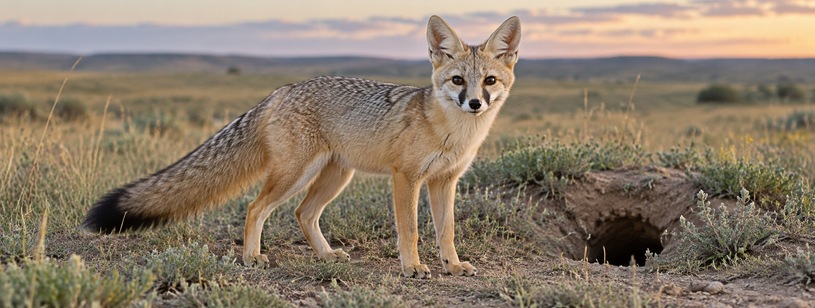
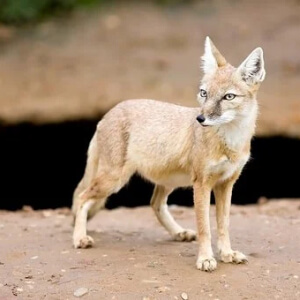
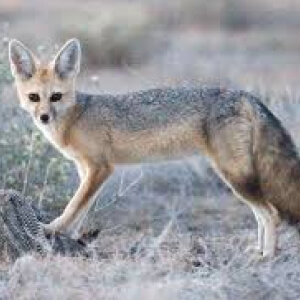
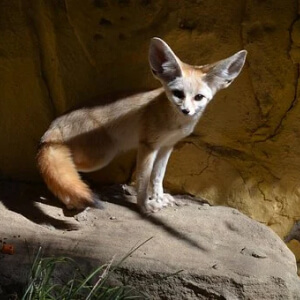
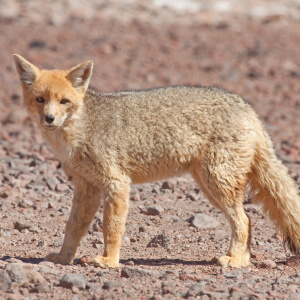
AI illustration of swift fox.
The swift fox is a small North American prairie fox with a short muzzle, black marks beside the nose and a black-tipped tail. It inhabits open landscapes of the United States and Canadian Great Plains and forages mainly in the evening and at night.
Its scientific name is Vulpes velox. It is distinct from the similar-looking kit fox. Its history includes local losses and reintroduction programmes in prairie habitats.
Quick facts
| Species | Vulpes velox |
| Class / order / family | Mammalia / Carnivora / Canidae |
| Distribution | The Great Plains of the United States and southern Canada |
| Habitat | Shortgrass and mixed-grass prairies |
| Size | Often around 2–3 kg; head and body approximately 38–53 cm |
| Diet | Omnivorous: small mammals, insects, birds and some plant foods |
| Reproduction | Gestation approximately 51 days; often 2–6 pups |
| Young | Born alive and raised in a den |
| Conservation | Least Concern (LC) globally; Threatened in Canada |
- Primary category:Mammals
- Explore this animal's categories:
Interesting facts
- “Swift” refers to speed. The fox can run fast but also relies on nearby dens for protection.
- It is about the size of a small domestic cat. Fur and tail can make it look bigger.
- Dens matter outside the breeding season too. They provide refuge from weather and predators.
- Reintroduction has restored it to some regions. This has required cooperation and long-term monitoring.
- It has cultural importance for Niitsitapi, also known as Blackfoot, communities. This is a documented relationship, rather than an assumption about all Indigenous peoples.
Records and remarkable features
It is one of North America’s smaller foxes. Adults often weigh around 2–3 kg, with a head-and-body length of approximately 38–53 cm, excluding the tail. Values vary between individuals and populations.
Canadian government sources describe running speeds that can exceed approximately 60 km/h. This helps explain its name.
Speed does not overcome every danger. A small fox can be vulnerable to larger predators, so distance to shelter and activity timing matter alongside running ability.
Characteristics
The back is greyish yellow with darker hairs, while the underside is pale. The legs have yellowish or reddish tones. Black marks are visible on either side of the muzzle.
| Feature | Identification clue |
| Small size | Light body and fine legs |
| Marks beside the nose | Dark areas on the sides of the muzzle |
| Bushy tail | Black tip |
| Triangular ears | Generally less exaggerated than in the kit fox |
Swift foxes and kit foxes are different species. Identification should not rely only on an ear photograph. Distribution, proportions and other characteristics complete the comparison.
It is a canid, like red foxes, wolves and dogs.
Habits and behaviour
It is mainly nocturnal and crepuscular, meaning active at night and during the dim light around dawn and dusk. It frequently rests in dens.
Shelters play an important role in daily life as well as during pup rearing. A network of refuges can reduce the risk of encountering a larger predator.
Pairs can share space and family responsibilities. Foraging is often individual, however, because insects and small mammals occur in scattered patches.
Coyotes are important predators. Food-rich ground is not automatically safe. Habitat quality includes refuge opportunities, alongside prey abundance.
Habitat and geographic distribution
Swift foxes are associated with the Great Plains of central North America. They particularly use shortgrass and mixed-grass habitats in the United States and southern Canada.
These landscapes have contrasting seasons, wind and extensive low vegetation.
- Short grass allows a clear view of the surroundings.
- Suitable soils offer denning opportunities.
- Diverse prey provides resources in different seasons.
- Connected grasslands allow movement and encounters with mates.
Converting prairie to cropland and fragmenting it with infrastructure can reduce these conditions.
Diet and feeding
It is omnivorous, eating small mammals, insects, birds, carrion and sometimes fruit or other plant resources. Proportions change between regions and seasons.
Insects can be abundant and easy to find in summer. At other times, small mammals or carrion may matter more. Flexibility helps in an environment where resources change considerably through the year.
It searches near the ground, investigating smells and listening for prey movements. Small foods are caught in short attacks.
Rodents and insects belong to the natural relationships of prairie ecosystems. Poisons used against small animals can also affect the predators that eat them. Prey control can have effects beyond the target species.
Reproduction and life cycle
Swift foxes raise pups in dens. Gestation lasts approximately 51 days, and Canadian authorities’ summaries commonly describe 2–6 pups.
Pups are born dependent on adult care. They initially remain inside, later appearing at the entrance, playing and exploring. Play and short outings precede movements across larger areas.
| Stage | Important change |
| Early weeks | Nursing and protection inside the den |
| First outings | Exploring close to refuge |
| Growth | Solid food and developing coordination |
| Dispersal | Finding an area of their own when conditions allow |
Family survival depends on food and safety. Leave an observed den undisturbed so adults can return and feed their pups without interruption.
Name and history
The English name swift fox refers to speed, while Vulpes velox is the scientific name. Both names are widely used in conservation material.
Trapping, poisons put out for wolves and coyotes, and the ploughing of the prairies made it disappear from much of its range, and by 1938 it was gone from Canada. Reintroductions that began in 1983 brought it back to southern Alberta and Saskatchewan.
Restoring a species involves more than releasing animals. It requires site selection, cooperation with landowners and communities, survival monitoring and confirmation of breeding.
Cultural significance and mythology
The Canadian species assessment records cultural and spiritual importance for the Niitsitapi, the Blackfoot Confederacy, including the Kainai community. Population recovery can therefore have human as well as ecological significance.
Modern conservation programmes have involved Indigenous communities and research organisations. Smithsonian describes recovery partnerships, including work on tribal lands in the northern Great Plains.
From 2020, swift foxes were also released on the Fort Belknap Indian Reservation in Montana, in a project led by the Aaniiih and Nakoda tribes.
Conservation status and threats
The global status is Least Concern (LC), according to the Canid Specialist Group. In Canada, where it was once extinct, it is now listed as Threatened.
Prairie loss, habitat fragmentation, poisons, road accidents and predation influence populations. Recovery in a region does not guarantee stable numbers without monitoring.
Retaining grasslands and working with the people who use them are essential. Reintroduction works better with habitat, local acceptance and long-term scientific follow-up.
Discover other foxes
Read about Red fox or explore: Culpeo · Pale fox · Blanford's fox · Cape fox · Corsac fox · Tibetan sand fox · Kit fox · Bengal fox · Fennec fox · Arctic fox.
Frequently asked questions
- Where does the swift fox live? In Great Plains prairies of the United States and southern Canada. Shortgrass and mixed-grass habitats provide food and den sites.
- Is it the same as the kit fox? No. The swift fox is Vulpes velox and the kit fox is Vulpes macrotis. They are distinct, although both are small with black-tipped tails and some similar features.
- Why is it called swift? The name refers to speed. Canadian sources describe running at around 60 km/h or more.
- What does it eat? Small mammals, insects, other animals and carrion, sometimes supplemented with fruit or other plant resources. The menu changes with season and local food availability.
- Are dens used only for pups? No. They also matter for rest, weather protection and avoiding predators. Nearby refuges are important alongside running speed.
- How long is gestation? Approximately 51 days. Canadian sources commonly describe 2–6 pups, initially dependent on adult care and den safety.
- Has it been reintroduced? Yes. Programmes have supported recovery in some regions, including Canada and the northern Great Plains. Success requires suitable habitat, local cooperation and monitoring.
- Is it threatened with extinction? Its global status is Least Concern, but regional circumstances can be more difficult. Prairie loss, fragmentation and mortality can continue to affect restored populations.