AzawakhCharacteristics, history, training and care
The Azawakh is a West African sighthound associated with Mali, Niger and Burkina Faso, where nomadic peoples such as the Tuareg kept it as a hunting and guard dog. It has a slim body, long legs and a short fine coat. Individuals can be reserved with unfamiliar people and need patient training and appropriate socialisation.
Quick facts
| Common name | Azawakh |
| Scientific name | Canis lupus familiaris |
| Country of origin | Mali, Niger, Burkina Faso |
| Official Recognition | Recognized by FCI and AKC |
| Typical lifespan | About 12-15 years |
| Dimensions (Male) | About 64-74 cm / 20-25 kg |
| Dimensions (Female) | About 60-70 cm / 15-20 kg |
| Coat type | Short, fine, close-lying |
| Common colours | Colours depend on the kennel standard; fawn, red, brindle and other colours occur |
| Energy Level | High |
| Suitable for apartment? | Suitability depends on exercise, training, safe management and the individual dog |
| Temperament | Independent, loyal, reserved |
| Behaviour towards unfamiliar people and dogs | Individual behaviour varies; appropriate socialisation, training and management matter |
| Compatibility with children | Depends on the individual; adult supervision and suitable handling are essential |
| Compatibility with other animals | Depends on socialisation, prey drive and the animals involved; strong chasing instinct |
| Genetic predispositions | Heart problems, epilepsy, autoimmune diseases |
- Primary category:Dog breeds
- Explore this animal's categories:
History and Origin
The Azawakh is an old sighthound from the Sahel, closely linked to the Tuareg and other nomadic peoples of Mali, Niger and Burkina Faso. For centuries it has been used to guard camps and to hunt, and it is valued for its speed and loyalty.
Evolution of the breed
- A nomads' dog - The Azawakh, named after the Azawagh valley, was kept by nomadic peoples to guard their camps and to hunt gazelles, hares and other fast animals.
- Made for the desert - It is adapted to great heat and little water, which makes it one of the hardiest sighthounds.
- Arrival in Europe and the USA - It was brought to Europe in the 1970s, notably by a Yugoslav diplomat who received dogs from Tuareg nomads; the FCI recognised it in 1981 and the AKC in 2019.
Breed Evaluation
The Azawakh is an athletic, fast and intelligent dog, but also very independent and sensitive, so it suits experienced owners. These are general editorial ratings, not measured scores; individual dogs vary.
| Characteristic | Stars |
|---|---|
| Training and Intelligence | ★★★★☆ |
| Easy to train | ★★★☆☆ |
| Intelligence | ★★★★★ |
| Level of independence | ★★★★★ |
| Level of stubbornness | ★★★★☆ |
| Behavior and Temperament | ★★★★☆ |
| Affectionate with family | ★★★★☆ |
| Friendly with children | ★★★☆☆ |
| Compatible with other dogs | ★★★☆☆ |
| Compatible with Cat and other animals | ★★☆☆☆ |
| Degree of loyalty | ★★★★★ |
| Tendency to be aggressive | ★★☆☆☆ |
| Tendency to bark | ★★★☆☆ |
| Needs and Care | ★★★★☆ |
| Shedding level | ★☆☆☆☆ |
| Requires frequent care | ★☆☆☆☆ |
| Activity and Lifestyle | ★★★★★ |
| Energy level | ★★★★★ |
| Daily exercise requirement | ★★★★★ |
| Suitable for apartment living | ★★☆☆☆ |
| Health and Longevity | ★★★☆☆ |
| Life expectancy | ★★★★★ |
| Predisposition to genetic diseases | ★★★☆☆ |
| Work and Utility Features | ★★★★★ |
| Good hunting dog | ★★★★★ |
| Good companion dog | ★★★☆☆ |
Physical Characteristics
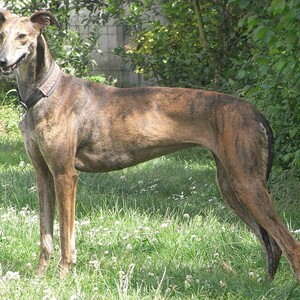
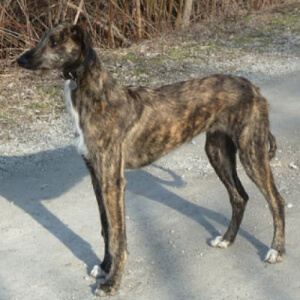
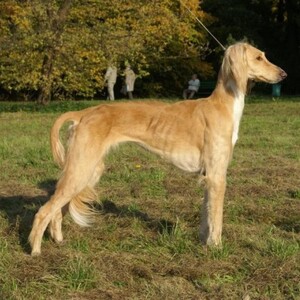
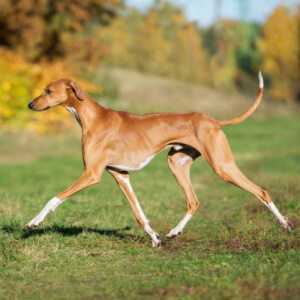
The Azawakh is a very elegant, lean sighthound, built for speed.
General appearance
- A slim, athletic body with flat, visible muscles and visible hip bones.
- A very short, fine coat that gives little protection from the cold.
- A long, narrow head with a proud, alert expression.
- A long, thin tail with a slight curve at the end.
- Very long, slender legs; the dog is clearly taller than it is long.
| Characteristic | Azawakh |
|---|---|
| Size | Large and slender (about 60-74 cm at the shoulder) |
| Weight | About 15-25 kg |
| Coat | Short, fine, close-lying |
| Muzzle | Long and narrow |
| Shedding tendency | Very low |
| Build | Very lean, fine-boned but strong |
The Azawakh is an African sighthound with a light, fast build, well adapted to dry country and high-speed chases.
Training and Socialization
The Azawakh is clever but independent, so training can be a challenge for inexperienced owners. It does not respond well to harsh methods and needs a gentle but consistent approach.
Tips for effective training
- Early socialisation - As a reserved, watchful breed, the Azawakh should meet people, animals and different places from an early age to prevent excessive shyness.
- Reward-based training - It does not tolerate harsh methods and responds best to food rewards and play.
- Managing the chase instinct - It has a strong urge to chase small animals, so recall training is important and a lead should be used in open places.
- Short, varied sessions - It gets bored with repetitive exercises, so training should be short and lively.
- A one-person dog - It often bonds strongly with one person, so consistency is important.
The Azawakh is clever but independent and needs a patient, experienced owner.
Activity and Lifestyle Needs
The Azawakh is an active breed that needs daily exercise and regular chances to run. Without enough activity, it may become anxious or destructive.
| Activity | Recommended duration |
|---|---|
| Daily walks | About 60 min |
| Free running in a secure area | 2-3 times a week or more |
| Interactive games | About 20-30 min |
| Obedience training | About 10-15 min/day |
Recommendations for a balanced lifestyle
- Not ideal for apartments - The Azawakh needs space, ideally a well-fenced garden.
- Needs to run - Walks alone are not enough; it needs to sprint regularly in a safe place.
- Does not like cold - Its very short coat gives no protection, so in cold climates it needs a dog coat.
- A companion for active people - Although independent, it can be a loyal companion for sporty owners.
The Azawakh is a very athletic dog that needs an active lifestyle to stay healthy and happy.
Care and Health
The Azawakh is easy to groom, but owners should watch its heart, joints and skin.
Fur and skin care
- Minimal brushing - The short coat needs only occasional brushing or wiping.
- Few baths - The Azawakh has little doggy smell and needs washing only when dirty.
- Protection from cold - With very little body fat, it must be protected from low temperatures.
Common health problems
| Condition | Description | Common symptoms |
|---|---|---|
| Heart problems | Some Azawakhs develop heart disease such as cardiomyopathy | Tiredness, weakness |
| Epilepsy | Seizures occur in some lines of the breed | Seizures, confusion |
| Autoimmune diseases | Such as autoimmune thyroiditis and myositis | Tiredness, muscle problems, skin changes |
Other aspects of care
- Regular veterinary checks - Important for monitoring the heart and general health.
- Balanced diet - A complete diet helps keep its skin, coat and muscles healthy.
- Heat - It tolerates heat well, but on hot days it still needs water and shade.
The Azawakh is a hardy dog, but because of some inherited problems, health monitoring is important.
Diet and Nutrition
The Azawakh needs a balanced diet with good-quality protein; as a naturally lean dog, it should look slim, with visible hip bones.
Recommendations for a healthy diet
Choose a complete, balanced diet for the dog’s age, size and health. Plan home-prepared diets and supplements with a qualified veterinarian.
| Food type | Daily Amount (Adults) | Frequency |
|---|---|---|
| Premium dry food | Individual amount; follow a complete diet’s guidance and veterinary advice | 2 meals/day |
| Home cooked food | Individual amount; follow a complete diet’s guidance and veterinary advice | 2 meals/day |
| Raw food: bacterial contamination is a concern | Individual amount; follow complete-food guidance and veterinary advice | 2 meals/day |
Forbidden foods
Chocolate, grapes and raisins, onions and xylitol - toxic to dogs. ; Cooked bones - can splinter and cause intestinal blockage. ; Fatty and processed foods - can upset digestion. ; One large meal a day - can increase the risk of bloat.
The Azawakh should be fed according to its energy needs, while keeping an eye on its body condition.
Reproduction and Development
The Azawakh has a small population outside Africa, so breeders must choose breeding pairs carefully and use health screening to avoid inherited diseases. Breeding can involve health risks, and veterinary advice is necessary.
Physical and emotional maturity
- Physical maturity: The Azawakh reaches adult height at about 12-16 months, but continues to fill out until about 2 years.
- Emotional maturity: It is usually fully mature at about 2-3 years, when it becomes calmer and more confident.
Mating and Gestation
- Breeding decisions - A veterinarian should assess health, maturity and relevant screening. A fixed age alone does not establish that a dog should be bred.
- Duration of gestation: Approximately 58-68 days, usually about 63 days.
- Average number of puppies: Usually about 4-7 puppies.
Puppy care
- The first 3 weeks: Puppies depend completely on their mother and need constant warmth and milk.
- Between 4-8 weeks: They begin to eat solid food and to interact more with littermates and people.
- Moving to a new home - Timing depends on health, development and local requirements. Continue careful socialisation and veterinary care.
Good food and early socialisation are essential for Azawakh puppies to grow into confident, balanced dogs.
Curiosities and Interesting Facts
- African sighthound – The Azawakh is one of several sighthound breeds associated with Africa, rather than the only one.
- A companion of the nomads - Among the Tuareg and other Sahel peoples, the Azawakh was a hunting dog, a guardian and a status symbol.
- Very fast - Thanks to its light, muscular build, it can run at about 60 km/h.
- Stamina in the heat - Unlike many sighthounds, it can keep running in desert heat; it was traditionally used to chase gazelles and hares.
- Loyal but reserved - It bonds strongly with its family but is usually reserved with strangers.
- Sensitive to cold - Its short coat and low body fat make it sensitive to cold weather.
The Dog in Popular Culture
The Azawakh is little known in popular culture, but it has an important place in the traditions of the Sahel.
The importance in African culture
- Guardian and hunter - In the Sahara and Sahel, the Azawakh was used to guard camps and herds and to hunt gazelles and hares.
Azawakh in media and competitions
- Lure coursing - In Europe and North America, Azawakhs take part in lure coursing and racing events for sighthounds.
- Genetic studies - Researchers study African village dogs and sighthounds such as the Azawakh to learn about the history of dogs in Africa.