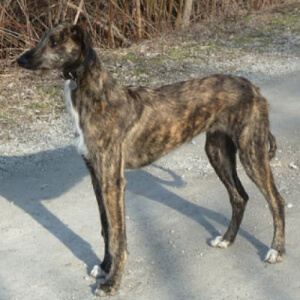
American StaghoundCharacteristics, history, training and care
The American Staghound is a working type of dog developed from sighthound ancestry in North America, mainly from Greyhounds and Scottish Deerhounds. It is selected mainly for working ability rather than a single uniform show standard, and individuals can vary in build and coat. Ranchers have used it to hunt coyotes, wolves and deer.
Quick facts
| Common name | American Staghound |
| Scientific name | Canis lupus familiaris |
| Country of origin | United States of America |
| Official Recognition | Not recognised by AKC or FCI |
| Typical lifespan | About 10-14 years |
| Dimensions (Male) | About 66-76 cm / 27-45 kg |
| Dimensions (Female) | About 63-71 cm / 23-40 kg |
| Coat type | Smooth, rough or broken |
| Common colours | Grey, fawn, brindle, black, white and other colours |
| Energy Level | High |
| Suitable for apartment? | Depends on exercise, training, health and the individual dog |
| Temperament | Calm at home, alert, independent |
| Behaviour towards unfamiliar people and dogs | Individual behaviour varies; socialisation, training and management matter |
| Compatibility with children | Depends on the individual; adult supervision and suitable handling are essential |
| Compatibility with other animals | Depends on socialisation, prey drive and the animals involved; strong chasing instinct |
| Genetic predispositions | Injuries, heart disease, bloat |
- Primary category:Dog breeds
- Explore this animal's categories:
History and Origin
The American Staghound is not a standardised breed but a working type of sighthound, bred for speed, strength and stamina. It was developed mainly by crossing the Greyhound, for speed, with the Scottish Deerhound, for size, toughness and a rough coat.
Development of the breed
- Documented hunting use — Theodore Roosevelt described greyhounds and staghounds hunting coyotes in Outdoor Pastimes of an American Hunter, whose enlarged edition appeared in 1908.
- The American West - In the 19th century, ranchers and soldiers on the Great Plains used packs of these dogs to hunt coyotes, wolves, deer and jackrabbits; General George Armstrong Custer was famous for his staghounds.
- Today - The American Staghound is still kept by some hunters and ranchers, but it is not recognised as an official breed, because dogs are selected for working ability rather than appearance.
Breed Evaluation
The American Staghound is a very fast, independent dog, best suited to experienced owners who can manage strong chasing instincts. These editorial ratings provide a general guide. Individual dogs vary with health, training and environment.
| Characteristic | Stars |
|---|---|
| Training and Intelligence | ★★★★☆ |
| Easy to train | ★★★☆☆ |
| Intelligence | ★★★★★ |
| Level of independence | ★★★★★ |
| Level of stubbornness | ★★★★☆ |
| Behavior and Temperament | ★★★★☆ |
| Affectionate with family | ★★★★☆ |
| Friendly with children | ★★★★☆ |
| Compatible with other dogs | ★★★☆☆ |
| Compatible with cats and other animals | ★★☆☆☆ |
| Degree of loyalty | ★★★★☆ |
| Tendency to be aggressive | ★☆☆☆☆ |
| Tendency to bark | ★★☆☆☆ |
| Needs and Care | ★★★☆☆ |
| Shedding level | ★★★☆☆ |
| Requires frequent care | ★★☆☆☆ |
| Activity and Lifestyle | ★★★★★ |
| Energy level | ★★★★★ |
| Daily exercise requirement | ★★★★★ |
| Suitable for apartment living | ★☆☆☆☆ |
| Health and Longevity | ★★★★☆ |
| Life expectancy | ★★★★☆ |
| Predisposition to genetic diseases | ★★★☆☆ |
| Work and Utility Features | ★★★★★ |
| Good hunting dog | ★★★★★ |
| Good companion dog | ★★★☆☆ |
Physical Characteristics
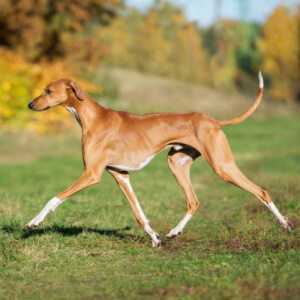
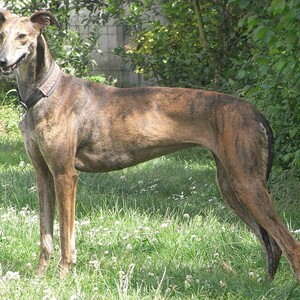
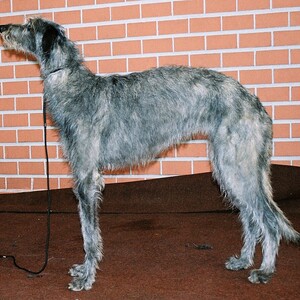
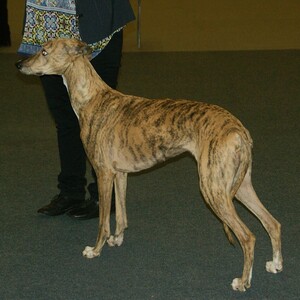
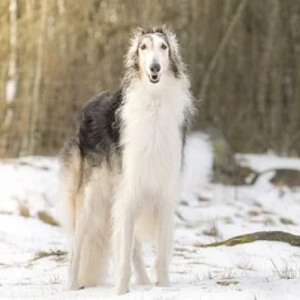
The American Staghound is a large, athletic, very agile sighthound, built for speed and stamina.
General appearance
- A long, muscular body with a deep chest that gives room for the heart and lungs.
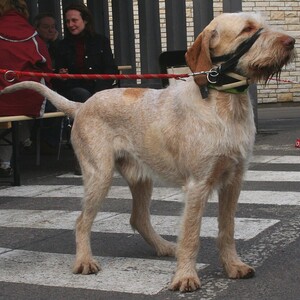
- Three coat types: smooth like a Greyhound, rough like a Deerhound, or a "broken" coat in between.
- A long, narrow head with a fine muzzle and small, folded "rose" ears, typical of sighthounds.
- A long, thin tail that helps with balance when running and turning.
- Dark or amber eyes with a keen, alert expression.
| Characteristic | American Staghound |
|---|---|
| Size | Large (about 63-76 cm at the shoulder) |
| Weight | About 23-45 kg |
| Coat | Smooth, rough or broken |
| Muzzle | Long, narrow |
| Shedding tendency | Moderate |
| Build | Lean but strong |
The American Staghound is a natural hunter, built for high speed and long chases.
Training and Socialization
The American Staghound is intelligent but independent, so training can be a challenge for inexperienced owners. Bred to chase prey on its own, it may be reserved and stubborn.
Tips for effective training
- Early socialisation - It should meet people, other animals and different places from an early age; this helps, but does not remove its instinct to chase small animals.
- Reward-based training - It responds well to food and praise, but loses interest if sessions are repetitive.
- Short, varied sessions - Training should be short and lively to keep its attention.
- Managing the chase instinct - It should learn a "leave it" command and walk well on a lead, and should only run free in securely fenced areas, as it may chase cats or wildlife.
- No harsh corrections - It is sensitive and should be trained firmly but gently; harsh methods make it unwilling to cooperate.
The American Staghound learns running and hunting tasks easily, but everyday obedience can be harder because it is independent.
Activity and Lifestyle Needs
This type of dog is very active and needs space and regular chances to run at full speed. Without enough activity, it may become restless and destructive.
| Activity | Recommended duration |
|---|---|
| Daily walks | About 60-90 min |
| Free running in a secure area | Several times a week |
| Interactive games | About 20-30 min |
| Obedience training | About 15 min/day |
Recommendations for a balanced lifestyle
- Not suited to apartment life - It needs space and regular exercise to be happy.
- Needs to run - Ideally it should have a safe, fenced place where it can sprint freely.
- Weather - Rough-coated dogs cope better with cold than smooth-coated ones, but none should be left out in extreme frost.
- Needs company - Although independent, it is attached to its family and can become bored if left alone for long periods.
The American Staghound is an active dog that suits active owners with plenty of space.
Care and Health
The American Staghound is generally a hardy dog, but it can have some problems typical of large sighthounds.
Fur and skin care
- Brushing once a week - Removes dead hair and keeps the coat clean; rough coats need a little more care.
- Baths only when needed - The coat does not hold much dirt, so frequent washing is not necessary.
- Ear and claw checks - Ears should be checked regularly and claws trimmed, as long claws can be injured when running.
Common health problems
| Condition | Description | Possible signs |
|---|---|---|
| Injuries | Cuts, torn muscles and broken toes are common in fast-running dogs | Limping, bleeding, swelling |
| Heart disease | Large sighthounds can develop heart problems such as cardiomyopathy | Tiredness, breathing difficulties |
| Bloat (gastric torsion) | A serious problem in large, deep-chested dogs | Swollen belly, drooling, restlessness |
| Anesthesia sensitivity | Lean sighthounds can be more sensitive to some anaesthetics | The vet should know the dog's background before surgery |
Other aspects of care
- Regular veterinary checks - Checking the heart and joints is important.
- Smaller meals - To reduce the risk of bloat, feed two or more smaller meals a day and avoid hard exercise right after eating.
- Choose a complete, balanced diet for the dog’s age, size and health. Plan home-prepared diets or supplements with a qualified veterinarian. Raw pet food can carry harmful bacteria.
Diet and Nutrition
The American Staghound needs a balanced diet with good-quality protein and fat, matched to its activity level.
Recommendations for a healthy diet
Choose a complete, balanced diet for the dog’s age, size and health. Plan home-prepared diets or supplements with a qualified veterinarian. Raw pet food can carry harmful bacteria. Good protein sources in complete dog foods include chicken, fish and turkey.
| Food type | Daily Amount (Adults) | Frequency |
|---|---|---|
| Premium dry food | Individual amount; follow a complete diet’s guidance and veterinary advice | 2 meals/day |
| Home cooked food | Individual amount; follow a complete diet’s guidance and veterinary advice | 2 meals/day |
| Raw food: bacterial contamination is a concern | Individual amount; follow complete-food guidance and veterinary advice | 2 meals/day |
Forbidden foods
Chocolate, grapes and raisins, onions and xylitol - toxic to dogs. / Cooked bones - can splinter and cause intestinal blockage. / Fatty and processed foods - can cause digestive problems. / One large meal a day - increases the risk of bloat.
The American Staghound needs a balanced diet for its high energy, with food split into smaller meals to protect digestion.
Reproduction and Development
Breeding can involve health risks. Responsible breeders use appropriate health screening and veterinary advice rather than assuming that a breed is free of reproductive problems.
Physical and emotional maturity
- Physical maturity: It reaches adult height at about 12-18 months, but continues to fill out until about 2 years.
- Emotional maturity: It often stays playful and active, but usually becomes calmer after 2-3 years.
Mating and Gestation
- Breeding decisions – A veterinarian should assess health, maturity and relevant screening. A fixed age alone does not establish that a dog should be bred.
- Duration of gestation: Approximately 58-68 days, usually about 63 days.
- Average number of puppies: Usually about 4-8 puppies.
Puppy care
- The first 3 weeks: Puppies depend completely on their mother and need a warm, safe place.
- Between 4-8 weeks: They begin to eat solid food and have their first social contacts.
- Moving to a new home - Timing depends on health, development and local requirements. Continue careful socialisation and veterinary care.
Curiosities and Interesting Facts
- Very fast - Like other sighthounds, it is extremely fast over short distances, approaching Greyhound speeds.
- Bred for work, not looks - Unlike show breeds, the American Staghound has no official appearance standard and is selected only for hunting ability.
- Great stamina - Thanks to its Deerhound ancestry, it can keep running longer than a pure Greyhound.
- A coyote hunter - For generations, ranchers in the American West have used staghounds to hunt coyotes that attack livestock.
- Rare outside the USA - It is little known outside North America.
- A pack dog - Staghounds were traditionally hunted in packs and usually get on well with other dogs.
The Dog in Popular Culture
The American Staghound is not famous in popular culture, but it played a part in the history of the American West.
Importance in American culture
- Dogs of the frontier - In the 19th century, ranchers, hunters and cavalry officers used staghounds to hunt coyotes, wolves, deer and jackrabbits on the Great Plains.
- Custer's dogs - General George Armstrong Custer kept a large pack of staghounds and greyhounds, which often appeared in photos of his camps.