Giant SchnauzerCharacteristics, history, training and care
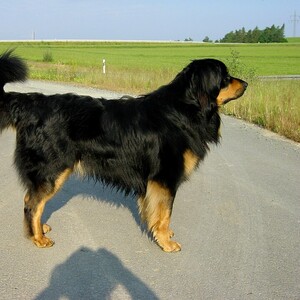
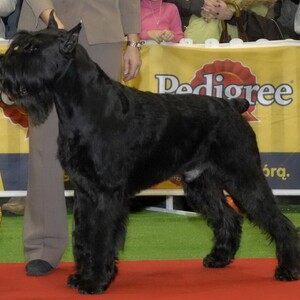
Giant Schnauzer. · Kkrzysiu o2 / Wikimedia Commons, CC BY-SA 3.0. Cropped and resized.
The Giant Schnauzer (Riesenschnauzer) is the largest of the three Schnauzers: a powerful, stocky dog with a wiry coat, a beard and bushy eyebrows. It first drove cattle in southern Germany, then became a working and guard dog. It is good-natured, balanced and incorruptibly loyal to its owner.
Quick facts
| Common name | Giant Schnauzer (Riesenschnauzer) |
| Scientific name | Canis lupus familiaris |
| Country of origin | Germany (southern Germany) |
| Official recognition | FCI, definitively since 11 July 1955 (group 2, Pinscher and Schnauzer type, with working trial; standard no. 181); also recognised by the AKC |
| Lifespan | 10–13 years, according to the AKC |
| Size (males) | 60–70 cm at the withers; 35–47 kg |
| Size (females) | 60–70 cm at the withers; 35–47 kg |
| Coat type | Wiry, harsh and dense, with a dense undercoat; beard and bushy eyebrows |
| Common colours | Black, pepper and salt (according to Wikipedia, also black and silver) |
| Energy level | Very high |
| Suited to an apartment? | Not really; it needs a great deal of exercise |
| Temperament | Good-natured, balanced, loyal, protective |
| Tendency to aggression | Low with the family; very protective and territorial |
| Good with children | Average |
| Good with other animals | Average |
| Genetic predispositions | Hip dysplasia, eye diseases, autoimmune thyroiditis |
- Primary category:Dog breeds
- Explore this animal's categories:
History and origin
The FCI standard says the Giant Schnauzer was originally used in southern Germany for driving cattle. Around 1900, breeders saw that it had excellent working qualities and a remarkable character. It has been recorded in a stud book since 1913, and in 1925 it was officially recognised as a working dog.
Wikipedia says that after helping on farms and guarding homesteads, it moved to the city, where it guarded breweries, butchers' shops, stockyards and factories. It was almost unknown outside Bavaria until it became popular as a military dog in the two world wars.
How the breed developed
- 19th century – The dogs drive cattle in southern Germany.
- 1913 – The breed enters the stud book.
- 1925 – It is officially recognised as a working dog.
- 11 July 1955 – The FCI recognises the breed.
- 25 May 2021 – The current FCI standard is published.
Breed rating
| Feature | Stars |
|---|---|
| Training and intelligence | ★★★★☆ |
| Easy to train | ★★★☆☆ |
| Intelligence | ★★★★★ |
| Independence | ★★★★☆ |
| Stubbornness | ★★★★☆ |
| Behaviour and temperament | ★★★★☆ |
| Affectionate with family | ★★★★☆ |
| Friendly with children | ★★★☆☆ |
| Good with other dogs | ★★★☆☆ |
| Good with cats and other animals | ★★☆☆☆ |
| Loyalty | ★★★★★ |
| Tendency to be aggressive | ★★☆☆☆ |
| Tendency to bark | ★★★☆☆ |
| Needs and care | ★★★★☆ |
| Shedding | ★★☆☆☆ |
| Needs frequent grooming | ★★★★☆ |
| Activity and lifestyle | ★★★★☆ |
| Energy level | ★★★★★ |
| Daily exercise needs | ★★★★★ |
| Suited to apartment life | ★★☆☆☆ |
| Health and longevity | ★★★★☆ |
| Life expectancy | ★★★☆☆ |
| Predisposition to genetic diseases | ★★★☆☆ |
| Working abilities and uses | ★★★★★ |
| Good guard dog | ★★★★★ |
| Good companion dog | ★★★★☆ |
Indicative rating: 5 stars means the highest level. It is based on the ratings the American Kennel Club gives the breed and on the FCI standard.
Physical characteristics
The standard describes it as a large, powerful dog, stocky rather than slender, an enlarged and powerful version of the Schnauzer. It is an imperturbable dog, ready to defend, whose appearance commands respect. The body is square.
General appearance
The not-too-soft beard on the muzzle and the bushy eyebrows, which slightly shade the eyes, are typical features. The coat is short on the forehead and ears. The AKC says a well-bred Giant Schnauzer looks like the Standard Schnauzer, only bigger.
| Feature | Giant Schnauzer |
|---|---|
| Size | Large |
| Height at the withers | 60–70 cm |
| Weight | 35–47 kg |
| Coat | Wiry, harsh, with an undercoat |
| Head | With a beard and bushy eyebrows |
| Shape | Square, stocky |
The FCI standard accepts black and pepper and salt. Wikipedia mentions three varieties: pepper and salt, pure black with a black undercoat, and black and silver.
Training and socialisation
The standard says its good nature, balanced temperament and incorruptible loyalty to its owner are its typical traits. It has highly developed senses, is intelligent, easy to train and strong.
The AKC says it is extremely intelligent and very territorial, loves its owners and feels responsible for protecting them. It learns quickly and can tell friend from foe. It cannot bear to be ignored or left alone in the yard, and it needs a job.
Tips for effective training
- Give it a job. The AKC says it needs an activity, even a simple one.
- Do not leave it alone in the yard. It wants to be with its owners.
- Socialise it thoroughly. It is very territorial.
- Be consistent. It is clever and tests boundaries.
Activity needs and lifestyle
The AKC says it is more energetic than most large breeds and needs plenty of exercise. It is a great partner for running, cycling, hiking, cross-country skiing, swimming or skijoring.
| Activity | How often | Why it matters |
|---|---|---|
| Long walks or running | daily | Very high energy |
| Play with another dog | several times a week | Burns off energy |
| Training or dog sports | several times a week | It needs a job |
Tips for a balanced life
- It suits an active, experienced owner.
- The yard must be well fenced.
- Be ready to care for its coat.
Care and health
Coat and skin care
The AKC says the wiry double coat should be brushed weekly and clipped or stripped regularly. The owner must make time for it or take the dog to a groomer periodically.
Common health problems
The AKC says the breed is generally healthy, and breeders test for:
| Condition | Description | Common symptoms |
|---|---|---|
| Hip dysplasia | The hip joint forms incorrectly and, over time, arthritis develops | Limping, difficulty getting up or jumping, hip pain |
| Eye diseases | Inherited eye conditions | Poor vision, cloudy eyes |
| Autoimmune thyroiditis | The body attacks the thyroid gland | Weight gain, tiredness, dull coat |
| Gastric dilatation-volvulus (bloat) | The stomach fills with gas and may twist; this is a veterinary emergency | Swollen belly, trying to vomit without success, drooling, restlessness |
Other care
- Clean the beard after meals.
- Check the ears regularly.
- Trim the nails when they start to touch the floor.
Diet and nutrition
The AKC recommends good-quality food suited to its age and activity level. Too many treats lead to obesity.
Tips for a healthy diet
The table gives a starting estimate, calculated with the formula from the Merck Veterinary Manual. The first two calorie columns show the calories per day for a healthy adult dog. The last column shows what this means in dry food with 3,500–4,000 kcal per kilogram.
| Dog's weight | Calories per day (neutered) | Calories per day (not neutered) | Dry food per day (approximate) |
|---|---|---|---|
| 35 kg | 1,610 kcal | 1,810 kcal | 400–520 g |
| 41 kg | 1,810 kcal | 2,040 kcal | 450–580 g |
| 47 kg | 2,010 kcal | 2,260 kcal | 500–650 g |
- Split the food into two meals a day to reduce the risk of bloat.
- Do not let it run right after a meal.
- A dog is at the right weight when you can feel its ribs under the coat without pressing hard.
Foods to avoid
Some human foods are dangerous for dogs: chocolate, coffee, grapes and raisins, onions, garlic, xylitol (a sweetener used in chewing gum), macadamia nuts and alcohol.
Reproduction and development
Physical and emotional maturity
In dogs, sexual maturity usually comes between 6 and 12 months, but in large breeds it can be delayed until about two years. The body also reaches its adult form later than in small breeds.
Mating and pregnancy
Pregnancy lasts about 63 days, counted from ovulation. Mating a female on her first heat is not recommended. The FCI standard requires that only healthy dogs of typical breed appearance are used for breeding.
Caring for the puppies
In large breeds, a litter has around 7 puppies on average. Socialisation starts in the first weeks: gentle handling, everyday noises and new people.
Interesting facts
- “Schnauze” = muzzle. Wikipedia says “Schnauz” also means walrus moustache in German.
- A brewery guard. In the city it guarded breweries and butchers' shops.
- A military dog. It became known as a military dog in the two world wars.
- Recognised since 1925. It was officially recognised as a working dog in 1925.
- Sport and police work. It is used in protection sports, in scent work and by the police.
Frequently asked questions
What is the difference between the Giant Schnauzer and the Standard Schnauzer?
Mainly size: the Giant measures 60–70 cm and weighs 35–47 kg.
Is it a good guard dog?
Yes, it is very protective, territorial and loyal.
How much exercise does it need?
A great deal. The AKC says it is more energetic than most large breeds.
How long does it live?
The AKC gives 10–13 years.