Yorkshire TerrierCharacteristics, history, training and care
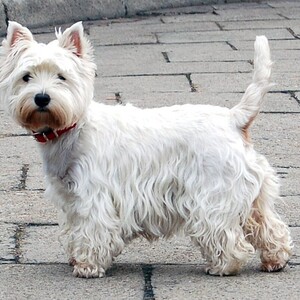
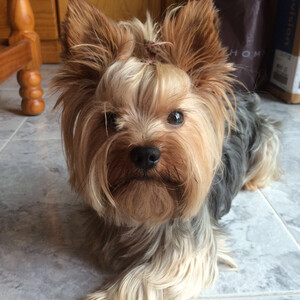
Yorkshire Terrier. · Gandalfelrojo2 / Wikimedia Commons, CC BY-SA 4.0. Cropped and resized.
The Yorkshire Terrier (Yorkie) is a toy terrier from the English county of Yorkshire, one of the smallest dogs, weighing no more than 3.2 kg, with a long, straight, silky coat, dark steel blue on the body and golden tan on the head and chest. The FCI standard describes it as an alert, intelligent toy terrier, full of life and even-tempered. The AKC says that, beneath its delicate air, it has all the traits of a true terrier: tenacious, brave and sometimes bossy.
Quick facts
| Common name | Yorkshire Terrier (Yorkie) |
| Scientific name | Canis lupus familiaris |
| Country of origin | United Kingdom (England) |
| Official recognition | FCI, definitively since 30 October 1954 (group 3, toy terriers; standard no. 86); also recognised by the AKC |
| Lifespan | 11–15 years, according to the AKC |
| Size (males) | 18–20 cm at the withers according to the AKC; no more than 3.2 kg |
| Size (females) | 18–20 cm at the withers according to the AKC; no more than 3.2 kg |
| Coat type | Long, perfectly straight, glossy, fine and silky |
| Common colours | Dark steel blue on the body, golden tan on the head and chest |
| Energy level | High |
| Suited to an apartment? | Yes |
| Temperament | Alert, intelligent, lively, brave, even-tempered |
| Tendency to aggression | Low; it can be bossy |
| Good with children | Good, with gentle children |
| Good with other animals | Moderate |
| Genetic predispositions | Luxating patella, eye diseases |
- Primary category:Dog breeds
- Explore this animal's categories:
History and origin
The FCI standard says the Yorkshire Terrier comes from the same area as the Airedale Terrier and appeared around the 1850s. Behind it lie the old black and tan terrier, as well as other breeds such as the Maltese and the Skye Terrier. Its present name was accepted in 1870.
Wikipedia says that, in the mid-19th century, Scottish workers who came to Yorkshire looking for work brought several types of terrier with them, and the breed was developed mainly by workers in the cotton and woollen mills of Yorkshire and Lancashire. Mary Ann Foster's dog Huddersfield Ben fixed the type of the breed.
How the breed developed
- Around 1850 – The first Yorkshire Terriers appear.
- 1870 – Its present name is accepted.
- Second World War – A dog called Smoky revives interest in the breed.
- 30 October 1954 – The FCI recognises the breed.
Breed rating
| Feature | Stars |
|---|---|
| Training and intelligence | ★★★★★ |
| Easy to train | ★★★★★ |
| Intelligence | ★★★★★ |
| Independence | ★★★★☆ |
| Stubbornness | ★★★★★ |
| Behaviour and temperament | ★★★★★ |
| Affectionate with family | ★★★★☆ |
| Friendly with children | ★★★★☆ |
| Good with other dogs | ★★★★★ |
| Good with cats and other animals | ★★★★☆ |
| Loyalty | ★★★★☆ |
| Tendency to be aggressive | ★☆☆☆☆ |
| Tendency to bark | ★★☆☆☆ |
| Needs and care | ★★★★☆ |
| Shedding | ★★★★☆ |
| Needs frequent grooming | ★★★★☆ |
| Activity and lifestyle | ★★★★☆ |
| Energy level | ★★★★☆ |
| Daily exercise needs | ★★☆☆☆ |
| Suited to apartment life | ★★★★★ |
| Health and longevity | ★★★★☆ |
| Life expectancy | ★★★★☆ |
| Predisposition to genetic diseases | ★☆☆☆☆ |
| Working abilities and uses | ★★★★★ |
| Good companion dog | ★★★★☆ |
| Good companion dog | ★★☆☆☆ |
Indicative rating: 5 stars means the highest level. It is based on the ratings the American Kennel Club gives the breed and on the FCI standard.
Physical characteristics
The standard describes it as very compact and neat, with a very upright carriage that gives an air of importance. The coat hangs straight and evenly down each side, with a parting from the nose to the tip of the tail.
General appearance
On the body, the coat is moderately long, perfectly straight, glossy, fine and silky, never woolly. On the head the hair is long and a rich golden tan, deeper on the sides of the head, at the base of the ears and on the muzzle. The AKC says the coat is very similar to human hair.
| Feature | Yorkshire Terrier |
|---|---|
| Size | Toy |
| Height at the withers | 18–20 cm (AKC) |
| Weight | no more than 3.2 kg |
| Coat | Long, silky |
| Colour | Steel blue and tan |
| Type | Toy terrier |
The standard calls for dark steel blue (not silver blue) from the back of the skull to the root of the tail, with no fawn, bronze or dark hairs, and rich golden tan on the head and chest. No other colour or combination is accepted.
Training and socialisation
The standard describes it as an alert, intelligent toy terrier, full of life, with an even temperament. It keeps the hunting instinct of terriers, whether it is chasing a toy indoors or a rodent in the garden.
The AKC says the Yorkie loves its owners, is very intelligent and eager to please, and praise and rewards work much better than harsh corrections. It should be socialised from an early age, with new situations, people and dogs introduced slowly and calmly.
Tips for effective training
- Praise it a lot. Rewards work best.
- Socialise it early. Slowly and calmly.
- Limit jumping. Especially in puppies, for the sake of their knees.
- Teach it “quiet”. It can bark quite a lot.
Activity needs and lifestyle
The AKC says small dogs need exercise too: walks at a steady pace and short bursts of chasing a ball. Two short walks a day are usually enough.
| Activity | How often | Why it matters |
|---|---|---|
| Short walks | twice a day | Fitness |
| Ball games | daily | Energy |
| Light training | several times a week | A busy mind |
Tips for a balanced life
- It suits an apartment.
- Tie the hair on its head up in a topknot.
- Keep it from big jumps.
Care and health
Coat and skin care
The AKC says the coat is similar to human hair and should be treated the same way. If it is kept long, it should be brushed daily. The hair on the head is trimmed short or tied up in a topknot so that it does not irritate the eyes. It should be bathed about once a week, and the ears checked weekly.
Common health problems
The AKC says the Yorkie is generally healthy, and responsible breeders check their dogs for:
| Condition | Description | Common symptoms |
|---|---|---|
| Patellar luxation | The kneecap slips out of place | Suddenly holds a hind leg up for a few steps, then uses it again |
| Eye diseases | Eye anomalies | Poor vision, irritated eyes |
| Dental disease | Common in very small breeds | Tartar, bad breath |
Other care
- Limit jumping in puppies.
- Brush its teeth often.
- Check the ears weekly.
Diet and nutrition
The AKC recommends good-quality food suited to the dog's age, and attention to its weight.
Tips for a healthy diet
The table gives a starting estimate, calculated with the formula from the Merck Veterinary Manual. The first two calorie columns show the calories per day for a healthy adult dog. The last column shows what this means in dry food with 3,500–4,000 kcal per kilogram.
| Dog's weight | Calories per day (neutered) | Calories per day (not neutered) | Dry food per day (approximate) |
|---|---|---|---|
| 2 kg | 190 kcal | 210 kcal | 48–60 g |
| 2.7 kg | 240 kcal | 270 kcal | 60–77 g |
| 3.2 kg | 270 kcal | 300 kcal | 68–86 g |
- Give puppies their food in three to four small meals.
- Treats count towards the daily portion.
- A dog is at the right weight when you can feel its ribs under the coat without pressing hard.
Foods to avoid
Some human foods are dangerous for dogs: chocolate, coffee, grapes and raisins, onions, garlic, xylitol (a sweetener used in chewing gum), macadamia nuts and alcohol.
Reproduction and development
Physical and emotional maturity
In dogs, sexual maturity usually comes between 6 and 12 months. Small breeds become adults faster than large ones, usually at around one year.
Mating and pregnancy
Pregnancy lasts about 63 days, counted from ovulation. Mating a female on her first heat is not recommended. The FCI standard requires that only healthy dogs of typical breed appearance are used for breeding.
Caring for the puppies
In small breeds, a litter has 3–4 puppies on average. The puppies are very small and fragile in the first weeks, so they must be kept warm and handled with care. Socialisation starts early: gentle handling, everyday noises and new people.
Interesting facts
- No more than 3.2 kg. One of the smallest dogs.
- A coat like human hair. That is how the AKC describes it.
- A working people's dog. Bred by mill workers.
- Huddersfield Ben. He fixed the type of the breed.
- Smoky, the war dog. She revived interest in the breed.
In popular culture
Smoky
Wikipedia says Smoky, a Yorkshire Terrier who became famous as a “war dog” in the Second World War, revived interest in the breed.
Huddersfield Ben
Wikipedia says the portrait of Huddersfield Ben, the dog who fixed the type of the breed, was painted by George Earl.
Frequently asked questions
How much does it weigh?
No more than 3.2 kg.
Does it shed?
Very little; the AKC gives 1 out of 5.
How often should it be brushed?
Daily, if the coat is kept long.
How long does it live?
The AKC gives 11–15 years.