Lapponian HerderCharacteristics, history, training and care
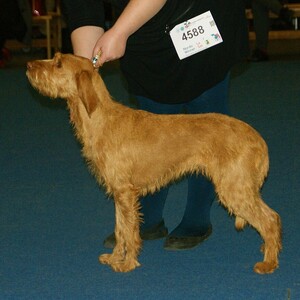
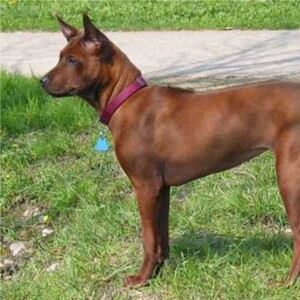
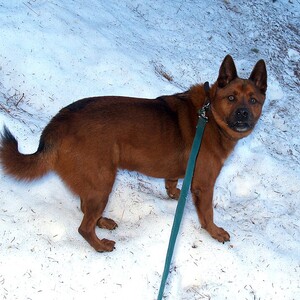
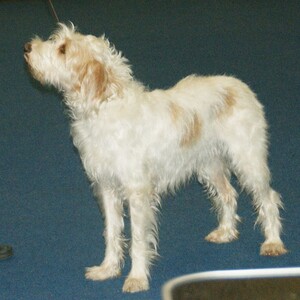
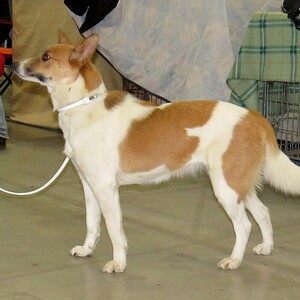
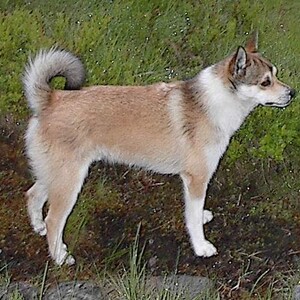
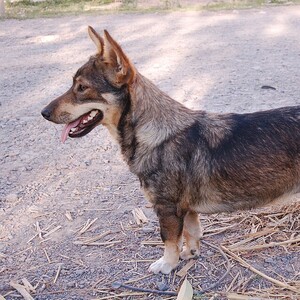
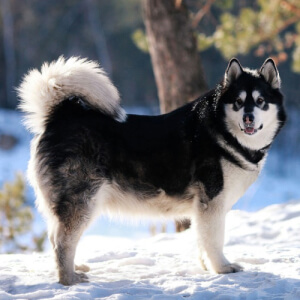
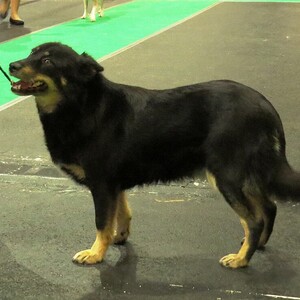
Lapponian Herder. · Томасина / Wikimedia Commons, CC BY-SA 3.0. Cropped and resized.
The Lapponian Herder (Lapinporokoira) is a medium-sized Finnish spitz with a double coat, usually black with lighter markings. Dogs of this type have been used for hundreds of years by the Sami to herd reindeer. The standard describes it as docile, calm, friendly, energetic and eager to work.
Quick facts
| Common name | Lapponian Herder (Lapinporokoira) |
| Scientific name | Canis lupus familiaris |
| Country of origin | Finland |
| Official recognition | FCI, definitively since 13 November 1970 (group 5, Nordic watchdogs and herders; standard no. 284); AKC, in the Foundation Stock Service since 2017 |
| Lifespan | 10–14 years, according to the AKC |
| Size (males) | ideally 51 cm at the withers (±3 cm) |
| Size (females) | ideally 46 cm at the withers (±3 cm) |
| Coat type | Double: harsh topcoat, fine, dense undercoat |
| Common colours | Black in various shades, grey or dark brown, with lighter markings |
| Energy level | High |
| Suited to an apartment? | Only with plenty of activity |
| Temperament | Docile, calm, friendly, energetic, hard-working |
| Tendency to aggression | Low |
| Good with children | Average |
| Good with other animals | Average |
| Genetic predispositions | Few known problems |
- Primary category:Dog breeds
- Explore this animal's categories:
History and origin
The FCI standard says the Sami have used dogs of this type for hundreds of years to herd reindeer. Registration of the breed began in the 1950s, when the Finnish Lapphund and the Lapponian Herder were still considered the same breed.
On 10 December 1966, the Lapponian Herder was separated as a distinct breed, after it was observed that there were two different breeds of reindeer dog. Wikipedia says it is one of the three Lapphund-type breeds, developed from the dogs the Sami used to guard and herd reindeer.
How the breed developed
- For hundreds of years – The Sami use dogs of this type with reindeer.
- The 1950s – Registration of the breed begins, together with the Finnish Lapphund.
- 10 December 1966 – It becomes a separate breed.
- 13 November 1970 – The FCI recognises the breed.
Breed rating
| Feature | Stars |
|---|---|
| Training and intelligence | ★★★★☆ |
| Easy to train | ★★★★☆ |
| Intelligence | ★★★★☆ |
| Independence | ★★★★☆ |
| Stubbornness | ★★★☆☆ |
| Behaviour and temperament | ★★★★☆ |
| Affectionate with family | ★★★★★ |
| Friendly with children | ★★★☆☆ |
| Good with other dogs | ★★★☆☆ |
| Good with cats and other animals | ★★★☆☆ |
| Loyalty | ★★★★★ |
| Tendency to be aggressive | ★★☆☆☆ |
| Tendency to bark | ★★★★☆ |
| Needs and care | ★★★☆☆ |
| Shedding | ★★★☆☆ |
| Needs frequent grooming | ★★☆☆☆ |
| Activity and lifestyle | ★★★★☆ |
| Energy level | ★★★★☆ |
| Daily exercise needs | ★★★★☆ |
| Suited to apartment life | ★★★☆☆ |
| Health and longevity | ★★★☆☆ |
| Life expectancy | ★★★★☆ |
| Predisposition to genetic diseases | ★★☆☆☆ |
| Working abilities and uses | ★★★★☆ |
| Good herding dog | ★★★★★ |
| Good companion dog | ★★★★☆ |
Indicative rating: 5 stars means the highest level. It is based on the ratings the American Kennel Club gives the breed and on the FCI standard.
Physical characteristics
The standard describes it as a medium-sized herding spitz, clearly longer than it is tall (by about 10%), with strong bones and muscles, but without looking heavy. The coat is adapted to the Arctic climate.
General appearance
The head is elongated, and the muzzle is slightly shorter than the skull. The topcoat is medium length or long, straight, fairly stand-off and harsh, and the undercoat is fine and dense. The hair is more abundant on the neck, chest and the back of the thighs.
| Feature | Lapponian Herder |
|---|---|
| Size | Medium |
| Height at the withers | males: ideally 51 cm; females: ideally 46 cm (±3 cm) |
| Coat | Double, harsh |
| Body | 10% longer than tall |
| Ears | Erect |
| Climate | Adapted to Arctic cold |
The colour is black in various shades, even grey or dark brown, with lighter grey or brownish markings, often on the head, the underside of the body and the legs.
Training and socialisation
The AKC says it is docile, calm, friendly, energetic and eager to work, and it barks readily while working. Although it is independent, it wants to please you and likes to have a job to do.
It can be reserved with strangers, especially the females, but becomes very friendly once it knows you. The AKC says early socialisation is important.
Tips for effective training
- Give it a job. It is happiest when it has a task.
- Socialise it from an early age. It can be reserved with strangers.
- Use rewards. It wants to please you.
- Think of the neighbours. It barks readily while working.
Activity needs and lifestyle
The AKC says it does best when it has work to do: herding, dog sports or training. It excels at obedience, agility, rally, dock diving, scent work and search and rescue. Without activity, it can become destructive.
| Activity | How often | Why it matters |
|---|---|---|
| Long walks | daily | High energy |
| Dog sports | weekly | It likes to work |
| Search games | several times a week | Mental stimulation |
Tips for a balanced life
- It copes very well with cold.
- In summer, give it shade.
- It suits experienced owners.
Care and health
Coat and skin care
The AKC says it has a thick double coat that sheds its undercoat once or twice a year, usually in spring and autumn. The coat is smooth and does not mat, so occasional brushing and a bath now and then are enough.
Common health problems
The AKC says the breed is still considered primitive and has few or no consistent health problems. Responsible breeders can tell future owners about specific risks.
Other care
- Check its paws after outings.
- Trim the nails as needed.
- Go for regular check-ups.
Diet and nutrition
The AKC says some dogs gain weight easily, so calories and weight should be watched.
Tips for a healthy diet
The table gives a starting estimate, calculated with the formula from the Merck Veterinary Manual. The first two calorie columns show the calories per day for a healthy adult dog. The last column shows what this means in dry food with 3,500–4,000 kcal per kilogram.
| Dog's weight | Calories per day (neutered) | Calories per day (not neutered) | Dry food per day (approximate) |
|---|---|---|---|
| 18 kg | 980 kcal | 1,100 kcal | 240–310 g |
| 23 kg | 1,180 kcal | 1,320 kcal | 300–380 g |
| 28 kg | 1,360 kcal | 1,530 kcal | 340–440 g |
- Split the food into two meals a day.
- Adjust the portion to its level of effort.
- A dog is at the right weight when you can feel its ribs under the coat without pressing hard.
Foods to avoid
Some human foods are dangerous for dogs: chocolate, coffee, grapes and raisins, onions, garlic, xylitol (a sweetener used in chewing gum), macadamia nuts and alcohol.
Reproduction and development
Physical and emotional maturity
In dogs, sexual maturity usually comes between 6 and 12 months. Most breeds become adults at around 13–15 months.
Mating and pregnancy
Pregnancy lasts about 63 days, counted from ovulation. Mating a female on her first heat is not recommended. The FCI standard requires that only healthy dogs of typical breed appearance are used for breeding.
Caring for the puppies
In dogs, a litter has 5–6 puppies on average, and the number rises with the size of the breed. Socialisation starts in the first weeks: gentle handling, everyday noises and new people.
Interesting facts
- A reindeer dog. It herds reindeer, not sheep.
- Split from the Lapphund. Until 1966 it was the same breed as the Finnish Lapphund.
- It barks at work. Barking helps it drive the reindeer.
- A primitive breed. The AKC says it is still considered primitive.
- One of three. It is one of the three Lapphund-type breeds.
Frequently asked questions
How does it differ from the Finnish Lapphund?
The Lapponian Herder has a longer body and a shorter coat; they have been separate breeds since 1966.
How big does it get?
Males ideally measure 51 cm and females 46 cm (±3 cm).
Does it bark a lot?
It barks readily, especially when working.
How long does it live?
The AKC gives 10–14 years.