WetterhounCharacteristics, history, training and care
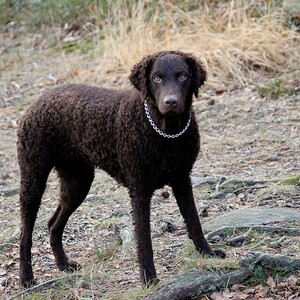
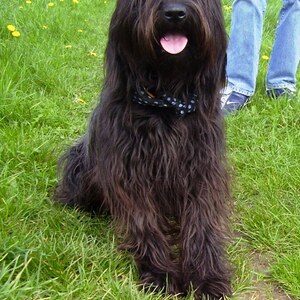
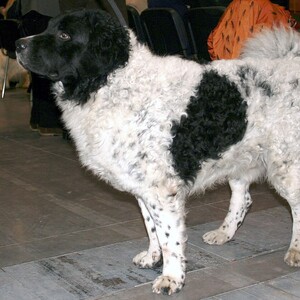
Wetterhoun. · Pleple2000 / Wikimedia Commons, CC BY-SA 3.0. Cropped and resized.
The Wetterhoun (Frisian Water Dog) is a rare Dutch dog from Friesland, with a coat of hard curls that feel greasy to the touch. It was traditionally used to hunt otters and to guard the yard. The FCI standard describes it as headstrong by nature, affectionate with its family, vigilant in the house and yard and keen on catching vermin, reserved with strangers at first, but not fearful.
Quick facts
| Common name | Wetterhoun (Frisian Water Dog) |
| Scientific name | Canis lupus familiaris |
| Country of origin | Netherlands (Friesland) |
| Official recognition | FCI, definitively since 21 December 1959 (group 8, water dogs; standard no. 221); in the Netherlands since 1942; the AKC lists it in the Foundation Stock Service |
| Lifespan | About 13 years, according to the AKC |
| Size (males) | ideally 59 cm at the withers; about 34 kg |
| Size (females) | ideally 55 cm at the withers; about 28 kg |
| Coat type | Hard, dense curls, harsh, greasy hair; short on the head and legs |
| Common colours | Black or brown, with white on the chest and toes; patched, roan |
| Energy level | Medium to high |
| Suited to an apartment? | No |
| Temperament | Headstrong, affectionate, vigilant, reserved with strangers |
| Tendency to aggression | Low; it must not be fearful |
| Good with children | No specific data; affectionate with its family |
| Good with other animals | Poor with rodents |
| Genetic predispositions | No specific diseases are known; the club recommends health tests |
- Primary category:Dog breeds
- Explore this animal's categories:
History and origin
The FCI standard says it was probably brought by Romani people and/or by sailors from the countries around the Baltic Sea. In the 19th and 20th centuries it was used to pull carts, but above all to hunt otters and other small predators in the water-rich areas of Friesland. At the beginning of the 20th century it was often crossed with the Stabyhoun, and each breed was in danger of losing its character.
In 1938, a group of enthusiasts from the Kynologenclub Fryslân began to purify the breed, and in 1942 both breeds were officially recognised. The first standard dates from 10 February 1944. The standard says there were about 1,000 dogs in the world in 2013.
How the breed developed
- 19th–20th centuries – An otter hunter and draught dog in Friesland.
- 1938 – The purification of the breed begins.
- 1942 – Official recognition in the Netherlands.
- 10 February 1944 – The first standard.
- 21 December 1959 – The FCI recognises the breed.
Breed rating
| Feature | Stars |
|---|---|
| Training and intelligence | ★★★☆☆ |
| Easy to train | ★★★★☆ |
| Intelligence | ★★★☆☆ |
| Independence | ★★★☆☆ |
| Stubbornness | ★★★☆☆ |
| Behaviour and temperament | ★★★☆☆ |
| Affectionate with family | ★★★★☆ |
| Friendly with children | ★★★☆☆ |
| Good with other dogs | ★★★★☆ |
| Good with cats and other animals | ★★☆☆☆ |
| Loyalty | ★★★★☆ |
| Tendency to be aggressive | ★★☆☆☆ |
| Tendency to bark | ★★★★☆ |
| Needs and care | ★★★☆☆ |
| Shedding | ★★★★☆ |
| Needs frequent grooming | ★★★☆☆ |
| Activity and lifestyle | ★★★☆☆ |
| Energy level | ★★★☆☆ |
| Daily exercise needs | ★★★★☆ |
| Suited to apartment life | ★★★★☆ |
| Health and longevity | ★★★☆☆ |
| Life expectancy | ★★★☆☆ |
| Predisposition to genetic diseases | ★★☆☆☆ |
| Working abilities and uses | ★★★☆☆ |
| Good guard dog | ★★★★☆ |
| Good companion dog | ★★★★☆ |
Indicative rating: 5 stars means the highest level. It is based on the FCI standard; the AKC profile gives no scores for the breed.
Physical characteristics
The standard describes it as a plain, square, strong, compact but not coarse dog, with a lean, sturdy, powerful head. Wikipedia says it is also called the “Otterhoun” or “Dutch Spaniel”, as it can flush game for the hunter.
General appearance
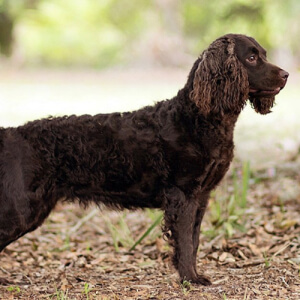
The coat is made up of hard, firm curls formed by tufts of hair. The hair itself is fairly harsh and feels greasy to the touch. The head and legs are covered with short hair.
| Feature | Wetterhoun |
|---|---|
| Size | Large |
| Height at the withers | males: 59 cm; females: 55 cm (ideally) |
| Weight | males: ~34 kg; females: ~28 kg |
| Coat | Hard curls |
| Colour | Black or brown |
| Type | Water dog |
The standard accepts solid black or solid brown, with white on the chest and/or toes, as well as black or brown patches, ticking and roan.
Training and socialisation
The standard describes it as headstrong by nature, affectionate with its family, vigilant in the house and yard and keen on catching vermin. At first it may be reserved with strangers, but it must not be fearful.
The AKC says it is almost always by its owner's side and that, being persistent, it can excel at various dog sports. As it is headstrong, it needs consistent, patient training.
Tips for effective training
- Be consistent. It is headstrong.
- Socialise it early. It is reserved with strangers.
- Let it swim. It is a water dog.
- Give it a sport. It is persistent.
Activity needs and lifestyle
As a persistent water hunter, it needs daily walks, swimming and activities in which it works with its owner.
| Activity | How often | Why it matters |
|---|---|---|
| Walks | daily | Fitness |
| Swimming | occasionally | Instinct |
| Dog sports | weekly | A busy mind |
Tips for a balanced life
- Suited to experienced owners.
- Let it stay close to the family.
- Dry it after swimming.
Care and health
Coat and skin care
The curly coat should be checked regularly for dirt and burrs, especially after outings in the countryside. The ears should be checked after swimming.
Common health problems
The AKC says the breed is fairly healthy, despite its small population. The Dutch breed club has started a controlled outcrossing programme for genetic diversity and recommends health tests. Things to watch for:
| Condition | Description | Common symptoms |
|---|---|---|
| Hip dysplasia | The hip joint forms incorrectly and, over time, arthritis develops | Limping, difficulty getting up or jumping, hip pain |
| Ear infections | Infections of the ears, especially after swimming | Head shaking, unpleasant smell |
Other care
- Ask for the tests recommended by the club.
- Dry the ears after swimming.
- Go for yearly check-ups.
Diet and nutrition
An active working dog needs good-quality food adapted to its workload.
Tips for a healthy diet
The table gives a starting estimate, calculated with the formula from the Merck Veterinary Manual. The first two calorie columns show the calories per day for a healthy adult dog. The last column shows what this means in dry food with 3,500–4,000 kcal per kilogram.
| Dog's weight | Calories per day (neutered) | Calories per day (not neutered) | Dry food per day (approximate) |
|---|---|---|---|
| 28 kg | 1,360 kcal | 1,530 kcal | 340–440 g |
| 31 kg | 1,470 kcal | 1,660 kcal | 370–470 g |
| 34 kg | 1,580 kcal | 1,770 kcal | 400–510 g |
- Split the food into two meals a day.
- Do not let it run right after a meal.
- A dog is at the right weight when you can feel its ribs under the coat without pressing hard.
Foods to avoid
Some human foods are dangerous for dogs: chocolate, coffee, grapes and raisins, onions, garlic, xylitol (a sweetener used in chewing gum), macadamia nuts and alcohol.
Reproduction and development
Physical and emotional maturity
In dogs, sexual maturity usually comes between 6 and 12 months, but in large breeds it can be delayed until about two years. The body also reaches its adult form later than in small breeds.
Mating and pregnancy
Pregnancy lasts about 63 days, counted from ovulation. Mating a female on her first heat is not recommended. The FCI standard requires that only healthy dogs of typical breed appearance are used for breeding.
Caring for the puppies
In large breeds, a litter has around 7 puppies on average. Socialisation starts in the first weeks: gentle handling, everyday noises and new people.
Interesting facts
- A greasy coat. The curls feel greasy to the touch.
- An otter hunter. That was its traditional job.
- Arrived from the Baltic. It was probably brought by sailors or Romani people.
- Related to the Stabyhoun. The two breeds were separated after 1938.
- Very rare. About 1,000 dogs in the world (2013).
Frequently asked questions
What does the name mean?
“Water dog”, in Frisian.
Is it a rare breed?
Yes, very rare.
How much does it weigh?
Males around 34 kg, females 28 kg.
Is it a good guard dog?
Yes; it is vigilant in the house and yard.