NorrbottenspetsCharacteristics, history, training and care
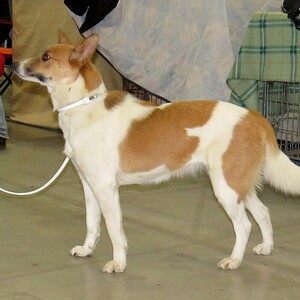
Norrbottenspets. · Томасина / Wikimedia Commons, CC BY-SA 3.0. Cropped and resized.
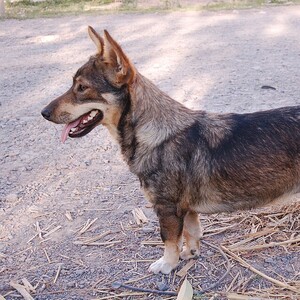
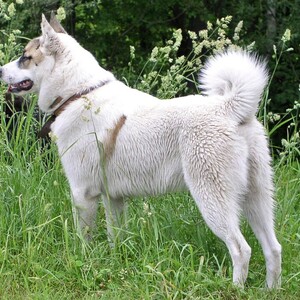
The Norrbottenspets is a small hunting spitz from northern Sweden, with a lean, hardy body, white with red or yellow patches. It is used mainly to hunt capercaillie, but it can also hunt fur-bearing animals and hold a moose at bay. The standard describes it as keen, lively, self-confident and gentle by nature.
Quick facts
| Common name | Norrbottenspets (Norrbottenspitz) |
| Scientific name | Canis lupus familiaris |
| Country of origin | Sweden |
| Official recognition | FCI, definitively since 20 September 1968 (group 5, Nordic hunting dogs, with working trial; standard no. 276); has a breed profile at the AKC |
| Lifespan | 14–17 years, according to the AKC |
| Size (males) | ideally 45 cm at the withers (±2 cm) |
| Size (females) | ideally 42 cm at the withers (±2 cm) |
| Weight | 9–13.5 kg, according to the AKC |
| Coat type | Double: hard, short, straight topcoat; fine, dense undercoat |
| Common colours | White with red or yellow patches |
| Energy level | High |
| Suited to an apartment? | Only with plenty of exercise |
| Temperament | Keen, lively, self-confident, gentle |
| Tendency to aggression | Low |
| Good with children | Average |
| Good with other animals | Poor with small animals; hunting instinct |
| Genetic predispositions | No breed-specific diseases are known |
- Primary category:Dog breeds
- Explore this animal's categories:
History and origin
The FCI standard says the breed probably descends from small laika-type spitz dogs that lived with hunters in the North Cape area since prehistoric times. In the harsh north of the Scandinavian Peninsula, hunting for food and furs was necessary for survival, and for centuries valuable furs were the only currency.
When the price of furs fell sharply after the Second World War, interest in the breed fell too. The Swedish Kennel Club declared it extinct, but a decade later typical dogs were found on small farms in the interior of the province of Norrbotten. Thanks to a few people, the breed was saved and reinstated in the register in 1967.
How the breed developed
- Prehistory – Small spitz dogs live with hunters in northern Scandinavia.
- After 1945 – The price of furs falls; the breed is declared extinct.
- A decade later – Typical dogs are found on small farms.
- 1967 – The breed is reinstated in the register, with a new standard.
- 20 September 1968 – The FCI recognises the breed.
Breed rating
| Feature | Stars |
|---|---|
| Training and intelligence | ★★★★☆ |
| Easy to train | ★★★★☆ |
| Intelligence | ★★★★☆ |
| Independence | ★★★★☆ |
| Stubbornness | ★★★☆☆ |
| Behaviour and temperament | ★★★★☆ |
| Affectionate with family | ★★★★★ |
| Friendly with children | ★★★☆☆ |
| Good with other dogs | ★★★☆☆ |
| Good with cats and other animals | ★★☆☆☆ |
| Loyalty | ★★★★★ |
| Tendency to be aggressive | ★☆☆☆☆ |
| Tendency to bark | ★★★☆☆ |
| Needs and care | ★★★☆☆ |
| Shedding | ★★★☆☆ |
| Needs frequent grooming | ★★☆☆☆ |
| Activity and lifestyle | ★★★★☆ |
| Energy level | ★★★★☆ |
| Daily exercise needs | ★★★★☆ |
| Suited to apartment life | ★★★☆☆ |
| Health and longevity | ★★★★★ |
| Life expectancy | ★★★★☆ |
| Predisposition to genetic diseases | ★★☆☆☆ |
| Working abilities and uses | ★★★★☆ |
| Good hunting dog | ★★★★★ |
| Good companion dog | ★★★★☆ |
Indicative rating: 5 stars means the highest level. It is based on the ratings the American Kennel Club gives the breed and on the FCI standard.
Physical characteristics
The AKC says it is not a big dog, but it has a tough, lean body, made to hold out on difficult ground and in a harsh climate. It hunts using sight, scent and hearing, holds game at bay and calls its hunter with sharp barks.
General appearance
The head is strong and well chiselled. The coat is double: the undercoat is fine and dense, and the topcoat is hard, short and straight, shorter on the nose, skull, ears and the front of the legs and longer on the neck, the backs of the thighs and under the tail.
| Feature | Norrbottenspets |
|---|---|
| Size | Small to medium |
| Height at the withers | males: ideally 45 cm; females: ideally 42 cm |
| Weight | 9–13.5 kg (AKC) |
| Coat | Double, short |
| Colour | White with red or yellow patches |
| Body | Lean, hardy |
The colour is pure white, with well-defined, well-distributed patches, ideally in all shades of red and yellow. The patches on the body should be fairly large.
Training and socialisation
The standard says that when hunting it must be alert and bold. It is a keen, lively, self-confident dog with a gentle nature. Although it is used mainly on capercaillie, it can also hunt fur-bearing animals and can hold a moose at bay.
The AKC describes it as lively, energetic and playful, with an affectionate, pleasant nature, and gives it a good score for trainability.
Tips for effective training
- Use rewards. It learns easily.
- Practise the recall. On a trail, its instinct can carry it away.
- Think of the neighbours. It barks sharply to call the hunter.
- Keep its mind busy. It enjoys search games.
Activity needs and lifestyle
The AKC recommends play in a fenced yard, walks several times a day and indoor games such as hide-and-seek or new tricks.
| Activity | How often | Why it matters |
|---|---|---|
| Walks | several times a day | High energy |
| Play in a fenced yard | daily | Exercise |
| Search games | several times a week | Hunting instinct |
Tips for a balanced life
- It copes very well with cold.
- The fence must be solid.
- Do not leave it unsupervised with small animals.
Care and health
Coat and skin care
The AKC says it is a very clean dog, with no unpleasant smell. Apart from weekly brushing, a very occasional bath keeps it clean. The nails are trimmed when needed.
Common health problems
There are no known breed-specific diseases, and the AKC gives it a long life expectancy of 14–17 years. Regular vet check-ups remain important.
Other care
- Check the paws after outings in the forest.
- Check for ticks regularly.
- Trim the nails when needed.
Diet and nutrition
The AKC says some dogs gain weight easily, so calories and weight should be watched.
Tips for a healthy diet
The table gives a starting estimate, calculated with the formula from the Merck Veterinary Manual. The first two calorie columns show the calories per day for a healthy adult dog. The last column shows what this means in dry food with 3,500–4,000 kcal per kilogram.
| Dog's weight | Calories per day (neutered) | Calories per day (not neutered) | Dry food per day (approximate) |
|---|---|---|---|
| 9 kg | 580 kcal | 650 kcal | 140–190 g |
| 11 kg | 680 kcal | 760 kcal | 170–220 g |
| 13.5 kg | 790 kcal | 890 kcal | 200–250 g |
- Give it its food in two meals a day.
- Adjust the portion to its level of effort.
- A dog is at the right weight when you can feel its ribs under the coat without pressing hard.
Foods to avoid
Some human foods are dangerous for dogs: chocolate, coffee, grapes and raisins, onions, garlic, xylitol (a sweetener used in chewing gum), macadamia nuts and alcohol.
Reproduction and development
Physical and emotional maturity
In dogs, sexual maturity usually comes between 6 and 12 months. Small breeds become adults faster than large ones, usually at around one year.
Mating and pregnancy
Pregnancy lasts about 63 days, counted from ovulation. Mating a female on her first heat is not recommended. The FCI standard requires that only healthy dogs of typical breed appearance are used for breeding.
Caring for the puppies
In small breeds, a litter has 3–4 puppies on average. The puppies are very small and fragile in the first weeks, so they must be kept warm and handled with care. Socialisation starts early: gentle handling, everyday noises and new people.
Interesting facts
- Declared extinct. The Swedish club declared it extinct, but it was found again.
- Furs as currency. For centuries, valuable furs were the only currency in the north.
- It holds a moose at bay. Although it is small, it can hold a moose at bay.
- It calls the hunter. It barks sharply to alert him.
- It lives a long time. The AKC gives 14–17 years.
Frequently asked questions
What does it hunt?
Mainly capercaillie, but also fur-bearing animals; it can hold a moose at bay.
How big does it get?
Males ideally measure 45 cm and females 42 cm; the AKC gives 9–13.5 kg.
Is it a clean dog?
Yes. The AKC says it is very clean and odourless.
How long does it live?
The AKC gives 14–17 years.