GullInteresting facts and information
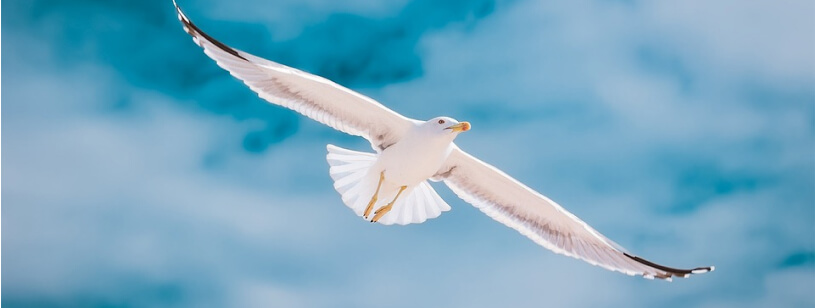
Gulls are birds in the family Laridae. Many use coastal habitats, but others also feed or breed around inland waters and towns. Their diets and seasonal movements differ between species.
Gulls are adaptable, intelligent birds with a busy social life and many clever ways of finding food. They steal food from other birds, drop shellfish onto rocks to crack them and quickly learn from experience.
In some places, gulls are loved as symbols of the sea and freedom; in others, they are seen as pests because they search for food in towns and rubbish dumps.
Quick facts
| Common name | Gull |
| Scientific name | Laridae (gulls in several genera) |
| Typical lifespan | Often 10-20 years; some over 30 years (depending on species) |
| Maximum speed | About 40-60 km/h in normal flight, faster with the wind |
| Length | About 25-79 cm (depending on species) |
| Wingspan | About 60 cm - 1.7 m |
| Weight | About 70 g - 2.3 kg |
| Diet type | Omnivore (fish, crustaceans, insects, eggs, food scraps) |
| Main predators | Foxes, rats, eagles, skuas and larger gulls (mainly for eggs and chicks) |
| Conservation status | Assess separately by species and population; different taxa and regions have different needs |
| Geographical distribution | All continents, including the coasts of Antarctica and the high Arctic |
| Social behaviour | Often nests in large colonies; noisy and territorial |
| Special adaptations | Salt glands for drinking seawater, intelligence, varied feeding techniques |
- Primary category:Birds
- Explore this animal's categories:Animals of AfricaAnimals of AntarcticaAnimals of AsiaAnimals of AustraliaAnimals of EuropeAnimals of North AmericaAnimals of RomaniaAnimals of South AmericaAnimals of the Danube DeltaBirdsBirds of RomaniaEgg-laying animalsFeathered animalsFlying animalsGMigratory animalsMigratory birdsOmnivoresVertebratesWaterbirdsWetland animals
Interesting facts
- Gulls can drink seawater - Special salt glands above their eyes remove extra salt from the blood, and the salty liquid drips out through their nostrils.
- Clever feeders - Gulls drop shellfish onto rocks or roads to crack them open, and some stamp their feet on wet ground to bring worms to the surface.
- Very vocal - Gulls have many different calls, including the famous "long call", alarm calls and begging calls.
- City birds - Many gulls now live in towns, where they eat food waste, nest on roofs and even snatch food from people's hands.
- Faithful partners - Many gulls stay with the same partner for years and return to the same nesting place every spring.
- The red spot - Herring gull chicks peck at the red spot on their parent's bill to make it bring up food; this was famously studied by the scientist Niko Tinbergen.
Records and remarkable features
- Gulls are birds in the family Laridae. Many use coastal habitats, but others also feed or breed around inland waters and towns. Their diets and seasonal movements differ between species.
- The largest gull - The great black-backed gull (Larus marinus) can weigh up to about 2.3 kg, with a wingspan of up to about 1.7 m.
- The smallest gull - The little gull (Hydrocoloeus minutus) weighs only about 70-160 g.
- A state bird - The California gull is the state bird of Utah, honoured for eating crickets that threatened settlers' crops in 1848.
Characteristics
Gulls are medium to large seabirds with long wings built for efficient flight. Most are white and grey, often with black on the wings or head, and they have strong bills and webbed feet.
Physical aspect
- Gull sizes differ greatly between species. The little gull (Hydrocoloeus minutus) is much smaller than the great black-backed gull (Larus marinus).
- A strong, slightly hooked bill - Good for grabbing and tearing food. In some species, the bill has a red spot near the tip, which chicks peck to get food.
- Long, pointed wings - Allow gulls to glide and soar for long periods.
- Webbed feet - Help them swim and rest on the water for hours.
- White and grey plumage - The white underside may make them harder for fish to see from below.
- Changing plumage - Young gulls are mottled brown, and large gulls take about four years to get their adult plumage.
Special adaptations
- Salt glands - Allow them to drink seawater, removing the extra salt through their nostrils.
- Quick learners - Gulls learn new ways of finding food and copy each other.
- Flexible flight - Gulls can soar on rising air, glide, hover and fly actively, using winds and air currents efficiently.
- A varied diet - They fish, catch insects, steal food from other birds and scavenge in towns.
Habits and behaviour
Gulls are social birds that often nest in large colonies. They are noisy, curious and clever.
Social behaviour
- Colonies - Many gulls nest together, sometimes thousands of pairs in one place.
- Noisy birds - They call loudly to communicate, warn of danger and defend territories.
- Defending the nest - In the breeding season, gulls defend their nests fiercely and may dive at people who come too close.
- Long-lasting pairs - Many pairs stay together for years and return to the same nesting area.
Feeding techniques
- Fishing - Many gulls snatch fish from the surface of the water or make shallow plunges.
- Scavenging - In towns, gulls search rubbish dumps and bins and learn to open food packaging.
- Stealing food - Gulls often chase other seabirds, such as terns and puffins, to make them drop their food.
- Cracking shells - Some gulls fly up with shellfish and drop them onto hard surfaces to break them open.
Interaction with people
- Living with people - Many gulls have adapted to towns and harbours, feeding at fishing ports, markets and dumps.
- Food thieves - In seaside towns, gulls are known for snatching chips and sandwiches from people.
- Symbols of the sea - Gulls appear in many books and works of art as symbols of the sea and freedom.
Habitat and geographic distribution
Gulls live on every continent, including the coasts of Antarctica, and are found along coasts, lakes, rivers and in towns.
| Region | Example species | Habitat Preferred |
|---|---|---|
| Europe | Herring gull (Larus argentatus), great black-backed gull (Larus marinus), black-headed gull (Chroicocephalus ridibundus) | Coasts, lakes, towns |
| North America | Ring-billed gull (Larus delawarensis), California gull (Larus californicus) | Coasts, lakes, rivers, farmland |
| Asia | Brown-headed gull, Pallas's gull | Mountain lakes, large rivers, coasts |
| Australia and New Zealand | Silver gull, red-billed gull | Coasts, lagoons, towns |
| Southern Africa, South America and Antarctica | Kelp gull (Larus dominicanus), Olrog's gull (Larus atlanticus) | Coasts, islands |
Types of Habitat
- Coasts - Most gulls live along seashores, estuaries and islands.
- Lakes and rivers - Some species, such as the black-headed gull, breed inland by lakes and marshes.
- Towns and farmland - Many gulls feed in fields, dumps and towns, and some nest on roofs.
Human Impact and Threats
- Pollution - Oil spills and plastic in the oceans harm gulls.
- Overfishing - Fewer fish means less food for some gulls.
- Climate change - Rising seas and storms can flood nesting sites on low islands.
- Conflict with people - In some towns, gulls are seen as pests because of their noise, mess and food stealing.
Diet and feeding
Gulls are opportunistic omnivores that eat a huge range of foods, from fish and crabs to insects, earthworms, food scraps and the eggs and chicks of other birds.
What does the gull eat?
| Type of food | Examples |
|---|---|
| Fish | Herring, sprats, sand eels, fish waste |
| Crustaceans and molluscs | Crabs, shrimps, mussels, clams |
| Insects and worms | Beetles, flying ants, caterpillars, earthworms |
| Eggs and chicks | Eggs and chicks of other seabirds and ducks |
| Food scraps | Bread, chips, meat |
| Other food | Carrion, small mammals, berries and seeds |
Feeding methods
- Fishing - Gulls grab fish from near the surface while flying or swimming.
- Dropping shells - They drop shellfish onto rocks to break them.
- Stealing - Gulls often steal food from other birds, a habit called kleptoparasitism.
- Scavenging - Urban gulls look for food at dumps, in bins and directly from people.
- Raiding nests - Large gulls take the eggs and chicks of other birds.
Adaptation to Food Availability
- Not only the sea - Many gulls feed inland, in fields, rivers and lakes.
- Following people - Gulls follow fishing boats and ploughs to catch food stirred up by them.
- Foot-paddling - Some gulls "dance" on wet grass or mud to bring worms and other small animals to the surface.
Reproduction and life cycle
Most gulls are monogamous, and many pairs stay together for years. They usually nest in colonies, on the ground or on cliffs, and defend their nests against predators and other gulls.
| Characteristic | Details |
|---|---|
| Age of sexual maturity | About 2-5 years, depending on the species |
| Breeding season | Spring - early summer |
| Type of reproduction | Oviparous (lays eggs) |
| Number of eggs per nest | Usually 2-3 eggs |
| Incubation period | About 22-30 days |
| Time until first flight | About 4-7 weeks |
| Life expectancy | Often 10-20 years; some have lived more than 30 years in the wild |
Breeding process
- Courtship - Pairs call to each other, and the male feeds the female.
- Building the nest - Both partners build a nest of grass, seaweed and feathers on the ground, on cliffs or on roofs.
- Incubation - Both parents take turns sitting on the eggs and guarding the nest.
- Feeding the chicks - Parents bring up food for the chicks, which peck at the red spot on their bill.
- Learning to fly - After about 4-7 weeks, the young start to fly, but their parents keep feeding them for a while.
Survival Strategies
- Safety in numbers - In colonies, many gulls together can drive away predators.
- Always alert - Adults attack intruders and warn their neighbours.
- Camouflaged chicks - The speckled brown chicks are hard to see among stones and grass.
Name and history
Gulls have lived alongside people on the coasts for thousands of years and have long been linked with the sea and sailors.
Origin and etymology of the name
- The word "gull" probably comes from a Celtic language, such as Cornish gullan or Welsh gwylan. The word "seagull" is an everyday name, not used by scientists, because many gulls live inland.
- The genus name Larus comes from the Greek laros, a name for a large seabird.
Gulls in the History of Humanity
- Seafarers - For centuries, sailors watched gulls to find land, fish and signs of the weather.
- The "Miracle of the Gulls" - In 1848, flocks of California gulls ate swarms of crickets that were destroying the crops of Mormon settlers in Utah.
- Science - In the mid-20th century, Niko Tinbergen's experiments with herring gull chicks helped found the scientific study of animal behaviour.
Gulls in Folklore and Superstition
- A symbol of freedom - Gulls are often linked with sea voyages and exploration.
- Weather signs - Many coastal people believe that gulls flying inland are a sign of a coming storm.
- Fishermen's luck - Gulls following a fishing boat are often seen as a sign of a good catch.
Cultural significance and mythology
Gulls appear in folklore, literature and symbols as birds of the sea, freedom and travel.
Gulls in Mythology and Religion
- Souls of sailors - An old belief among sailors says that gulls carry the souls of seamen lost at sea, so killing one brings bad luck.
- Utah - A monument in Salt Lake City honours the gulls of the "Miracle of the Gulls".
- Coastal traditions - In many fishing communities, gulls are seen as companions of fishermen.
Gulls in heraldry and symbolism
- Sea symbols - Gulls appear on many nautical emblems and badges.
- Town emblems - Several coastal towns use gulls on their coats of arms or logos.
- Art - Gulls are a favourite subject in seaside paintings and photographs.
Gulls in Folklore and Superstition
- "Seagull, seagull, sit on the sand, it's never fine weather when you're on the land" - An old English rhyme about gulls and the weather.
- Good luck - Many fishermen believe that gulls bring luck.
- Do not kill a gull - A sailors' superstition says that gulls are the souls of lost seamen.
Conservation status and threats
Many gull species are still widespread and common, but some are threatened, and even familiar gulls have declined in parts of their range.
| IUCN status | Species Examples | Affected Regions |
|---|---|---|
| Least Concern (LC) | Herring gull (Larus argentatus), great black-backed gull (Larus marinus) | Europe, North America |
| Near Threatened (NT) | Olrog's gull (Larus atlanticus) | Argentina |
| Vulnerable (VU) | Relict gull (Ichthyaetus relictus), lava gull (Galápagos) | Central and East Asia; Galápagos Islands |
Main threats
- Plastic pollution - Gulls swallow plastic, which can block their digestive system.
- Habitat loss - Coastal development and disturbance damage nesting sites.
- Less food - Overfishing and the closure of open rubbish dumps reduce food for some gulls.
- Fishing gear - Gulls can be caught on fishing hooks and in nets.
- Climate change and disease - Rising seas threaten low nesting islands, and bird flu has killed many seabirds in recent years.
Conservation efforts
- Protected colonies - In many countries, important gull colonies are protected.
- Safer fishing - Some fisheries use methods that reduce the number of seabirds caught.
- Reducing plastic - Campaigns to reduce plastic waste help gulls and other seabirds.
- Living with gulls - Towns encourage people not to feed gulls and to keep rubbish covered.
In popular culture
Gulls are a strong symbol of the sea and of freedom and appear in literature, films and art.
Literature and fables
- Jonathan Livingston Seagull (Richard Bach, 1970) - A best-selling story about a gull who lives for the joy of flying and freedom.
- The Seagull (Anton Chekhov, 1896) - A famous Russian play in which a shot gull becomes a symbol of lost hopes.
- Sea legends - In many stories, gulls are linked with the souls of sailors.
Films and animation
- Finding Nemo (2003) - The greedy gulls shouting "Mine! Mine! Mine!" are among the film's most memorable characters.
- The Lighthouse (2019) - A dark film in which a lighthouse keeper's quarrel with a gull leads to disaster.
- The Little Mermaid (Disney, 1989) - Scuttle is a friendly but confused gull.
Video Games and the internet
- The Legend of Zelda: The Wind Waker - Seagulls help the player find hidden places at sea.
- "Seagulls! (Stop It Now)" (2016) - A viral comedy song from a Star Wars parody video.
Gulls as Commercial Symbols
- Logos - Many shipping companies and seaside businesses use gulls in their logos.
- Tourism - Gulls are a classic symbol of seaside holidays.
- Souvenirs - Gull images appear on many postcards and souvenirs from coastal towns.