Thai RidgebackCharacteristics, history, training and care
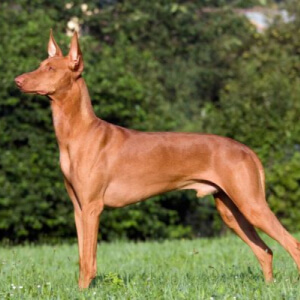
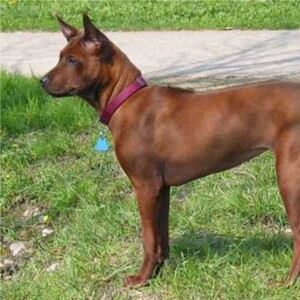
Thai Ridgeback. · HiSa Hiller / Wikimedia Commons, CC BY-SA 3.0. Cropped and resized.
The Thai Ridgeback is a medium-sized primitive dog from Thailand, with short hair and a ridge on its back formed by hair growing in the opposite direction. The FCI standard says it is an old breed, used mainly for hunting in eastern Thailand, and describes it as tough, active, with an excellent jumping ability, and a loyal family dog.
Quick facts
| Common name | Thai Ridgeback |
| Scientific name | Canis lupus familiaris |
| Country of origin | Thailand |
| Official recognition | FCI, definitively since 26 May 2003 (group 5, primitive type – hunting dogs; standard no. 338); also recognised by the AKC |
| Lifespan | 14–15 years, according to the AKC |
| Size (males) | ideally 56–61 cm at the withers; 16–34 kg according to the AKC |
| Size (females) | ideally 51–56 cm at the withers |
| Coat type | Short and smooth, no undercoat, with a ridge on the back |
| Common colours | Red, black, blue, very light fawn (isabella) |
| Energy level | Medium |
| Suited to an apartment? | Not really; the AKC gives it 1 out of 5 for adaptability |
| Temperament | Tough, active, loyal to its family, aloof with strangers |
| Tendency to aggression | Moderate; very protective |
| Good with children | Moderate |
| Good with other animals | Moderate |
| Genetic predispositions | Dermoid sinus; hip dysplasia, rarely |
- Primary category:Dog breeds
- Explore this animal's categories:
History and origin
The FCI standard says the Thai Ridgeback is an old breed that appears in Thai archaeological documents written about 360 years ago. It was used mainly for hunting in the east of the country, but also to escort carts and as a watchdog.
It kept its original type for so long because the poor roads of eastern Thailand gave it few chances to cross with other breeds. Wikipedia says it is the national dog of Thailand.
How the breed developed
- About 360 years ago – It appears in Thai documents.
- 26 May 2003 – The FCI recognises the breed.
Breed rating
| Feature | Stars |
|---|---|
| Training and intelligence | ★☆☆☆☆ |
| Easy to train | ★★★★★ |
| Intelligence | ★★★☆☆ |
| Independence | ★★★☆☆ |
| Stubbornness | ★★★☆☆ |
| Behaviour and temperament | ★★★☆☆ |
| Affectionate with family | ★★★☆☆ |
| Friendly with children | ★★★☆☆ |
| Good with other dogs | ★★★★★ |
| Good with cats and other animals | ★☆☆☆☆ |
| Loyalty | ★★★☆☆ |
| Tendency to be aggressive | ★☆☆☆☆ |
| Tendency to bark | ★★★☆☆ |
| Needs and care | ★★★☆☆ |
| Shedding | ★★★★☆ |
| Needs frequent grooming | ★★★★☆ |
| Activity and lifestyle | ★★★☆☆ |
| Energy level | ★★★☆☆ |
| Daily exercise needs | ★★★★☆ |
| Suited to apartment life | ★★★★★ |
| Health and longevity | ★★★☆☆ |
| Life expectancy | ★★★★☆ |
| Predisposition to genetic diseases | ★★☆☆☆ |
| Working abilities and uses | ★★☆☆☆ |
| Good guard dog | ★★★★☆ |
| Good companion dog | ★★★★☆ |
Indicative rating: 5 stars means the highest level. It is based on the ratings the American Kennel Club gives the breed and on the FCI standard.
Physical characteristics
The standard describes it as a medium-sized dog, with a body slightly longer than it is tall and well-developed muscles. The AKC says its supple body makes it very agile, a natural athlete.
General appearance
The coat is short and smooth. The ridge on the back is formed by hair growing in the opposite direction and must be clearly defined and symmetrical. Wikipedia says there are eight types of ridge: needle, feather, arrow, lute, violin, bowling pin, leaf and saddle; the broader it is, the more it is prized. The AKC says some puppies are born without a ridge.
| Feature | Thai Ridgeback |
|---|---|
| Size | Medium |
| Height at the withers | males: 56–61 cm; females: 51–56 cm |
| Weight | 16–34 kg (AKC) |
| Coat | Short, with a ridge |
| Colour | Solid |
| Type | Primitive dog |
The standard accepts only solid colours: red, black, blue and very light fawn (isabella). In red dogs, a black mask is preferred.
Training and socialisation
The standard describes it as tough and active, with an excellent jumping ability, a loyal family dog. The AKC gives it 5 out of 5 for watchdog ability and 1 out of 5 for openness to strangers.
It needs an experienced owner, early socialisation and consistent, reward-based training. The fence must be high, as it is an excellent jumper.
Tips for effective training
- Socialise it early. It is aloof with strangers.
- The fence must be high. It jumps superbly.
- Be consistent. It is independent.
- Keep its mind busy. The AKC gives 4 out of 5 for its need for mental stimulation.
Activity needs and lifestyle
The AKC recommends play in a fenced yard or walks several times a day, as well as search games and tricks. Swimming, hiking and fetch give it a good workout.
| Activity | How often | Why it matters |
|---|---|---|
| Walks | several times a day | Energy |
| Search games | daily | A busy mind |
| Hiking | weekly | Stamina |
Tips for a balanced life
- The fence must be high.
- Suited to experienced owners.
- Check the skin on the back of puppies.
Care and health
Coat and skin care
The AKC says the short, harsh, straight coat needs only an occasional brush; it sheds just once or twice a year. As it has no undercoat, it may bother people allergic to dogs less.
Common health problems
The AKC says most dogs are healthy. Hip dysplasia is rare, and more common is:
| Condition | Description | Common symptoms |
|---|---|---|
| Dermoid sinus | An abnormal channel in the skin along the back | Swelling or infection on the back |
| Hip dysplasia | The hip joint forms incorrectly and, over time, arthritis develops | Limping, difficulty getting up or jumping, hip pain |
Other care
- Ask for the puppy to be checked for dermoid sinus.
- Go for yearly check-ups.
- Trim the nails regularly.
Diet and nutrition
The AKC recommends good-quality food suited to the dog's age, and attention to its weight.
Tips for a healthy diet
The table gives a starting estimate, calculated with the formula from the Merck Veterinary Manual. The first two calorie columns show the calories per day for a healthy adult dog. The last column shows what this means in dry food with 3,500–4,000 kcal per kilogram.
| Dog's weight | Calories per day (neutered) | Calories per day (not neutered) | Dry food per day (approximate) |
|---|---|---|---|
| 16 kg | 900 kcal | 1,010 kcal | 220–290 g |
| 25 kg | 1,250 kcal | 1,410 kcal | 310–400 g |
| 34 kg | 1,580 kcal | 1,770 kcal | 400–510 g |
- Treats count towards the daily portion.
- Split the food into two meals a day.
- A dog is at the right weight when you can feel its ribs without pressing hard.
Foods to avoid
Some human foods are dangerous for dogs: chocolate, coffee, grapes and raisins, onions, garlic, xylitol (a sweetener used in chewing gum), macadamia nuts and alcohol.
Reproduction and development
Physical and emotional maturity
In dogs, sexual maturity usually comes between 6 and 12 months. Most breeds become adults at around 13–15 months.
Mating and pregnancy
Pregnancy lasts about 63 days, counted from ovulation. Mating a female on her first heat is not recommended. The FCI standard requires that only healthy dogs of typical breed appearance are used for breeding.
Caring for the puppies
In dogs, a litter has 5–6 puppies on average, and the number rises with the size of the breed. Socialisation starts in the first weeks: gentle handling, everyday noises and new people.
Interesting facts
- Eight types of ridge. From the “needle” to the “violin” and the “saddle”.
- The national dog. Of Thailand, according to Wikipedia.
- Preserved by poor roads. It stayed pure because it was isolated.
- An excellent jumper. The standard praises its jumping.
- Puppies without a ridge. Some are born without one.
Frequently asked questions
What is the ridge?
Hair that grows in the opposite direction along the back.
Is it good for beginners?
Not really; it needs an experienced owner.
What colours does it come in?
Red, black, blue or isabella.
How long does it live?
The AKC gives 14–15 years.