KishuCharacteristics, history, training and care
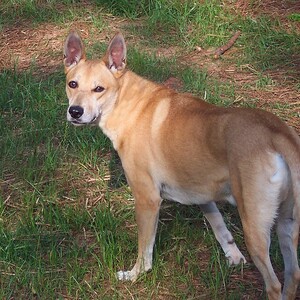
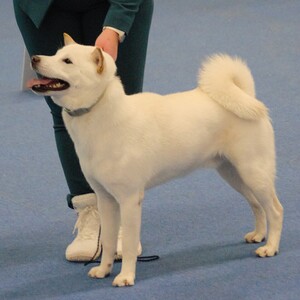
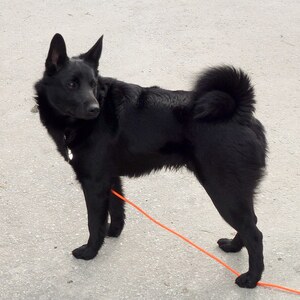
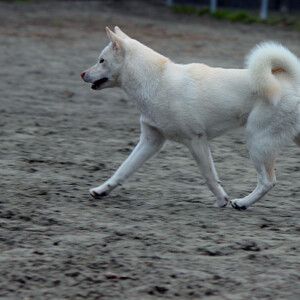
Kishu. · CJ Hammond / Wikimedia Commons, CC BY-SA 4.0. Cropped and resized.
The Kishu is a medium-sized, muscular Japanese dog with erect ears and a tail carried over the back, most often white. It took shape as a breed in the mountains of the Kishu region (Wakayama and Mie prefectures) and was used to hunt wild boar and deer. The standard describes it as hardy, noble, faithful, docile and very alert.
Quick facts
| Common name | Kishu (Kishu Ken, Kishu Inu) |
| Scientific name | Canis lupus familiaris |
| Country of origin | Japan (Wakayama and Mie) |
| Official recognition | FCI, definitively since 1 February 1982 (group 5, Asian spitz; standard no. 318); AKC, in the Foundation Stock Service since 2005 |
| Lifespan | 12–15 years, according to the AKC |
| Size (males) | 52 cm at the withers (±3 cm) |
| Size (females) | 49 cm at the withers (±3 cm) |
| Weight | 13.5–27 kg, according to the AKC |
| Coat type | Double: harsh, straight topcoat, soft and dense undercoat |
| Common colours | White, red, sesame |
| Energy level | Moderate |
| Suited to an apartment? | Not really |
| Temperament | Faithful, docile, very alert, dignified |
| Tendency to aggression | Low |
| Good with children | Average |
| Good with other animals | Poor with small animals; hunting instinct |
| Genetic predispositions | Allergies, autoimmune thyroiditis, Addison's disease |
- Primary category:Dog breeds
- Explore this animal's categories:
History and origin
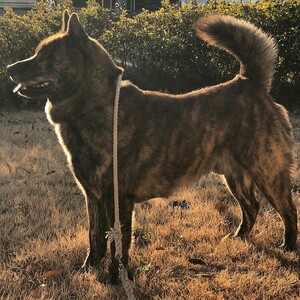
The FCI standard says the breed comes from the medium-sized dogs that lived in Japan in ancient times and took shape in the mountainous Kishu region (Wakayama and Mie prefectures). At first, the dogs often had striking colours, such as red, sesame or brindle.
From 1934 only solid colours were accepted, and spotted coats had disappeared by 1945. The breed was used to hunt wild boar and, in the past, deer. The AKC says they were the dogs of the traditional “matagi” hunters. In 1934, the breed was declared a natural monument.
How the breed developed
- Ancient times – Medium-sized dogs live in the mountains of Japan.
- 1934 – The breed is declared a natural monument; only solid colours are accepted.
- 1945 – Spotted coats disappear.
- 1 February 1982 – The FCI recognises the breed.
- 2005 – It enters the AKC Foundation Stock Service.
Breed rating
| Feature | Stars |
|---|---|
| Training and intelligence | ★★★☆☆ |
| Easy to train | ★★★☆☆ |
| Intelligence | ★★★★★ |
| Independence | ★★★★☆ |
| Stubbornness | ★★★☆☆ |
| Behaviour and temperament | ★★★★☆ |
| Affectionate with family | ★★★★★ |
| Friendly with children | ★★★☆☆ |
| Good with other dogs | ★★★☆☆ |
| Good with cats and other animals | ★★☆☆☆ |
| Loyalty | ★★★★★ |
| Tendency to be aggressive | ★★☆☆☆ |
| Tendency to bark | ★☆☆☆☆ |
| Needs and care | ★★★☆☆ |
| Shedding | ★★★☆☆ |
| Needs frequent grooming | ★☆☆☆☆ |
| Activity and lifestyle | ★★★☆☆ |
| Energy level | ★★★☆☆ |
| Daily exercise needs | ★★★★☆ |
| Suited to apartment life | ★★☆☆☆ |
| Health and longevity | ★★★☆☆ |
| Life expectancy | ★★★★★ |
| Predisposition to genetic diseases | ★★☆☆☆ |
| Working abilities and uses | ★★★☆☆ |
| Good hunting dog | ★★★★★ |
| Good companion dog | ★★★★☆ |
Indicative rating: 5 stars means the highest level. It is based on the ratings the American Kennel Club gives the breed and on the FCI standard.
Physical characteristics
The standard describes it as a medium-sized, well-balanced dog with well-developed muscles, erect ears and a curled or sickle tail. The AKC says it is a sturdy dog with compact muscles.
General appearance
The forehead is broad and the nose black (in white dogs a slight lack of pigment is accepted). The topcoat is harsh and straight, the undercoat soft and dense, and the hair is longer on the cheeks and tail.
| Feature | Kishu |
|---|---|
| Size | Medium |
| Height at the withers | males: 52 cm; females: 49 cm (±3 cm) |
| Weight | 13.5–27 kg (AKC) |
| Coat | Double, harsh |
| Ears | Erect |
| Tail | Curled or sickle-shaped |
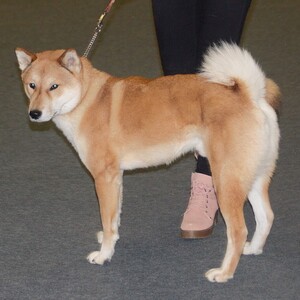
The accepted colours are white, red and sesame (a mixture of black, red and white hairs). The AKC says many Kishu dogs are white.
Training and socialisation
The standard describes it as a very hardy, noble and dignified dog, faithful, docile and very alert. Wikipedia says that, like the Shiba, it is often quiet and tracks its prey silently, without barking.
The AKC says it is easily motivated by food and by its bond with its owner, but it needs quick, upbeat training sessions. Training should never be harsh or involve punishment.
Tips for effective training
- Keep sessions short and upbeat. The AKC recommends a brisk pace.
- Do not use punishment. A Kishu trained harshly becomes stubborn.
- Use food. It is easily motivated by rewards.
- Keep it on the lead. It has a hunting instinct.
Activity needs and lifestyle
The AKC gives it the highest score for mental stimulation needs. It needs daily exercise and does very well in dog sports.
| Activity | How often | Why it matters |
|---|---|---|
| Walks | daily | Exercise and exploring |
| Search games | daily | A high need for mental stimulation |
| Dog sports | weekly | It does very well |
Tips for a balanced life
- It needs a fenced yard.
- Do not leave it unsupervised with small animals.
- Spend time with it every day.
Care and health
Coat and skin care
The double coat should be brushed once a week. During moulting periods, the undercoat sheds heavily and brushing is needed more often.
Common health problems
The AKC says it is generally healthy, with few joint problems and no known eye diseases. However, it can have a few autoimmune conditions:
| Condition | Description | Common symptoms |
|---|---|---|
| Allergies | Reactions to the environment or to food | Itching, red skin, frequent scratching |
| Autoimmune thyroiditis | The body attacks the thyroid gland | Tiredness, weight gain, coat problems |
| Addison's disease | The adrenal glands do not produce enough hormones | Weakness, vomiting, weight loss |
Other care
- Check for ticks after outings in nature.
- Trim the nails regularly.
- Go for regular check-ups.
Diet and nutrition
The AKC says it is easily motivated by food. Training treats should be subtracted from the daily ration.
Tips for a healthy diet
The table gives a starting estimate, calculated with the formula from the Merck Veterinary Manual. The first two calorie columns show the calories per day for a healthy adult dog. The last column shows what this means in dry food with 3,500–4,000 kcal per kilogram.
| Dog's weight | Calories per day (neutered) | Calories per day (not neutered) | Dry food per day (approximate) |
|---|---|---|---|
| 14 kg | 810 kcal | 910 kcal | 200–260 g |
| 20 kg | 1,060 kcal | 1,190 kcal | 260–340 g |
| 27 kg | 1,330 kcal | 1,490 kcal | 330–430 g |
- Split the food into two meals a day.
- Adjust the portion to its level of effort.
- A dog is at the right weight when you can feel its ribs under the coat without pressing hard.
Foods to avoid
Some human foods are dangerous for dogs: chocolate, coffee, grapes and raisins, onions, garlic, xylitol (a sweetener used in chewing gum), macadamia nuts and alcohol.
Reproduction and development
Physical and emotional maturity
In dogs, sexual maturity usually comes between 6 and 12 months. Most breeds become adults at around 13–15 months.
Mating and pregnancy
Pregnancy lasts about 63 days, counted from ovulation. Mating a female on her first heat is not recommended. The FCI standard requires that only healthy dogs of typical breed appearance are used for breeding.
Caring for the puppies
In dogs, a litter has 5–6 puppies on average, and the number rises with the size of the breed. Socialisation starts in the first weeks: gentle handling, everyday noises and new people.
Interesting facts
- A silent hunter. It tracks its prey quietly, without barking.
- Often white. The AKC says many Kishu dogs have a white coat.
- A natural monument. It was declared a natural monument in 1934.
- The dog of the matagi hunters. It was used by traditional mountain hunters.
- Simpler colours. Since 1934 only solid colours have been accepted.
In popular culture
Kishu Kun
The AKC says the police mascot of Wakayama Prefecture is a Kishu named Kishu Kun.
Frequently asked questions
Where does the name Kishu come from?
From the Kishu region, today Wakayama and Mie prefectures.
How big does it get?
Males measure around 52 cm and females 49 cm (±3 cm).
Does it bark a lot?
No. It is usually quiet.
How long does it live?
The AKC gives 12–15 years.