Cat fleaCtenocephalides felis — habitat, diet and reproduction
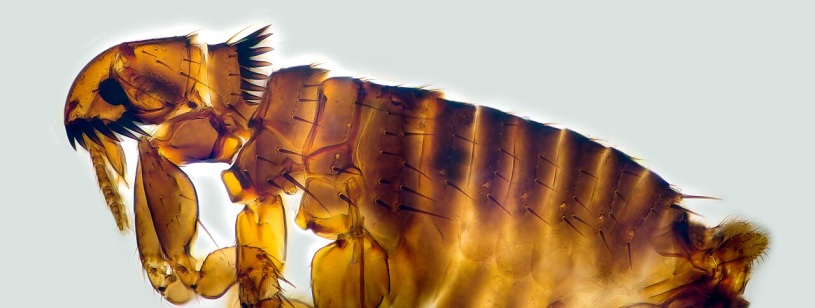
Cat flea (Ctenocephalides felis), microscopic side view. · Sam Thomas / CC BY-SA 2.0 (https://creativecommons.org/licenses/by-sa/2.0). Cropped and resized. Source: https://commons.wikimedia.org/wiki/File:Ctenocephalides_felis_subsp._felis,_Hayling_Island_(53138287149).jpg
The cat flea (Ctenocephalides felis) is a small wingless insect whose adult feeds on blood. Its name does not restrict it to cats: dogs are frequent hosts too. Larvae develop in the surrounding environment. This account focuses on one representative flea species.
Quick facts
| Common name | Cat flea |
| Scientific name | Ctenocephalides felis |
| Lifespan | Adults may live several months in favourable conditions; duration varies |
| Length | Adults approximately 1–3 mm |
| Appearance | Reddish-brown to dark, wingless and flattened sideways |
| Diet | Adults drink blood; larvae eat organic debris and adult flea faeces |
| Hosts | Cats, dogs and other mammals; humans may be bitten |
| Species situation | Worldwide distribution and veterinary importance |
| Distribution | Many regions worldwide, associated with animal hosts |
| Habitat | Adults on hosts; immature stages in bedding, carpets and other refuges |
| Family | Pulicidae |
| Reproduction | Complete metamorphosis: egg, larva, pupa and adult |
- Primary category:Insects
- Explore this animal's categories:
Interesting facts
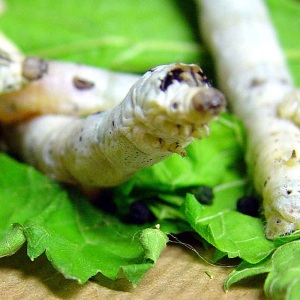
- Wormlike larvae have no legs and live off the host.
- Smooth eggs fall from fur into resting places.
- Hind legs produce jumps; fleas cannot fly.
- Developed adults may wait inside cocoons for host cues.
Records and extremes
Adults measure only 1–3 mm, yet jumps cover many body lengths. Research on fleas shows that stored elastic energy is transmitted through the legs during take-off.
Under favourable conditions, females can produce around 40–50 eggs per day. This is not a constant rate under every circumstance.
A fully developed adult can remain within its cocoon until suitable signals appear, extending persistence beyond a short, uniform life cycle.
Characteristics
The laterally flattened body helps movement between hairs. Adults have six legs, strong hind limbs and no wings, with reddish-brown to dark colouring.
Piercing mouthparts obtain blood. Distinguishing cat and dog fleas requires close examination under magnification.
Eggs are small, white and smooth. Pale larvae have elongated bodies, sparse hairs and no legs; their gut contents may show through the thin body covering.
Behaviour
New adults respond to potential hosts. Vibrations and rising carbon dioxide can signal an approaching animal, while jumping helps reach it.
Once established on a cat or dog, adults tend to remain there. Animals can acquire fleas where new adults emerge, without direct contact with another infested pet.
Larvae seek dark protected sites such as bedding, cracks and carpet fibres. Behaviour changes substantially between life stages.
Habitat and distribution
Cat fleas occur worldwide. Movement of domestic animals and contact with other mammals contribute to their spread. The common name is not an exclusive host rule.
Adults live on hosts, while eggs, larvae and cocoons develop around them. Resting places can concentrate immature stages, including suitable outdoor refuges.
Temperature and humidity influence survival. Dryness and exposure are unfavourable to larvae, but protected microhabitats can sustain development.
Diet and feeding
Both adult sexes consume blood, and females need a blood meal for egg production. Cats and dogs are common hosts, but other mammals may be bitten.
Larvae do not feed directly on animals. They eat organic material, including adult faeces containing partly digested blood that falls from fur.
This dietary shift links the adult’s life on a host to larval development in the places where that host rests.
Reproduction and life cycle
Complete metamorphosis includes egg, larva, pupa and adult. Smooth eggs fall from fur; larvae hatch, feed and grow through successive moults.
A mature larva spins a cocoon and becomes a pupa. Development produces the legged adult with specialised blood-feeding mouthparts. Debris may adhere to the cocoon.
Adults can delay emergence until a host seems near. Favourable conditions allow development within weeks, while persistent cocoons can prolong an infestation.
Name and history
Bouché described the species in 1835 as Pulex felis. It now belongs to Ctenocephalides, family Pulicidae and order Siphonaptera.
Cat fleas differ from human and rat fleas. Host preferences and epidemiological roles vary among species; they should not all be assigned the same disease risks.
Conservation and threats
Research focuses largely on effects on hosts. Bites cause itching and may trigger allergic reactions; some fleas carry pathogens or participate in other parasites’ life cycles.
Control must address multiple stages. Washing bedding and vacuuming reduce immature fleas in the environment, alongside coordinated care for animals.
A veterinarian can select appropriate products for each animal. Persistent cocoons explain later adult emergence, making follow-up and continued cleaning important.
Frequently asked questions
Can cat fleas live on dogs?
Yes. Ctenocephalides felis commonly uses both hosts.
Can fleas fly?
No. They lack wings and move by walking and jumping.
Do larvae drink blood directly from pets?
No. They live in the environment and eat debris, including adult flea faeces.
Where do the eggs go?
They fall from fur, often into the host’s resting places.
Why can fleas return after cleaning?
Protected cocoons can release adults later, so coordinated measures and follow-up are needed.
Are fleas and ticks the same kind of animal?
No. Fleas are insects and ticks are arachnids.