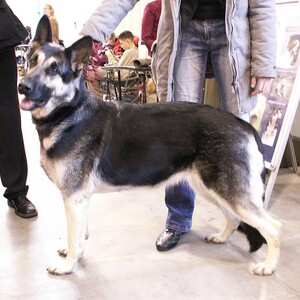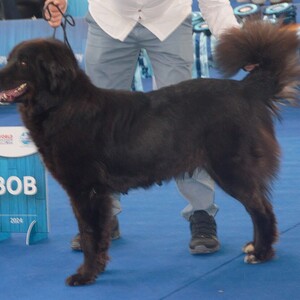
Macedonian Shepherd DogCharacteristics, history, training and care
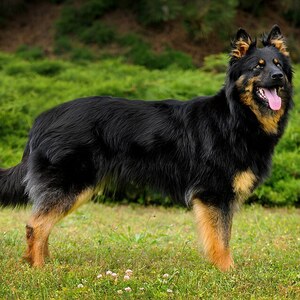
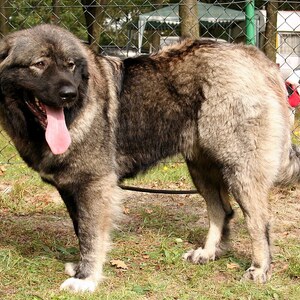
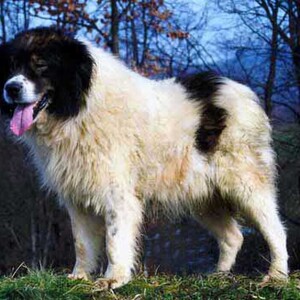
Macedonian Shepherd Dog. · Canarian / Wikimedia Commons, CC BY 4.0. Cropped and resized.
The Macedonian Shepherd Dog (Karaman) is a large guard dog from North Macedonia, black or black and tan, with a dense, harsh coat. For centuries it has guarded flocks against wolves and bears in the Balkan mountains. The standard describes it as reserved with strangers, but calm, good-natured, brave and very intelligent.
Quick facts
| Common name | Macedonian Shepherd Dog (Karaman) |
| Scientific name | Canis lupus familiaris |
| Country of origin | North Macedonia |
| Official recognition | FCI, provisionally accepted (group 2, molossoid breeds; standard no. 378) |
| Lifespan | No published data for the breed; large breeds usually live 10–12 years |
| Size (males) | 65–68 cm at the withers (±2 cm); 40–45 kg |
| Size (females) | 62–66 cm at the withers (±2 cm); 37–42 kg |
| Coat type | Dense, harsh, with a well-developed undercoat |
| Common colours | Black or black with tan markings |
| Energy level | Moderate |
| Suited to an apartment? | No |
| Temperament | Calm, brave, independent, very intelligent, loyal |
| Tendency to aggression | None, according to the standard; determined when guarding |
| Good with children | No specific data |
| Good with other animals | Good with the flock and the family's animals |
| Genetic predispositions | No breed-specific diseases are known |
- Primary category:Dog breeds
- Explore this animal's categories:
History and origin
The FCI standard says it is a native breed, whose origin is linked to the settlements of livestock breeders in Macedonia and their migrations. It has been bred for centuries as a flock guardian, and the shepherds held these dogs, considered mythical, in true veneration.
The dogs appear in folk songs, and Karaman motifs can be found on medieval frescoes and iconostases. The most important is the fresco in the Church of St George in Kurbinovo, near Lake Prespa, painted in 1191. Wikipedia says the name comes from the Turkish “karaman”, meaning “black”.
How the breed developed
- 1191 – The Karaman appears on the fresco of the church in Kurbinovo.
- Centuries – It guards the flocks during transhumance between summer and winter pastures.
- Today – The FCI provisionally accepts the breed.
Breed rating
| Feature | Stars |
|---|---|
| Training and intelligence | ★★★☆☆ |
| Easy to train | ★★★☆☆ |
| Intelligence | ★★★★★ |
| Independence | ★★★★☆ |
| Stubbornness | ★★★☆☆ |
| Behaviour and temperament | ★★★★☆ |
| Affectionate with family | ★★★★★ |
| Friendly with children | ★★★☆☆ |
| Good with other dogs | ★★★☆☆ |
| Good with cats and other animals | ★★★☆☆ |
| Loyalty | ★★★★★ |
| Tendency to be aggressive | ★★☆☆☆ |
| Tendency to bark | ★★★☆☆ |
| Needs and care | ★★★★☆ |
| Shedding | ★★★☆☆ |
| Needs frequent grooming | ★★☆☆☆ |
| Activity and lifestyle | ★★★☆☆ |
| Energy level | ★★★☆☆ |
| Daily exercise needs | ★★★★☆ |
| Suited to apartment life | ★☆☆☆☆ |
| Health and longevity | ★★★☆☆ |
| Life expectancy | ★★★☆☆ |
| Predisposition to genetic diseases | ★★☆☆☆ |
| Working abilities and uses | ★★★★★ |
| Good guard dog | ★★★★★ |
| Good companion dog | ★★★☆☆ |
Indicative rating: 5 stars means the highest level. The breed has no AKC profile, so the rating is based on the FCI standard.
Physical characteristics
The standard describes it as a dog with a compact, powerful body, used for the active defence of sheep and property, able to withstand both very low and very high temperatures.
General appearance
The coat is dense and harsh, with a well-developed undercoat; it is short on the head and longest on the withers, where it averages 9.5 cm. The length of the hair varies with the climate and is greater on the neck, withers and thighs.
| Feature | Macedonian Shepherd Dog |
|---|---|
| Size | Large |
| Height at the withers | males: 65–68 cm; females: 62–66 cm |
| Weight | males: 40–45 kg; females: 37–42 kg |
| Coat | Dense, harsh, with an undercoat |
| Colour | Black |
| Climate | Withstands cold and heat |
The colour is black or black with tan markings. Wikipedia says the name Karaman comes from its black colour.
Training and socialisation
The standard says it is reserved with strangers, but determined and brave when guarding the flock and property. It is calm, good-natured, cautious as a guard, stable and fearless, without aggression, independent and very intelligent.
It is proud, entirely trustworthy, affectionate and loyal to its owner. Like any guard dog, it needs early socialisation and a calm, consistent owner.
Tips for effective training
- Socialise it as a puppy. It is reserved with strangers.
- Be calm and consistent. It is independent.
- Give it a territory to guard. Guarding is in its nature.
- Earn its trust. It is very loyal to its owner.
Activity needs and lifestyle
As a mountain flock dog, it needs space, daily walks and a large, fenced yard.
| Activity | How often | Why it matters |
|---|---|---|
| Long walks | daily | Exercise |
| Time in a large, fenced yard | daily | It guards its territory |
| Hiking | occasionally | A mountain dog |
Tips for a balanced life
- The fence must be solid.
- It suits experienced owners.
- It needs space.
Care and health
Coat and skin care
The dense coat with its abundant undercoat should be brushed weekly, and several times a week during moulting periods.
Common health problems
No health studies have been published for the breed and no specific diseases are known. As with any large dog, these are worth watching for:
| Condition | Description | Common symptoms |
|---|---|---|
| Hip dysplasia | The hip joint forms incorrectly and, over time, arthritis develops | Limping, difficulty getting up or jumping, hip pain |
| Gastric dilatation-volvulus (bloat) | The stomach fills with gas and may twist; this is a veterinary emergency | Swollen belly, trying to vomit without success, drooling, restlessness |
Other care
- Check the ears regularly.
- Check for ticks after outings in nature.
- Trim the nails if they do not wear down on their own.
Diet and nutrition
A large dog needs food suited to large breeds, especially while it is growing.
Tips for a healthy diet
The table gives a starting estimate, calculated with the formula from the Merck Veterinary Manual. The first two calorie columns show the calories per day for a healthy adult dog. The last column shows what this means in dry food with 3,500–4,000 kcal per kilogram.
| Dog's weight | Calories per day (neutered) | Calories per day (not neutered) | Dry food per day (approximate) |
|---|---|---|---|
| 37 kg | 1,680 kcal | 1,890 kcal | 420–540 g |
| 40 kg | 1,780 kcal | 2,000 kcal | 440–570 g |
| 45 kg | 1,950 kcal | 2,190 kcal | 490–630 g |
- Split the food into two meals a day to reduce the risk of bloat.
- Do not let it run right after a meal.
- A dog is at the right weight when you can feel its ribs under the coat without pressing hard.
Foods to avoid
Some human foods are dangerous for dogs: chocolate, coffee, grapes and raisins, onions, garlic, xylitol (a sweetener used in chewing gum), macadamia nuts and alcohol.
Reproduction and development
Physical and emotional maturity
In dogs, sexual maturity usually comes between 6 and 12 months, but in large breeds it can be delayed until about two years. The body also reaches its adult form later than in small breeds.
Mating and pregnancy
Pregnancy lasts about 63 days, counted from ovulation. Mating a female on her first heat is not recommended. The FCI standard requires that only healthy dogs of typical breed appearance are used for breeding.
Caring for the puppies
In large breeds, a litter has around 7 puppies on average. Socialisation starts in the first weeks: gentle handling, everyday noises and new people.
Interesting facts
- On a fresco from 1191. It appears on the fresco of the Church of St George in Kurbinovo.
- The name means “black”. Wikipedia says it comes from the Turkish “karaman”.
- A mythical dog. The shepherds venerated these dogs.
- On the club logo. The Kurbinovo fresco is part of the breed club's logo.
- Suited to any climate. It withstands very low and very high temperatures.
In popular culture
The Kurbinovo fresco
The FCI standard says the most important depiction of the Karaman is the fresco in the Church of St George in Kurbinovo, painted in 1191. The dog also appears in Macedonian folk songs.
Frequently asked questions
What does “Karaman” mean?
Wikipedia says it comes from the Turkish “karaman”, meaning “black”.
How big does it get?
Males measure 65–68 cm and weigh 40–45 kg; females measure 62–66 cm and weigh 37–42 kg.
Is it aggressive?
The standard says it has no aggression at all, but it is determined when guarding.
Is it recognised by the FCI?
Yes, it is provisionally accepted.