German SpanielCharacteristics, history, training and care
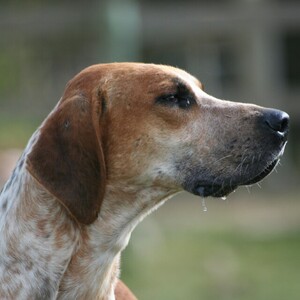
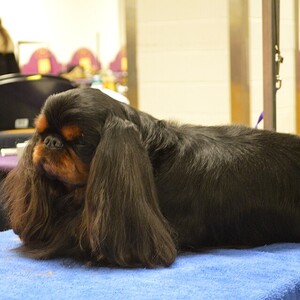
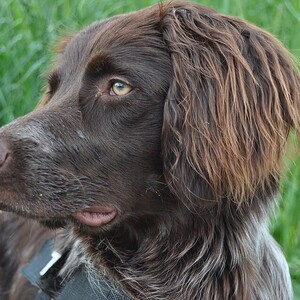
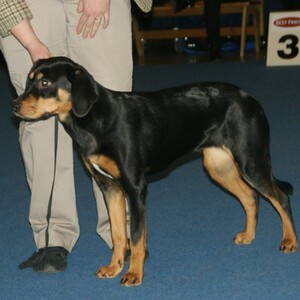
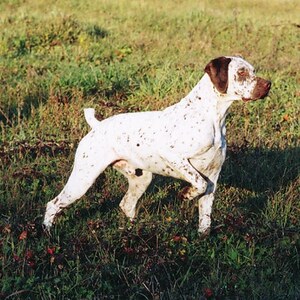
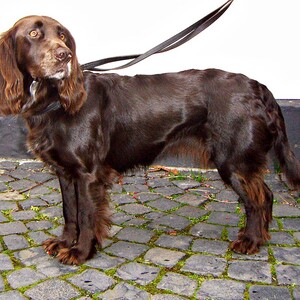
German Spaniel. · Steffen Heinz / Wikimedia Commons, CC BY-SA 2.5. Cropped and resized.
The Wachtelhund (German Spaniel) is a long-haired, very muscular German hunting dog with a noble head and strong bones. It flushes game from cover, tracks wounded game and retrieves, including from water. It is a lively, passionate hunter, friendly, self-confident, very docile and adaptable.
Quick facts
| Common name | Wachtelhund (Deutscher Wachtelhund, German Spaniel) |
| Scientific name | Canis lupus familiaris |
| Country of origin | Germany |
| Official recognition | FCI, definitively since 3 December 1954 (group 8, flushing dogs, with working trial; standard no. 104); also recognised by the AKC |
| Lifespan | 12–14 years, according to the AKC |
| Size (males) | 48–54 cm at the withers; 18–25 kg |
| Size (females) | 45–52 cm at the withers; slightly lighter |
| Coat type | Strong, close-lying, mostly wavy, sometimes curly or long and straight, with a thick undercoat |
| Common colours | Brown (sometimes with white) or brown roan |
| Energy level | Moderate to high |
| Suited to an apartment? | Not really |
| Temperament | Lively, passionate, friendly, self-confident, docile, adaptable |
| Tendency to aggression | Low; the standard does not accept aggression |
| Good with children | Very good |
| Good with other animals | Average; strong hunting instinct |
| Genetic predispositions | No breed-specific diseases are known |
- Primary category:Dog breeds
- Explore this animal's categories:
History and origin
The FCI standard says that, according to hunting literature, dogs similar to today's Wachtelhund have existed for centuries and were used to flush game from cover. Breeding based on a stud book began at the end of the 19th century, and the breed's ancestor was “Lord Augusta”, from Staufenberg in Upper Bavaria.
Wikipedia says Frederick Roberth created the modern breed around 1890, starting mainly from the old Stöberer, mentioned as early as 1719. After the revolutions of 1848, ordinary people gained the right to hunt and needed a versatile dog. The breed was recognised in 1903, and in 1910 the club chose 11 dogs, from which all of today's Wachtelhunds descend.
How the breed developed
- 1719 – The Stöberer, the breed's ancestor, is mentioned in literature.
- After 1848 – Ordinary people can hunt and need a versatile dog.
- Around 1890 – Frederick Roberth creates the modern breed.
- 1903 – The breed is recognised in Germany.
- 1910 – The club chooses 11 dogs as the foundation of the breed.
- 3 December 1954 – The FCI recognises the breed.
Breed rating
| Feature | Stars |
|---|---|
| Training and intelligence | ★★★★☆ |
| Easy to train | ★★★★☆ |
| Intelligence | ★★★★☆ |
| Independence | ★★★★☆ |
| Stubbornness | ★★★☆☆ |
| Behaviour and temperament | ★★★★☆ |
| Affectionate with family | ★★★★☆ |
| Friendly with children | ★★★★★ |
| Good with other dogs | ★★★☆☆ |
| Good with cats and other animals | ★★☆☆☆ |
| Loyalty | ★★★★★ |
| Tendency to be aggressive | ★☆☆☆☆ |
| Tendency to bark | ★★★☆☆ |
| Needs and care | ★★★★☆ |
| Shedding | ★★☆☆☆ |
| Needs frequent grooming | ★★☆☆☆ |
| Activity and lifestyle | ★★★★☆ |
| Energy level | ★★★☆☆ |
| Daily exercise needs | ★★★★☆ |
| Suited to apartment life | ★★☆☆☆ |
| Health and longevity | ★★★★☆ |
| Life expectancy | ★★★★☆ |
| Predisposition to genetic diseases | ★★☆☆☆ |
| Working abilities and uses | ★★★★☆ |
| Good hunting dog | ★★★★★ |
| Good companion dog | ★★★★☆ |
Indicative rating: 5 stars means the highest level. It is based on the ratings the American Kennel Club gives the breed and on the FCI standard.
Physical characteristics
The AKC describes it as a medium-sized, long-haired, very muscular hunting dog, with a noble head and strong bones.
General appearance
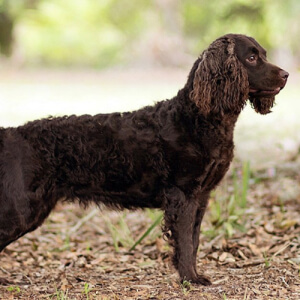
The coat is strong, close-lying, usually wavy, sometimes curly (astrakhan) or straight and long, with a thick undercoat. The ears are covered with curls or dense wavy hair. The backs of the legs and the tail have rich feathering, and there is often a frill on the neck.
| Feature | German Spaniel |
|---|---|
| Size | Medium |
| Height at the withers | males: 48–54 cm; females: 45–52 cm |
| Weight | 18–25 kg, depending on size |
| Coat | Wavy or curly, with a thick undercoat |
| Ears | Covered with curls |
| Tail | With rich feathering |
The standard says that at first only brown dogs (sometimes with white) and white and brown dogs were bred, sometimes with small tan markings. The brown roan colour appeared through the bitch “Baby auf der Schanze”. Rudolf Friess introduced separate breeding of the brown and the roan dogs.
Training and socialisation
The standard describes it as a lively, passionate hunter, friendly, self-confident, very docile and adaptable, neither nervous nor aggressive. It has a great desire to find game, a keen nose, follows a trail steadily, gives tongue on the trail, and loves to retrieve and to work in water.
The AKC says its sense of smell is comparable to a Bloodhound's and it can track wounded game 40 hours old. In Germany it is kept almost exclusively by hunters, gamekeepers and professional hunters.
Tips for effective training
- Give it work in the field. It is bred for hunting.
- Work with its nose. It has an exceptional sense of smell.
- Let it swim. It loves water.
- Practise the recall. It works independently on a trail.
Activity needs and lifestyle
The AKC recommends play in a fenced yard, walks several times a day and activities such as swimming, hiking or retrieving. Indoors, it enjoys hide-and-seek and learning new tricks.
| Activity | How often | Why it matters |
|---|---|---|
| Walks | several times a day | Daily exercise |
| Swimming and retrieving from water | weekly | It loves water |
| Tracking | several times a week | An exceptional nose |
Tips for a balanced life
- It is best suited to hunters.
- Check its ears and coat after every outing.
- The yard must be well fenced.
Care and health
Coat and skin care
The AKC says that, besides weekly grooming, an occasional bath keeps it clean. The nails grow quickly and should be trimmed regularly, and the ears should be checked for wax and dirt.
Common health problems
There are no known hereditary diseases specific to the breed. As with any active spaniel, it is worth watching for:
| Condition | Description | Common symptoms |
|---|---|---|
| Hip dysplasia | The hip joint forms incorrectly and, over time, arthritis develops | Limping, difficulty getting up or jumping, hip pain |
| Ear infections | Infections of the hair-covered ears | Scratching, unpleasant smell, tilted head |
Other care
- Check the ears after swimming.
- Look for ticks and burrs after hunting.
- Trim the nails regularly.
Diet and nutrition
The AKC recommends food suited to medium-sized breeds and to each life stage, chosen with your vet or breeder.
Tips for a healthy diet
The table gives a starting estimate, calculated with the formula from the Merck Veterinary Manual. The first two calorie columns show the calories per day for a healthy adult dog. The last column shows what this means in dry food with 3,500–4,000 kcal per kilogram.
| Dog's weight | Calories per day (neutered) | Calories per day (not neutered) | Dry food per day (approximate) |
|---|---|---|---|
| 18 kg | 980 kcal | 1,100 kcal | 240–310 g |
| 21 kg | 1,100 kcal | 1,240 kcal | 280–350 g |
| 25 kg | 1,250 kcal | 1,410 kcal | 310–400 g |
- Give it its food in two meals a day.
- Increase the portion during the hunting season.
- A dog is at the right weight when you can feel its ribs under the coat without pressing hard.
Foods to avoid
Some human foods are dangerous for dogs: chocolate, coffee, grapes and raisins, onions, garlic, xylitol (a sweetener used in chewing gum), macadamia nuts and alcohol.
Reproduction and development
Physical and emotional maturity
In dogs, sexual maturity usually comes between 6 and 12 months. Most breeds become adults at around 13–15 months.
Mating and pregnancy
Pregnancy lasts about 63 days, counted from ovulation. Mating a female on her first heat is not recommended. The FCI standard requires that only healthy dogs of typical breed appearance are used for breeding.
Caring for the puppies
In dogs, a litter has 5–6 puppies on average, and the number rises with the size of the breed. Socialisation starts in the first weeks: gentle handling, everyday noises and new people.
Interesting facts
- The “quail dog”. “Wachtelhund” means “quail dog” in German.
- A Bloodhound's nose. The AKC says it can track wounded game 40 hours old.
- Eleven ancestors. All of today's Wachtelhunds descend from 11 dogs chosen in 1910.
- Only for hunters. In Germany it is kept almost exclusively by hunters.
- A relative of the Drentse. It is related to the Small Münsterländer and the Drentse Patrijshond.
Frequently asked questions
What does “Wachtelhund” mean?
It means “quail dog” in German.
How big does it get?
Males measure 48–54 cm and females 45–52 cm; they weigh between 18 and 25 kg.
Is it a family dog?
It is friendly and very good with children, but in Germany it is kept almost exclusively by hunters.
How long does it live?
The AKC gives 12–14 years.