Thai Bangkaew DogCharacteristics, history, training and care
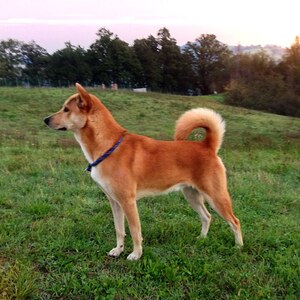
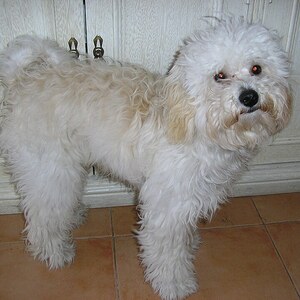
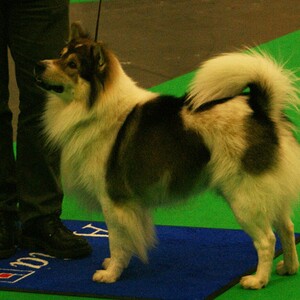
Thai Bangkaew Dog. · Canarian / Wikimedia Commons, CC BY-SA 4.0. Cropped and resized.
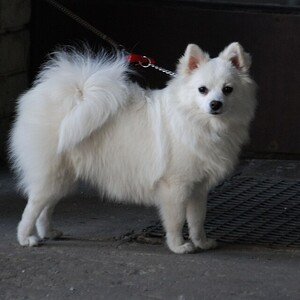
The Thai Bangkaew Dog is a medium-sized Spitz-type dog from Thailand, white with patches, with a double coat that forms a rich ruff and a bushy tail. The FCI standard describes it as alert, intelligent, loyal, watchful and obedient, easy to train but somewhat aloof with strangers. It is considered a treasure of Phitsanulok province.
Quick facts
| Common name | Thai Bangkaew Dog |
| Scientific name | Canis lupus familiaris |
| Country of origin | Thailand |
| Official recognition | FCI, definitively since 21 June 2022 (group 5, Asian Spitz; standard no. 358); in the AKC Foundation Stock Service since 2023 |
| Lifespan | 14–17 years, according to the AKC |
| Size (males) | 46–55 cm at the withers; 18–20 kg according to the AKC |
| Size (females) | 41–50 cm at the withers; 16–18 kg according to the AKC |
| Coat type | Double: straight, harsh topcoat, soft, dense undercoat, with a ruff |
| Common colours | White with lemon, red, fawn, tan, grey or black patches |
| Energy level | Medium |
| Suited to an apartment? | Not really; the AKC gives it 1 out of 5 for adaptability |
| Temperament | Alert, intelligent, loyal, watchful, obedient |
| Tendency to aggression | Moderate; aloof with strangers |
| Good with children | Moderate |
| Good with other animals | Moderate; prey drive |
| Genetic predispositions | Early-onset eye disease (PRA); hip dysplasia, rarely |
- Primary category:Dog breeds
- Explore this animal's categories:
History and origin
The FCI standard says the Bangkaew is an old breed from the village of Bangkaew, in the Thanang-ngam area, Bang Rakam district, Phitsanulok province. Its ancestors are said to come from a cross between a local black-and-white bitch, owned by a Buddhist abbot, and a wild dog that is now extinct. From 1957, selection led to today's dogs.
The AKC says that, according to a local story, the first bitch mated with a jackal, and that the breed almost disappeared but was saved in 1983 by Dr Nisit Tangtrakarnpong through a conservation programme. The standard says it is regarded as a precious heritage of Phitsanulok province and is now bred throughout Thailand.
How the breed developed
- 1957 – Selection of the breed begins.
- 1983 – Dr Nisit Tangtrakarnpong's rescue programme.
- 21 June 2022 – The FCI recognises the breed.
- July 2023 – The AKC enters it in the Foundation Stock Service.
Breed rating
| Feature | Stars |
|---|---|
| Training and intelligence | ★☆☆☆☆ |
| Easy to train | ★★★★★ |
| Intelligence | ★★★☆☆ |
| Independence | ★★★☆☆ |
| Stubbornness | ★★★☆☆ |
| Behaviour and temperament | ★★★☆☆ |
| Affectionate with family | ★★★☆☆ |
| Friendly with children | ★★★☆☆ |
| Good with other dogs | ★★★★★ |
| Good with cats and other animals | ★☆☆☆☆ |
| Loyalty | ★★★☆☆ |
| Tendency to be aggressive | ★☆☆☆☆ |
| Tendency to bark | ★★★☆☆ |
| Needs and care | ★★★☆☆ |
| Shedding | ★★★☆☆ |
| Needs frequent grooming | ★★★☆☆ |
| Activity and lifestyle | ★★★☆☆ |
| Energy level | ★★★☆☆ |
| Daily exercise needs | ★★★☆☆ |
| Suited to apartment life | ★★★★★ |
| Health and longevity | ★★★☆☆ |
| Life expectancy | ★★★★☆ |
| Predisposition to genetic diseases | ★★☆☆☆ |
| Working abilities and uses | ★★★☆☆ |
| Good guard dog | ★★★☆☆ |
| Good companion dog | ★★★☆☆ |
Indicative rating: 5 stars means the highest level. It is based on the ratings the American Kennel Club gives the breed and on the FCI standard.
Physical characteristics
The standard describes it as a square, well-proportioned dog, never low-set, with a fairly broad, deep chest. The coat forms a ruff around the neck and shoulders and a plumed tail, both more pronounced in males.
General appearance
The coat is double: a straight, harsh topcoat and a soft, dense undercoat, moderately long on the body and longer around the neck and shoulders. There is feathering on the back of the legs. The coat must not be so long that it hides the shape of the body.
| Feature | Thai Bangkaew Dog |
|---|---|
| Size | Medium |
| Height at the withers | males: 46–55 cm; females: 41–50 cm |
| Weight | 16–20 kg (AKC) |
| Coat | Double, with a ruff |
| Colour | White with patches |
| Type | Spitz |
The colour is white with well-defined patches, usually lemon, red, fawn, tan or grey, sometimes with black-tipped hairs, up to a tricolour look; white with black patches is also accepted. Symmetrical head markings covering the eyes and ears are preferred.
Training and socialisation
The standard describes it as alert, intelligent, loyal, watchful and obedient, easy to train but somewhat aloof with strangers. The AKC says it likes working with its owner but does best with gentleness and rewards.
The AKC recommends enthusiastic, engaging lessons without much repetition, or it loses interest. Training and socialisation should start early.
Tips for effective training
- Do not repeat too much. It loses interest.
- Use rewards. It responds to gentleness.
- Socialise it early. It is aloof with strangers.
- Keep it on the lead. It has a prey drive.
Activity needs and lifestyle
The AKC says it needs moderate exercise: regular walks, hikes and supervised off-lead time in a fenced area. Because of its prey drive and independent nature, it should be kept on the lead or in fenced spaces.
| Activity | How often | Why it matters |
|---|---|---|
| Walks | daily | Fitness |
| Hiking | weekly | Stamina |
| Fast CAT or scent work | occasionally | A busy mind |
Tips for a balanced life
- Keep it on the lead.
- Do not use deshedding tools such as the Furminator.
- Socialise it a lot.
Care and health
Coat and skin care
The AKC recommends weekly brushing with a rake comb and a slicker brush, a bath once a month or as needed, and nail trimming every two to four weeks. Deshedding tools such as the Furminator should not be used, as they damage the topcoat.
Common health problems
The AKC says the breed seems very healthy and long-lived, and the main concern at present is early-onset eye disease. Watch for:
| Condition | Description | Common symptoms |
|---|---|---|
| Progressive retinal atrophy | Early-onset eye disease | Poor night vision, then blindness |
| Hip dysplasia | The hip joint forms incorrectly and, over time, arthritis develops | Limping, difficulty getting up or jumping, hip pain |
Other care
- Have its eyes checked by a vet.
- Wipe the ears when brushing.
- Trim the nails regularly.
Diet and nutrition
Good-quality food suited to its age and activity is enough for a medium-sized dog.
Tips for a healthy diet
The table gives a starting estimate, calculated with the formula from the Merck Veterinary Manual. The first two calorie columns show the calories per day for a healthy adult dog. The last column shows what this means in dry food with 3,500–4,000 kcal per kilogram.
| Dog's weight | Calories per day (neutered) | Calories per day (not neutered) | Dry food per day (approximate) |
|---|---|---|---|
| 16 kg | 900 kcal | 1,010 kcal | 220–290 g |
| 18 kg | 980 kcal | 1,100 kcal | 240–310 g |
| 20 kg | 1,060 kcal | 1,190 kcal | 260–340 g |
- Treats count towards the daily portion.
- Split the food into two meals a day.
- A dog is at the right weight when you can feel its ribs under the coat without pressing hard.
Foods to avoid
Some human foods are dangerous for dogs: chocolate, coffee, grapes and raisins, onions, garlic, xylitol (a sweetener used in chewing gum), macadamia nuts and alcohol.
Reproduction and development
Physical and emotional maturity
In dogs, sexual maturity usually comes between 6 and 12 months. Most breeds become adults at around 13–15 months.
Mating and pregnancy
Pregnancy lasts about 63 days, counted from ovulation. Mating a female on her first heat is not recommended. The FCI standard requires that only healthy dogs of typical breed appearance are used for breeding.
Caring for the puppies
In dogs, a litter has 5–6 puppies on average, and the number rises with the size of the breed. Socialisation starts in the first weeks: gentle handling, everyday noises and new people.
Interesting facts
- The abbot's dog. The first bitch belonged to a Buddhist abbot.
- A jackal in the family? One story says the father of the first generation was a jackal.
- Saved in 1983. Through a conservation programme.
- The province's treasure. It is the precious heritage of Phitsanulok province.
- Long-lived. The AKC gives 14–17 years.
Frequently asked questions
Where does it come from?
From the village of Bangkaew, Phitsanulok province, Thailand.
Is it easy to train?
Yes, if the lessons are short and fun.
Is it friendly with strangers?
Not really; it is aloof.
How long does it live?
The AKC gives 14–17 years.