HamiltonstövareCharacteristics, history, training and care
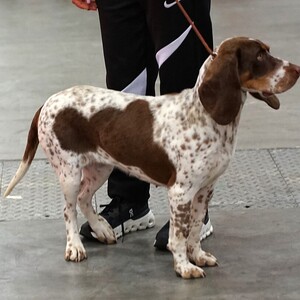
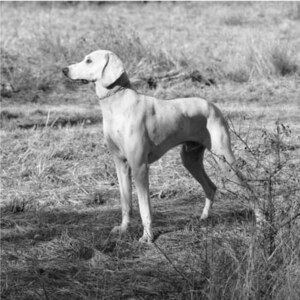
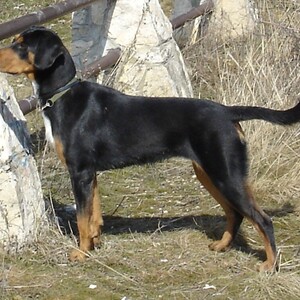
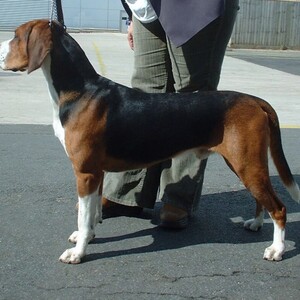
Hamiltonstövare. · sannse / Wikimedia Commons, CC BY-SA 3.0. Cropped and resized.
The Hamiltonstövare is a tricolour Swedish hound, elegant and powerful, bred for hunting hares and foxes. It is named after Count Adolf Patrik Hamilton, the founder of the Swedish Kennel Club, whose dogs Pang and Stella are at the origin of the breed. It is friendly, even-tempered and very attached to its people.
Quick facts
| Common name | Hamiltonstövare (Hamilton Hound) |
| Scientific name | Canis lupus familiaris |
| Country of origin | Sweden |
| Official recognition | FCI, definitively since 6 January 1955 (group 6, medium-sized scenthounds, with working trial; standard no. 132) |
| Lifespan | 14–17 years, according to the AKC |
| Size (males) | ideally 57 cm at the withers (53–61 cm) |
| Size (females) | ideally 53 cm at the withers (49–57 cm) |
| Weight | about 23–27 kg (Wikipedia) |
| Coat type | Harsh, not too short, very close-lying |
| Common colours | Tricolour: black mantle, tan and white |
| Energy level | High |
| Suited to an apartment? | Can adapt, with plenty of exercise |
| Temperament | Friendly, even-tempered, very attached to people |
| Tendency to aggression | Low |
| Good with children | Very good |
| Good with other animals | Good with dogs; strong prey drive |
| Genetic predispositions | Rarely hip dysplasia and epilepsy; sensitive to heat |
- Primary category:Dog breeds
- Explore this animal's categories:
History and origin
The FCI standard says hounds have been known in Sweden since the 16th century. Until 1789, hunting with hounds was a privilege of royalty and the nobility; only at the end of the 18th century were peasants given the right to hunt. The breed is believed to come from hounds from southern Germany and Switzerland, the Foxhound and the Harrier.
At the first dog show in Sweden, in 1886, 189 hounds were shown, among them Pang and Stella, the dogs of Count Adolf Patrik Hamilton, considered the origin of the breed. The breed was at first called the “Swedish Hound” and was given the name Hamiltonstövare in 1921, in honour of the count, the founder of the Swedish Kennel Club.
How the breed developed
- 16th century – Hounds are known in Sweden.
- 1789 – Hunting with hounds is no longer a privilege of the nobility alone.
- 1886 – Count Hamilton's Pang and Stella appear at the first Swedish dog show.
- 1921 – The breed is given the name Hamiltonstövare.
- 6 January 1955 – The FCI recognises the breed.
- 22 August 2017 – The current FCI standard is published.
Breed rating
| Feature | Stars |
|---|---|
| Training and intelligence | ★★★★☆ |
| Easy to train | ★★★★☆ |
| Intelligence | ★★★★☆ |
| Independence | ★★★☆☆ |
| Stubbornness | ★★★☆☆ |
| Behaviour and temperament | ★★★★☆ |
| Affectionate with family | ★★★★★ |
| Friendly with children | ★★★★★ |
| Good with other dogs | ★★★☆☆ |
| Good with cats and other animals | ★☆☆☆☆ |
| Loyalty | ★★★★★ |
| Tendency to be aggressive | ★☆☆☆☆ |
| Tendency to bark | ★★★☆☆ |
| Needs and care | ★★★★☆ |
| Shedding | ★★★☆☆ |
| Needs frequent grooming | ★★☆☆☆ |
| Activity and lifestyle | ★★★★☆ |
| Energy level | ★★★★☆ |
| Daily exercise needs | ★★★★☆ |
| Suited to apartment life | ★★★☆☆ |
| Health and longevity | ★★★★☆ |
| Life expectancy | ★★★★★ |
| Predisposition to genetic diseases | ★★☆☆☆ |
| Working abilities and uses | ★★★★☆ |
| Good hunting dog | ★★★★★ |
| Good companion dog | ★★★★★ |
Indicative rating: 5 stars means the highest level. It is based on the ratings the American Kennel Club gives the breed and on the FCI standard.
Physical characteristics
The standard describes it as a rectangular, well-proportioned dog that gives an impression of great strength and stamina, but is never heavy. The head is fairly long, with a black nose.
General appearance
In adults, the black forms a mantle that continues along the upper side of the neck and tail. The head, ears and legs are tan, and white appears on the muzzle, chest, neck, legs and tail tip. Wikipedia says its striking appearance also makes it a handsome show dog.
| Feature | Hamiltonstövare |
|---|---|
| Size | Large |
| Height at the withers | males: 53–61 cm; females: 49–57 cm |
| Weight | about 23–27 kg |
| Coat | Harsh, close-lying |
| Colour | Tricolour |
| Build | Powerful, but not heavy |
The Hamiltonstövare is tricolour: a black mantle on the back and on the upper side of the neck and tail; tan on the head, ears, legs, sides of the neck, shoulders and underside; white on the muzzle, chest, neck, legs and tail tip.
Training and socialisation
The standard describes it as friendly and even-tempered. The AKC says it is very perceptive and adores its people; in the United States, since the 1990s, it has also been used as a service dog, especially for medical and psychiatric alert work.
Like any scenthound, it follows its nose and is slow to come back, so a lead and a fence are a must. The AKC says that, unlike most hounds, it is very people-oriented.
Tips for effective training
- Keep it on the lead. The AKC says it follows its nose and is slow to come back.
- Be careful around rodents. It has a strong prey drive.
- Keep it out of the heat. The AKC says it cannot tolerate temperatures above 27 °C for long.
- Do not overwork it as a puppy. Its joints mature late.
Activity needs and lifestyle
The AKC says it is an active breed that knows how to switch off: today it warms the sofa, tomorrow it goes on a 16 km hike. Every day it needs at least 20 minutes of free running outdoors, in safety, and something to stimulate its mind.
| Activity | How often | Why it matters |
|---|---|---|
| Free running in a fenced area | daily, at least 20 minutes | The AKC recommendation |
| Hikes | weekly | Great stamina |
| Scent games | daily | Mental activity |
Tips for a balanced life
- It is built for cold weather.
- The fence must be solid.
- It suits families with children very well.
Care and health
Coat and skin care
The AKC says it needs very little grooming: it sheds little, in spring and autumn, does not drool and rarely smells doggy. A bath once a month and care of the nails and teeth are enough.
Common health problems
The AKC says the breed is very healthy and rarely has hereditary diseases. Rarely, the following may occur:
| Condition | Description | Common symptoms |
|---|---|---|
| Hip dysplasia | The hip joint forms incorrectly and, over time, arthritis develops | Limping, difficulty getting up or jumping, hip pain |
| Epilepsy | Repeated neurological seizures; rare in this breed | Trembling, convulsions, loss of consciousness |
Other care
- Check the ears after every outing.
- Brush its teeth regularly.
- Trim the nails regularly.
Diet and nutrition
The AKC says Hamiltons do not tolerate certain grains well and recommends a grain-free diet, decided with the vet or the breeder.
Tips for a healthy diet
The table gives a starting estimate, calculated with the formula from the Merck Veterinary Manual. The first two calorie columns show the calories per day for a healthy adult dog. The last column shows what this means in dry food with 3,500–4,000 kcal per kilogram.
| Dog's weight | Calories per day (neutered) | Calories per day (not neutered) | Dry food per day (approximate) |
|---|---|---|---|
| 23 kg | 1,180 kcal | 1,320 kcal | 300–380 g |
| 25 kg | 1,250 kcal | 1,410 kcal | 310–400 g |
| 27 kg | 1,330 kcal | 1,490 kcal | 330–430 g |
- Give it its food in two meals a day.
- Training treats count towards the daily portion.
- A dog is at the right weight when you can feel its ribs without pressing hard.
Foods to avoid
Some human foods are dangerous for dogs: chocolate, coffee, grapes and raisins, onions, garlic, xylitol (a sweetener used in chewing gum), macadamia nuts and alcohol.
Reproduction and development
Physical and emotional maturity
In dogs, sexual maturity usually comes between 6 and 12 months, but in large breeds it can be delayed until about two years. The body also reaches its adult form later than in small breeds.
Mating and pregnancy
Pregnancy lasts about 63 days, counted from ovulation. Mating a female on her first heat is not recommended. The FCI standard requires that only healthy dogs of typical breed appearance are used for breeding.
Caring for the puppies
In large breeds, a litter has around 7 puppies on average. Socialisation starts in the first weeks: gentle handling, everyday noises and new people.
Interesting facts
- Pang and Stella. Count Hamilton's two dogs are at the origin of the breed.
- Named after a count. Count Hamilton founded the Swedish Kennel Club.
- A service dog. In the United States it does medical and psychiatric alert work.
- No doggy smell. The AKC says it rarely smells doggy and does not drool.
- Long-lived. The AKC gives a life expectancy of 14–17 years.
Frequently asked questions
Where does the name Hamiltonstövare come from?
From Count Adolf Patrik Hamilton, the founder of the Swedish Kennel Club.
How big does it get?
Males ideally measure 57 cm and females 53 cm; they weigh about 23–27 kg.
Is it good with children?
Yes, the AKC gives it the top score for children.
How long does it live?
The AKC gives 14–17 years.