American Eskimo DogCharacteristics, history, training and care
The American Eskimo Dog is an intelligent, energetic and affectionate dog, known for its thick white coat and alert expression. Although its name suggests a link with the Arctic, the breed was developed in the United States of America from the German Spitz. It comes in three sizes and is a lively family companion and a watchful little guardian.
Quick facts
| Common name | American Eskimo Dog |
| Scientific name | Canis lupus familiaris |
| Country of origin | United States of America |
| Official Recognition | Recognized by UKC, AKC |
| Typical lifespan | About 13-15 years |
| Dimensions (Toy) | About 23-30 cm / 3-4.5 kg |
| Size (Miniature) | About 30-38 cm / 4.5-9 kg |
| Dimensions (Standard) | About 38-48 cm / 9-16 kg |
| Coat type | Double, medium-long, thick, with a mane around the neck |
| Common colours | White or white with biscuit cream |
| Energy Level | Moderate to high |
| Suitable for apartment? | Depends on exercise, training, health and the individual dog |
| Temperament | Friendly, intelligent, alert |
| Behaviour towards unfamiliar people and dogs | Often reserved and watchful with strangers; socialisation, training and management matter |
| Compatibility with children | Depends on the individual; adult supervision and suitable handling are essential |
| Compatibility with other animals | Often good with appropriate introductions and socialisation |
| Genetic predispositions | Hip dysplasia, progressive retinal atrophy, patellar luxation, dental problems |
- Primary category:Dog breeds
- Explore this animal's categories:
History and Origin
The American Eskimo Dog is a spitz-type dog descended from the German Spitz, and possibly related to the Keeshond, the Pomeranian and the Volpino Italiano. German immigrants brought white spitz dogs to the United States in the 19th century, where they became popular farm dogs and companions.
The evolution of the breed
- 1800s – In the United States, white spitz dogs were kept as watchdogs and family dogs, especially in German-American communities.
- A new name – During and after the First World War, anti-German feeling led to the dogs being renamed "American Eskimo", possibly after a kennel of that name.
- Circus stars – In the early 20th century, the breed became very popular in American travelling circuses, performing tricks.
- Official recognition – The UKC first registered the breed in 1913 (as the American Spitz), and the AKC recognised it in 1995.
Breed Evaluation
The American Eskimo Dog is an intelligent, affectionate and energetic dog, but it needs consistent training and early socialisation. These editorial ratings offer a general guide. Individual dogs vary with training, environment and health.
| Characteristic | Stars |
|---|---|
| Training and Intelligence | ★★★★★ |
| Easy to train | ★★★★★ |
| Intelligence | ★★★★★ |
| Level of independence | ★★★☆☆ |
| Level of stubbornness | ★★★☆☆ |
| Behavior and Temperament | ★★★★★ |
| Affectionate with family | ★★★★★ |
| Friendly with children | ★★★★★ |
| Compatible with other dogs | ★★★★☆ |
| Compatible with cats and other animals | ★★★★☆ |
| Degree of loyalty | ★★★★★ |
| Tendency to be aggressive | ★☆☆☆☆ |
| Tendency to bark | ★★★★☆ |
| Needs and Care | ★★★★☆ |
| Shedding level | ★★★★★ |
| Requires frequent care | ★★★★★ |
| Activity and Lifestyle | ★★★★☆ |
| Energy level | ★★★★☆ |
| Daily exercise requirement | ★★★★☆ |
| Suitable for apartment living | ★★★★★ |
| Health and Longevity | ★★★★☆ |
| Life expectancy | ★★★★★ |
| Predisposition to genetic diseases | ★★★☆☆ |
| Work and Utility Features | ★★★★★ |
| Good guard dog | ★★★★☆ |
| Good companion dog | ★★★★★ |
Physical Characteristics
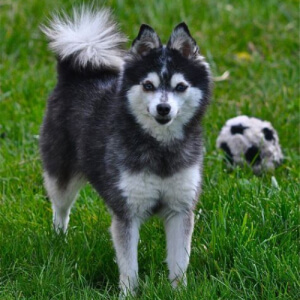
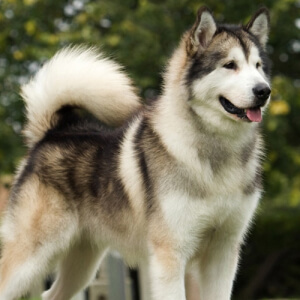
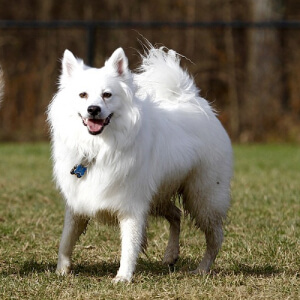
The American Eskimo Dog is a compact, well-balanced spitz with a thick white coat and a light, agile gait. It comes in three sizes: toy, miniature and standard.
General appearance
- A well-balanced body with a deep chest and a level back.
- A thick white double coat, with a "lion's mane" around the neck, which protects it from the cold.
- Triangular, erect ears that give it an alert expression.
- A plumed tail carried over the back.
- Dark, slightly oval eyes with black or dark brown rims, giving it a keen, intelligent look.
| Characteristic | American Eskimo Dog |
|---|---|
| Size | Small to medium, in three sizes (about 23-48 cm at the shoulder) |
| Weight | About 3-16 kg, depending on size |
| Coat | Thick, double, medium-long |
| Muzzle | Medium length, tapering |
| Shedding tendency | High |
| Build | Sturdy but agile |
The American Eskimo Dog is a sturdy yet elegant dog, with a striking white coat and a lively presence.
Training and Socialization
The American Eskimo Dog is very intelligent and eager to learn, which makes it easy to train, but it can also be independent, so it needs consistency and early socialisation.
Tips for effective training
- Early socialisation – As an alert watchdog, it should meet new people, animals and places from an early age to prevent shyness or over-protective behaviour.
- Reward-based training – It responds well to food rewards and praise; harsh methods do not work with this breed.
- Basic and advanced commands – It quickly learns obedience commands, agility and tricks.
- Managing barking – It tends to bark a lot, which can be reduced with training and mental exercise.
- Mental stimulation – Without activities that challenge its intelligence, it may become bored and destructive.
The American Eskimo Dog is easy to train, but needs regular training; otherwise it may develop problems such as excessive barking or separation anxiety.
Activity and Lifestyle Needs
The American Eskimo Dog is not hyperactive, but it needs regular exercise to stay healthy and balanced.
| Activity | Recommended duration |
|---|---|
| Daily walks | About 30-60 min, depending on size |
| Interactive games | About 20-30 min |
| Obedience training | About 10-15 min/day |
| Agility or dog sports | 2-3 sessions/week |
Recommendations for a balanced lifestyle
- Good for active families – It needs daily exercise and plenty of company.
- Can live in an apartment – With enough exercise, it adapts well to a smaller home, although its barking may bother neighbours.
- Curious and adventurous – It should be supervised, as it may dig or escape from unsecured gardens.
- Likes cool weather – Its thick coat helps it tolerate cold, but it must be protected from heat.
The American Eskimo Dog needs regular physical and mental activity and suits families who can give it plenty of attention.
Care and Health
Its thick coat needs regular grooming, and the breed can be prone to some inherited health problems.
Fur and skin care
- Brushing 2-3 times a week – The double coat sheds a lot, especially in spring and autumn, when daily brushing helps.
- Baths only when needed – The coat tends to shed dirt once dry, and frequent washing can dry out the skin.
- Ear and claw checks – Ears should be checked and cleaned regularly and claws trimmed.
Common health problems
| Condition | Description | Common Symptoms |
|---|---|---|
| Hip dysplasia | Abnormal development of the hip joint | Lameness, difficulty getting up |
| Progressive retinal atrophy | An inherited eye disease that slowly leads to blindness; a DNA test is available | Night blindness, vision loss |
| Patellar luxation | A slipping kneecap, common in small dogs | Occasional limping |
| Skin allergies and dental problems | Sensitive skin; tartar build-up, especially in small sizes | Itching, redness, bad breath |
Other aspects of care
- Regular vet checks – Yearly visits help monitor the teeth, eyes and joints.
- Balanced diet – Food should be matched to its size and activity to keep a healthy weight.
- Avoiding obesity – It can gain weight easily, so too many treats should be avoided.
Diet and Nutrition
The American Eskimo Dog needs good-quality, balanced food in portions matched to its size and activity.
Recommendations for a healthy diet
✔ Quality protein – For example, chicken, turkey or fish in a complete dog food, to maintain muscle. / ✔ Carbohydrates – For example, rice or sweet potatoes, as part of a balanced diet. / ✔ Omega-3 fatty acids – For example, fish oil for healthy skin and coat, if your vet recommends it. / ✔ Fibre – For example, carrots or pumpkin for healthy digestion.
| Food type | Daily Amount (Adults) | Frequency |
|---|---|---|
| Premium dry food | Individual amount; follow a complete diet’s guidance and veterinary advice | 2 meals/day |
| Home cooked food | Individual amount; follow a complete diet’s guidance and veterinary advice | 2 meals/day |
| Raw food: bacterial contamination is a concern | Individual amount; follow a complete diet’s guidance and veterinary advice | 2 meals/day |
Forbidden foods
⛔ Chocolate, grapes and raisins, onions and xylitol - toxic to dogs. / ⛔ Cooked bones - can break teeth or cause intestinal blockages. / ⛔ Salty foods - not suitable for dogs. / ⛔ Too much milk - can cause digestive problems.
The American Eskimo Dog should be fed properly to keep its energy while avoiding weight gain.
Reproduction and Development
Breeding can involve health risks. Responsible breeders use appropriate health screening and veterinary advice rather than assuming that a breed is free of reproductive problems.
Physical and emotional maturity
- Physical maturity: It usually reaches adult size at about 10-12 months, and fills out until about 18 months.
- Emotional maturity: It stays playful and active all its life, but usually becomes calmer after about 2 years.
Mating and Gestation
- Breeding decisions – A veterinarian should assess health, maturity and relevant screening. A fixed age alone does not establish that a dog should be bred.
- Duration of gestation: Approximately 58-68 days, usually about 63 days.
- Average litter size: Usually about 3-6 puppies, depending on size.
Puppy care
- The first 3 weeks: Puppies need a warm place and feed only on their mother's milk.
- Between 4-8 weeks: They begin to eat solid food and develop their personality.
- Moving to a new home – Timing depends on health, development and local requirements. Continue careful socialisation and veterinary care.
Curiosities and Interesting Facts
- Not an Arctic dog – Despite its name, the American Eskimo Dog has nothing to do with the Inuit or the Arctic; it was developed in the USA from the German Spitz.
- A circus star – Thanks to its intelligence and agility, it was a favourite in early 20th-century American circuses.
- A tightrope walker – An "Eskie" called Stout's Pal Pierre became famous in the 1930s as one of the first dogs to walk a tightrope.
- A good watchdog – It is not aggressive, but it is alert and quick to bark at strangers.
- Three sizes – The breed comes in toy, miniature and standard sizes.
- Dog sports – It does well in agility, obedience and freestyle (dancing with dogs).
The Dog in Popular Culture
The American Eskimo Dog has been admired for its beautiful white coat and its skill at learning tricks.
Importance in American culture
- Circus dog – In the early 20th century, the breed often performed in American circuses, including the Cooper Brothers' Railroad Circus, and circus owners even sold puppies to the audience.
- A name from history – Its name change from "German Spitz" to "American Eskimo" is a reminder of how the First World War affected even dog breeds.