PumiCharacteristics, history, training and care
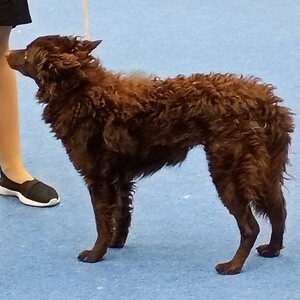
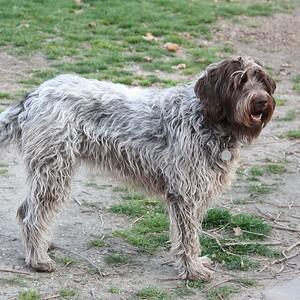
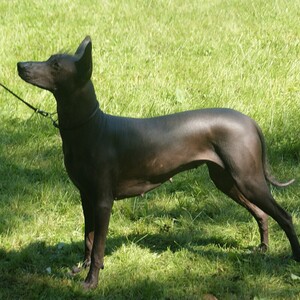
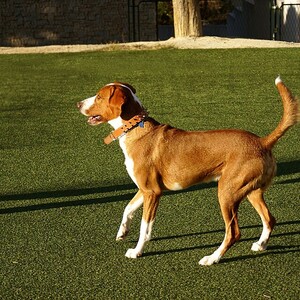
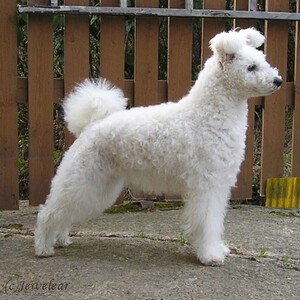
Pumi. · Taru T Torpström / Wikimedia Commons, CC BY-SA 3.0. Cropped and resized.
The Pumi is a cheerful, medium-sized Hungarian herding dog of terrier type, with a curly coat and erect ears whose tips fold forwards. It is very lively and alert, and the standard describes it as extremely bold, a little suspicious of strangers, full of drive and quite noisy.
Quick facts
| Common name | Pumi (plural: Pumik) |
| Scientific name | Canis lupus familiaris |
| Country of origin | Hungary |
| Official recognition | FCI, definitively since 11 August 1954 (group 1, sheepdogs; standard no. 56); also recognised by the AKC |
| Lifespan | 12–13 years, according to the AKC |
| Size (males) | 41–47 cm at the withers (ideally 43–45 cm); 10–15 kg |
| Size (females) | 38–44 cm at the withers (ideally 40–42 cm); 8–13 kg |
| Coat type | Wavy, curly, in tufts, 4–7 cm long |
| Common colours | Grey, black, fawn, white |
| Energy level | Very high |
| Suited to an apartment? | Yes, with a great deal of exercise |
| Temperament | Cheerful, very bold, clever, restless |
| Tendency to aggression | Low; a little suspicious of strangers |
| Good with children | Average |
| Good with other animals | Average |
| Genetic predispositions | Hip and elbow dysplasia, patellar luxation, degenerative myelopathy, eye diseases |
- Primary category:Dog breeds
- Explore this animal's categories:
History and origin
The FCI standard says the Pumi appeared in Hungary in the 17th–18th centuries, from crossing the old Puli with German and French terrier-type dogs with erect ears. It was recognised as a separate breed at the beginning of the 20th century.
The AKC says it was created as a compact, quick, fearless dog to drive herds along the narrow roads between the pastures of western Hungary.
How the breed developed
- 17th–18th centuries – It emerges from the Puli and German and French terriers.
- Early 20th century – It is recognised as a separate breed.
- 11 August 1954 – The FCI recognises the breed.
Breed rating
| Feature | Stars |
|---|---|
| Training and intelligence | ★★★★★ |
| Easy to train | ★★★★★ |
| Intelligence | ★★★★★ |
| Independence | ★★★☆☆ |
| Stubbornness | ★★★☆☆ |
| Behaviour and temperament | ★★★★☆ |
| Affectionate with family | ★★★★★ |
| Friendly with children | ★★★☆☆ |
| Good with other dogs | ★★★☆☆ |
| Good with cats and other animals | ★★★☆☆ |
| Loyalty | ★★★★★ |
| Tendency to be aggressive | ★★☆☆☆ |
| Tendency to bark | ★★★★☆ |
| Needs and care | ★☆☆☆☆ |
| Shedding | ★★★☆☆ |
| Needs frequent grooming | ★★☆☆☆ |
| Activity and lifestyle | ★★★★★ |
| Energy level | ★★★★★ |
| Daily exercise needs | ★★★★☆ |
| Suited to apartment life | ★★★☆☆ |
| Health and longevity | ★★★★☆ |
| Life expectancy | ★★★★☆ |
| Predisposition to genetic diseases | ★★☆☆☆ |
| Working abilities and uses | ★★★★☆ |
| Good herding dog | ★★★★☆ |
| Good companion dog | ★★★★★ |
Indicative rating: 5 stars means the highest level. It is based on the ratings the American Kennel Club gives the breed and on the FCI standard.
Physical characteristics
The standard describes it as a cheerful, medium-sized, terrier-type dog, of square build. The terrier character shows especially in the head: the muzzle is elongated, and the top third of the erect ears tips forwards.
General appearance
The wavy, curly coat forms tufts and is never smooth or corded. It averages 4–7 cm, and is springy, tousled and dense. The AKC says it has corkscrew curls, a circular tail and very expressive ears.
| Feature | Pumi |
|---|---|
| Size | Medium |
| Height at the withers | males: 41–47 cm; females: 38–44 cm |
| Weight | males: 10–15 kg; females: 8–13 kg |
| Coat | Curly, in tufts |
| Ears | Erect, with tipped ends |
| Tail | Circular, over the back |
The accepted colours are grey in various shades (puppies are usually born black and turn grey over time), black, fawn (red, yellow, cream) and white. The colour must always be intense and solid.
Training and socialisation
The standard says this lively herding dog has a restless temperament. It is extremely bold and a little suspicious of strangers. With its intelligent behaviour, liveliness and expressiveness, it attracts attention everywhere. It is quite noisy.
The AKC says it is a thinking dog that has to assess every new situation, so early socialisation is vital. It learns quickly and has an endless desire to work.
Tips for effective training
- Socialise it early. It assesses every new situation.
- Give it a job every day. It has a top need for mental stimulation.
- Teach it not to bark at everything. It is quite noisy.
- Play with a disc. The AKC says balls and discs are its favourites.
Activity needs and lifestyle
The AKC says it is very intelligent and energetic and needs regular exercise and mental stimulation. It is agile, climbs over and under things and likes to sit up high to see what is going on.
| Activity | How often | Why it matters |
|---|---|---|
| Running and fetch | daily | Very high energy |
| Brain games | daily | Mental stimulation |
| Herding, flyball or agility | weekly | Herding instinct |
Tips for a balanced life
- It suits very active people.
- Teach it to be quiet from an early age.
- Do not let it get bored.
Care and health
Coat and skin care
The AKC says the coat is half soft hair and half harsher hair, of the same length. It is combed out every 3–6 weeks, then wetted thoroughly so it curls up again, and it can be trimmed for a neat look. The Pumi does not shed, but hair comes out during combing.
Common health problems
The AKC says it is generally a very healthy breed, and responsible breeders screen their dogs for:
| Condition | Description | Common symptoms |
|---|---|---|
| Hip dysplasia | The hip joint forms incorrectly and, over time, arthritis develops | Limping, difficulty getting up or jumping, hip pain |
| Elbow dysplasia | The elbow joint develops incorrectly and arthritis appears | Limping on the front legs, especially after exercise |
| Patellar luxation | The kneecap slips out of place | Suddenly holds a hind leg up for a few steps, then uses it again |
| Degenerative myelopathy | A disease that gradually affects the spinal cord | Weakness in the hind legs |
| Eye diseases | Inherited eye conditions | Watery eyes, poor vision |
Other care
- Do not use a hair dryer on the coat.
- Check the ears regularly.
- Trim the nails regularly.
Diet and nutrition
The AKC says some dogs gain weight easily, so calories and weight should be watched.
Tips for a healthy diet
The table gives a starting estimate, calculated with the formula from the Merck Veterinary Manual. The first two calorie columns show the calories per day for a healthy adult dog. The last column shows what this means in dry food with 3,500–4,000 kcal per kilogram.
| Dog's weight | Calories per day (neutered) | Calories per day (not neutered) | Dry food per day (approximate) |
|---|---|---|---|
| 8 kg | 530 kcal | 600 kcal | 130–170 g |
| 11 kg | 680 kcal | 760 kcal | 170–220 g |
| 15 kg | 850 kcal | 960 kcal | 210–270 g |
- Give it its food in two meals a day.
- Treats count towards the daily portion.
- A dog is at the right weight when you can feel its ribs under the coat without pressing hard.
Foods to avoid
Some human foods are dangerous for dogs: chocolate, coffee, grapes and raisins, onions, garlic, xylitol (a sweetener used in chewing gum), macadamia nuts and alcohol.
Reproduction and development
Physical and emotional maturity
In dogs, sexual maturity usually comes between 6 and 12 months. Most breeds become adults at around 13–15 months.
Mating and pregnancy
Pregnancy lasts about 63 days, counted from ovulation. Mating a female on her first heat is not recommended. The FCI standard requires that only healthy dogs of typical breed appearance are used for breeding.
Caring for the puppies
In dogs, a litter has 5–6 puppies on average, and the number rises with the size of the breed. Socialisation starts in the first weeks: gentle handling, everyday noises and new people.
Interesting facts
- Tipped ears. The tips of its erect ears fold forwards.
- Born black. Grey puppies are usually born black.
- It likes heights. The AKC says it likes to sit in high places.
- On narrow roads. It drove herds along the roads between pastures.
- It does not shed. Hair only comes out during combing.
Frequently asked questions
How does it differ from the Puli?
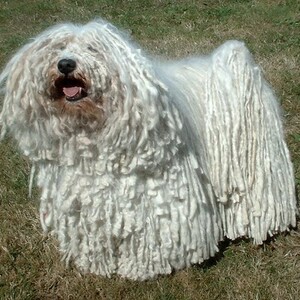
The Pumi has curls, not cords, and a terrier-type head with erect ears.
How big does it get?
Males measure 41–47 cm and females 38–44 cm.
Does it bark a lot?
The standard says it is quite noisy.
How long does it live?
The AKC gives 12–13 years.