Transylvanian HoundCharacteristics, history, training and care
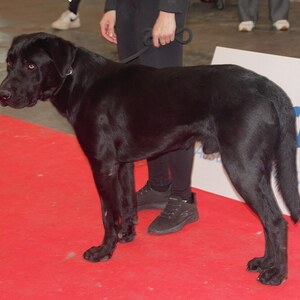
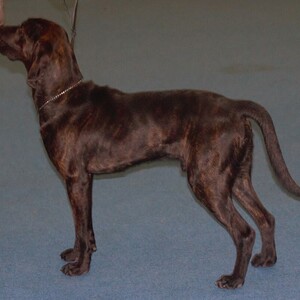
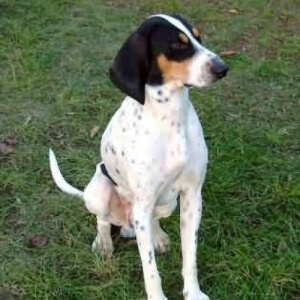
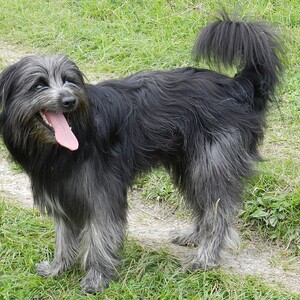
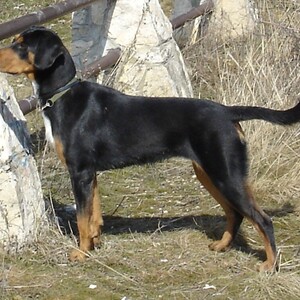
Transylvanian Hound. · Lnko2323 / Wikimedia Commons, CC BY-SA 3.0. Cropped and resized.
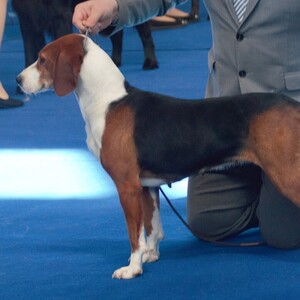
The Transylvanian Hound (Erdélyi kopó) is an old hound from Transylvania, black with tan markings and a tan spot above each eye. The FCI standard, under the patronage of Hungary, describes it as good-natured, brave and hardy, calm and balanced, yet determined and lively, able to hunt alone, even far from its owner, with a ringing, high-pitched and sonorous bark.
Quick facts
| Common name | Transylvanian Hound (Erdélyi kopó) |
| Scientific name | Canis lupus familiaris |
| Country of origin | Transylvania; FCI standard under the patronage of Hungary |
| Official recognition | FCI, definitively since 30 March 1963 (group 6, scent hounds; standard no. 241); in the AKC Foundation Stock Service |
| Lifespan | 10–14 years, according to the AKC |
| Size (males) | ideally 55–65 cm at the withers; at least 25 kg |
| Size (females) | ideally 55–65 cm at the withers; at least 25 kg |
| Coat type | Short, straight, dense, harsh and glossy, with an undercoat |
| Common colours | Black with tan markings, sometimes with white |
| Energy level | Very high |
| Suited to an apartment? | No |
| Temperament | Good-natured, brave, hardy, balanced, determined |
| Tendency to aggression | Low |
| Good with children | Very good, according to the AKC |
| Good with other animals | Very good with dogs; hunting instinct |
| Genetic predispositions | No breed-specific diseases are known |
- Primary category:Dog breeds
- Explore this animal's categories:
History and origin
The FCI standard says it is an old breed, shaped by the climate, terrain and hunting conditions of the region. It reached its peak in the Middle Ages, when it was the favourite hunting dog of the aristocracy. As farming and forestry developed, it was pushed back into the roadless forests of the Carpathians. Two varieties formed, always kept together: the long-legged one, for big game (bison, later bears, wild boar and lynx), and the short-legged one, for foxes, hares and chamois.
At the beginning of the 20th century, the breed had almost disappeared. Breeding resumed in 1968, and the standard says that today there is a significant number of long-legged dogs in Hungary and Romania; the short-legged variety has disappeared.
How the breed developed
- The Middle Ages – The favourite dog of the aristocracy.
- Early 20th century – The breed has almost disappeared.
- 30 March 1963 – The FCI recognises the breed.
- 1968 – Breeding resumes.
Breed rating
| Feature | Stars |
|---|---|
| Training and intelligence | ★★★★☆ |
| Easy to train | ★★★★★ |
| Intelligence | ★★★★★ |
| Independence | ★★★★★ |
| Stubbornness | ★★★★★ |
| Behaviour and temperament | ★★★★☆ |
| Affectionate with family | ★★★★★ |
| Friendly with children | ★★★★☆ |
| Good with other dogs | ★★★★★ |
| Good with cats and other animals | ★★★☆☆ |
| Loyalty | ★★★★★ |
| Tendency to be aggressive | ★★★☆☆ |
| Tendency to bark | ★★★★★ |
| Needs and care | ★★★★☆ |
| Shedding | ★★★★★ |
| Needs frequent grooming | ★★★★☆ |
| Activity and lifestyle | ★★★★☆ |
| Energy level | ★★★★☆ |
| Daily exercise needs | ★★★★★ |
| Suited to apartment life | ★★★★★ |
| Health and longevity | ★★★★☆ |
| Life expectancy | ★★★★☆ |
| Predisposition to genetic diseases | ★★☆☆☆ |
| Working abilities and uses | ★★★☆☆ |
| Good hunting dog | ★★★★★ |
| Good companion dog | ★★★★☆ |
Indicative rating: 5 stars means the highest level. It is based on the ratings the American Kennel Club gives the breed and on the FCI standard.
Physical characteristics
The standard says the shape of the head, the body proportions, the muscular limbs and the tail set match those of the Central European hounds. It is medium-sized and athletic, neither heavy nor too fine, with a body built for working over long distances.
General appearance
The whole body, even the belly, is covered with short, straight, dense, close-lying hair, harsh to the touch and glossy, with an undercoat. The hair is longer on the neck, withers, back of the thighs and under the tail.
| Feature | Transylvanian Hound |
|---|---|
| Size | Large |
| Height at the withers | ideally 55–65 cm |
| Weight | at least 25 kg |
| Coat | Short, harsh, glossy |
| Colour | Black and tan |
| Type | Hound |
The base colour is black, with a tan spot above each eye and clearly defined tan markings on the muzzle and legs. It may have white on the nose, a blaze on the forehead, a collar, chest and lower legs.
Training and socialisation
The standard describes it as good-natured, brave and hardy, with a calm, balanced character, yet determined and lively, able to withstand even extreme weather. It works well alone or in pairs.
The AKC says it is first and foremost a hunting dog that can hardly control its instincts, so training takes patience and perseverance. It understands what its owner wants but may not agree. Its education must be consistent and clear.
Tips for effective training
- Be patient and persevering. Its hunting instinct is strong.
- Do not let it off the lead. The AKC says it is not recommended.
- Be consistent. It understands, but may not agree.
- Try dog sports. Agility, obedience, scent work.
Activity needs and lifestyle
The AKC says it is a very active breed: it needs at least an hour a day of walking or running. Its urge to chase game can be stronger than its attachment to its owner, so free running should only happen in securely fenced areas.
| Activity | How often | Why it matters |
|---|---|---|
| Walk or run | at least an hour daily | Energy |
| Scent work | several times a week | Hound instinct |
| Agility or obedience | weekly | Keeps its mind busy |
Tips for a balanced life
- Suited to very active owners.
- The fence must be secure.
- It copes well with bad weather.
Care and health
Coat and skin care
The AKC says the short hair needs no special grooming: a weekly brush with a stiff brush; dead hair can be removed with a rubber mitt. The nails grow quickly and should be kept short.
Common health problems
The AKC says most dogs are healthy. There are no known breed-specific diseases; as with any hound, it is worth watching for:
| Condition | Description | Common symptoms |
|---|---|---|
| Ear infections | Infections of the ears | Head shaking, bad smell |
| Hip dysplasia | The hip joint forms incorrectly and, over time, arthritis develops | Limping, difficulty getting up or jumping, hip pain |
Other care
- Check for ticks after outings.
- Trim the nails regularly.
- Go for yearly check-ups.
Diet and nutrition
The AKC recommends good-quality food suited to the dog's age, and attention to its weight.
Tips for a healthy diet
The table gives a starting estimate, calculated with the formula from the Merck Veterinary Manual. The first two calorie columns show the calories per day for a healthy adult dog. The last column shows what this means in dry food with 3,500–4,000 kcal per kilogram.
| Dog's weight | Calories per day (neutered) | Calories per day (not neutered) | Dry food per day (approximate) |
|---|---|---|---|
| 25 kg | 1,250 kcal | 1,410 kcal | 310–400 g |
| 30 kg | 1,440 kcal | 1,620 kcal | 360–460 g |
| 35 kg | 1,610 kcal | 1,810 kcal | 400–520 g |
- Adjust the portion to its level of effort.
- Do not let it run right after a meal.
- A dog is at the right weight when you can feel its ribs without pressing hard.
Foods to avoid
Some human foods are dangerous for dogs: chocolate, coffee, grapes and raisins, onions, garlic, xylitol (a sweetener used in chewing gum), macadamia nuts and alcohol.
Reproduction and development
Physical and emotional maturity
In dogs, sexual maturity usually comes between 6 and 12 months, but in large breeds it can be delayed until about two years. The body also reaches its adult form later than in small breeds.
Mating and pregnancy
Pregnancy lasts about 63 days, counted from ovulation. Mating a female on her first heat is not recommended. The FCI standard requires that only healthy dogs of typical breed appearance are used for breeding.
Caring for the puppies
In large breeds, a litter has around 7 puppies on average. Socialisation starts in the first weeks: gentle handling, everyday noises and new people.
Interesting facts
- It hunted bison. The long-legged variety even hunted bison.
- Two varieties. The short-legged one has disappeared.
- “Four eyes”. The tan spots above its eyes.
- A high-pitched bark. The standard describes it as ringing and sonorous.
- Also found in Romania. The standard says there are many in Romania too.
Frequently asked questions
Where does it come from?
From Transylvania; the FCI places it under the patronage of Hungary.
Is it good with children?
Yes; the AKC gives it top marks.
Does it need a lot of exercise?
Yes, at least an hour a day.
How long does it live?
The AKC gives 10–14 years.