White Swiss Shepherd DogCharacteristics, history, training and care
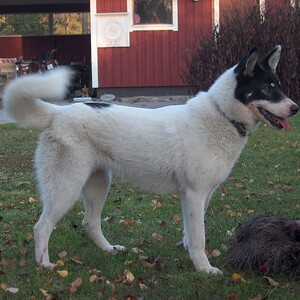
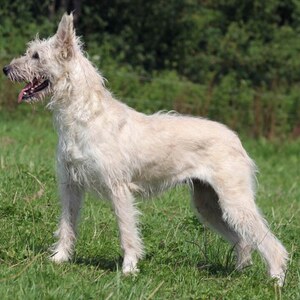
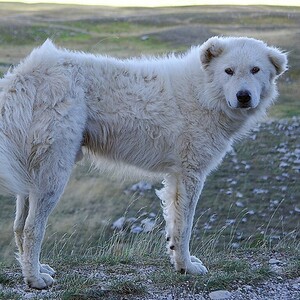
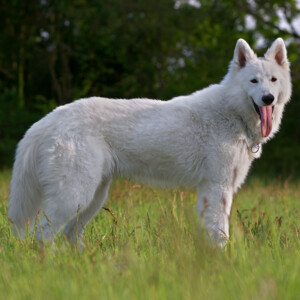
White Swiss Shepherd Dog. · Ilanga / Wikimedia Commons, CC BY 3.0 de. Cropped and resized.
The White Swiss Shepherd Dog (Berger Blanc Suisse) is a strong, well-muscled white dog with erect ears, created in Switzerland from white shepherds brought from North America. The FCI standard describes it as lively and well balanced, attentive, easy to train, friendly and discreet, very sociable and devoted to its owner, never fearful or aggressive without reason.
Quick facts
| Common name | White Swiss Shepherd Dog (Berger Blanc Suisse) |
| Scientific name | Canis lupus familiaris |
| Country of origin | Switzerland |
| Official recognition | FCI, provisionally since 2002, definitively since 4 July 2011 (group 1, sheepdogs; standard no. 347) |
| Lifespan | No published data for the breed; large breeds usually live 10–13 years |
| Size (males) | 58–66 cm at the withers; 30–40 kg |
| Size (females) | 53–61 cm at the withers; 25–35 kg |
| Coat type | Double, medium-length or long, with a plentiful undercoat |
| Common colours | White |
| Energy level | High |
| Suited to an apartment? | Only with plenty of exercise |
| Temperament | Lively, well balanced, friendly, discreet, devoted |
| Tendency to aggression | Low; never aggressive without reason |
| Good with children | Good; the standard praises its social skills |
| Good with other animals | Good |
| Genetic predispositions | No specific diseases are known; as in other large breeds, hip dysplasia |
- Primary category:Dog breeds
- Explore this animal's categories:
History and origin
Wikipedia says white German Shepherds could no longer be registered in Germany, but in the United States and Canada the colour remained popular, and the white dogs came to be regarded as a separate breed, the White Shepherd. The FCI standard says the first dogs were brought to Switzerland in the early 1970s, and the American male “Lobo”, born on 5 March 1966, can be regarded as the ancestor of the breed in Switzerland.
Lobo's descendants and other white shepherds brought from the United States and Canada gradually multiplied. From June 1991, the dogs were registered as a new breed in the appendix to the Swiss stud book (LOS). Wikipedia says the FCI recognised the breed provisionally in 2002 and definitively in 2011.
How the breed developed
- 5 March 1966 – Lobo, the ancestor of the breed in Switzerland, is born.
- Early 1970s – The first dogs reach Switzerland.
- June 1991 – Registered as a new breed in Switzerland.
- 2002 – Provisional FCI recognition.
- 4 July 2011 – Definitive FCI recognition.
Breed rating
| Feature | Stars |
|---|---|
| Training and intelligence | ★★★☆☆ |
| Easy to train | ★★★★★ |
| Intelligence | ★★★★☆ |
| Independence | ★★★★☆ |
| Stubbornness | ★★★★☆ |
| Behaviour and temperament | ★★★☆☆ |
| Affectionate with family | ★★★★☆ |
| Friendly with children | ★★★★★ |
| Good with other dogs | ★★★★☆ |
| Good with cats and other animals | ★★★☆☆ |
| Loyalty | ★★★★☆ |
| Tendency to be aggressive | ★★☆☆☆ |
| Tendency to bark | ★★★★☆ |
| Needs and care | ★★★★☆ |
| Shedding | ★★★★☆ |
| Needs frequent grooming | ★★★☆☆ |
| Activity and lifestyle | ★★★★★ |
| Energy level | ★★★★☆ |
| Daily exercise needs | ★★★★☆ |
| Suited to apartment life | ★★★★☆ |
| Health and longevity | ★★★★☆ |
| Life expectancy | ★★★★☆ |
| Predisposition to genetic diseases | ★★☆☆☆ |
| Working abilities and uses | ★★★☆☆ |
| Good companion dog | ★★★★☆ |
| Good companion dog | ★★★★☆ |
Indicative rating: 5 stars means the highest level. The breed has no AKC profile, so the rating is based on the FCI standard.
Physical characteristics
The standard describes it as a strong, well-muscled, medium-sized white shepherd dog, with erect ears, a medium-length or long double coat, an elongated body (ratio 12:10), medium-sized bones and an elegant, harmonious outline.
General appearance
There are two varieties: medium-length hair and long hair. Both have a dense, close-lying double coat, with a plentiful undercoat covered by harsh, straight guard hairs. The face, ears and front of the legs have shorter hair.
| Feature | White Swiss Shepherd Dog |
|---|---|
| Size | Large |
| Height at the withers | males: 58–66 cm; females: 53–61 cm |
| Weight | males: 30–40 kg; females: 25–35 kg |
| Coat | Double, medium or long |
| Colour | White |
| Ears | Erect |
The colour is white.
Training and socialisation
The standard describes it as lively and well balanced, enjoying action, attentive and easy to train, friendly and discreet, very sociable and devoted to its owner. It is a cheerful working and sports dog that learns easily and is suited to all-round training.
Its strong social skills help it adapt easily to different situations. It responds best to consistent, reward-based training.
Tips for effective training
- Use rewards. It learns easily.
- Give it a job. It enjoys action.
- Socialise it early. It adapts well.
- Do not leave it alone for long. It is devoted to its family.
Activity needs and lifestyle
The standard says it enjoys action and is a cheerful working and sports dog. It needs long daily walks and activities for the mind, such as agility, obedience or tracking.
| Activity | How often | Why it matters |
|---|---|---|
| Long walks | daily | Fitness |
| Training or dog sports | several times a week | A busy mind |
| Play | daily | Energy |
Tips for a balanced life
- Suited to active families.
- Brush it often during shedding.
- Include it in family life.
Care and health
Coat and skin care
The double coat should be brushed once or twice a week, and much more often during the moult, when the undercoat comes out in large amounts.
Common health problems
No health studies have been published for the breed and no specific diseases are known. As with any large breed, it is worth watching out for:
| Condition | Description | Common symptoms |
|---|---|---|
| Hip dysplasia | The hip joint forms incorrectly and, over time, arthritis develops | Limping, difficulty getting up or jumping, hip pain |
| Elbow dysplasia | The elbow joint develops incorrectly and arthritis appears | Limping on the front legs, especially after exercise |
| Gastric dilatation-volvulus (bloat) | The stomach fills with gas and may twist; this is a veterinary emergency | Swollen belly, trying to vomit without success, drooling, restlessness |
Other care
- Ask for the parents' hip and elbow tests.
- Do not let it run after a meal.
- Go for yearly check-ups.
Diet and nutrition
A large, active dog needs good-quality food suited to its age and workload.
Tips for a healthy diet
The table gives a starting estimate, calculated with the formula from the Merck Veterinary Manual. The first two calorie columns show the calories per day for a healthy adult dog. The last column shows what this means in dry food with 3,500–4,000 kcal per kilogram.
| Dog's weight | Calories per day (neutered) | Calories per day (not neutered) | Dry food per day (approximate) |
|---|---|---|---|
| 25 kg | 1,250 kcal | 1,410 kcal | 310–400 g |
| 32 kg | 1,510 kcal | 1,700 kcal | 380–490 g |
| 40 kg | 1,780 kcal | 2,000 kcal | 440–570 g |
- Split the food into two meals a day.
- Large-breed puppies need special food.
- A dog is at the right weight when you can feel its ribs under the coat without pressing hard.
Foods to avoid
Some human foods are dangerous for dogs: chocolate, coffee, grapes and raisins, onions, garlic, xylitol (a sweetener used in chewing gum), macadamia nuts and alcohol.
Reproduction and development
Physical and emotional maturity
In dogs, sexual maturity usually comes between 6 and 12 months, but in large breeds it can be delayed until about two years. The body also reaches its adult form later than in small breeds.
Mating and pregnancy
Pregnancy lasts about 63 days, counted from ovulation. Mating a female on her first heat is not recommended. The FCI standard requires that only healthy dogs of typical breed appearance are used for breeding.
Caring for the puppies
In large breeds, a litter has around 7 puppies on average. Socialisation starts in the first weeks: gentle handling, everyday noises and new people.
Interesting facts
- Its ancestor, Lobo. An American male born in 1966.
- From white German Shepherds. White was not accepted in Germany.
- A young breed. Only definitively recognised by the FCI in 2011.
- Two varieties. With medium-length or long hair.
- Related to the White Shepherd. It comes from American white shepherds.
Frequently asked questions
Is it the same as the American White Shepherd?
No; it descends from it, but it is a separate Swiss breed.
What colour is it?
Only white.
How big does it get?
Males measure 58–66 cm and weigh 30–40 kg.
Is it a family dog?
Yes; the standard describes it as friendly and devoted.