Transmontano MastiffCharacteristics, history, training and care
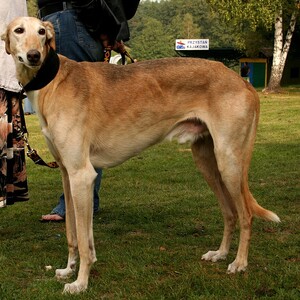
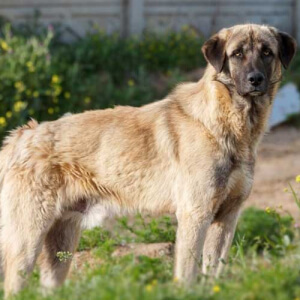
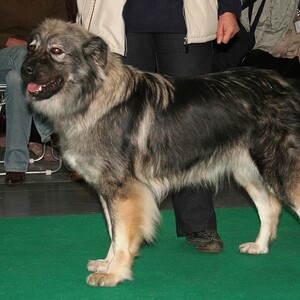
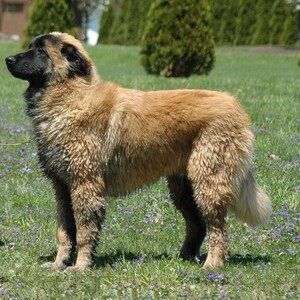
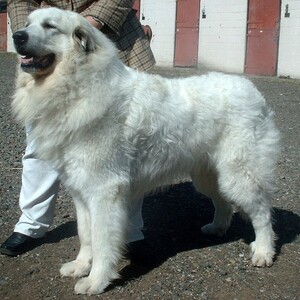
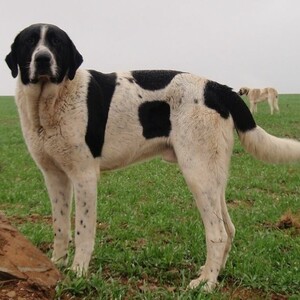
Transmontano Mastiff. · Carlos / Wikimedia Commons, CC BY-SA 4.0. Cropped and resized.
The Transmontano Mastiff (Cão de Gado Transmontano) is a giant molosser from the Trás-os-Montes region, in north-eastern Portugal. It is the largest Portuguese breed and still guards flocks of sheep and goats against the Iberian wolf today. Despite its size, it is docile, calm and reserved, cautious but not aggressive.
Quick facts
| Common name | Cão de Gado Transmontano (Transmontano Mastiff) |
| Scientific name | Canis lupus familiaris |
| Country of origin | Portugal (Trás-os-Montes) |
| Official recognition | FCI, provisionally (group 2, mountain molossers, without working trial; standard no. 368, published on 26 February 2020) |
| Lifespan | No published data for the breed; very large breeds live 8–11 years on average |
| Size (males) | 75–85 cm at the withers; 60–75 kg |
| Size (females) | 68–78 cm at the withers; 50–60 kg |
| Coat type | Dense, medium length, smooth, with an undercoat |
| Common colours | White with black, yellow, fawn or wolf-grey patches; solid fawn, yellow or wolf grey |
| Energy level | Moderate |
| Suited to an apartment? | No |
| Temperament | Docile, reserved, cautious, calm |
| Tendency to aggression | Low; resolutely defends the flock |
| Good with children | Good, with supervision; females are easier to handle |
| Good with other animals | Very good with flock animals and other dogs |
| Genetic predispositions | No breed-specific diseases are known; as in all very large dogs, hip dysplasia and bloat |
- Primary category:Dog breeds
- Explore this animal's categories:
History and origin
The FCI standard says the breed shares its origin with all the Iberian mastiffs and is linked to the transhumance routes of the Iberian Peninsula. Since ancient times, the dog has settled in the Portuguese mountains of Trás-os-Montes, where it accompanied the shepherd and defended the flocks against wolves.
In this land of steep pastures and hard-to-reach roads, the breed adapted to flocks of sheep and goats. Wikipedia says it is related to the Rafeiro do Alentejo and that until 1995 the breed had not been exported from Portugal. More than 95% of the dogs still work with flocks today.
How the breed developed
- Ancient times – Iberian mastiffs follow the transhumance routes.
- Centuries – The dogs guard the flocks of Trás-os-Montes against the Iberian wolf.
- 1995 – The breed is still found only in Portugal.
- 26 February 2020 – The FCI publishes standard no. 368 and provisionally accepts the breed.
Breed rating
| Feature | Stars |
|---|---|
| Training and intelligence | ★★★☆☆ |
| Easy to train | ★★★☆☆ |
| Intelligence | ★★★★☆ |
| Independence | ★★★★★ |
| Stubbornness | ★★★★☆ |
| Behaviour and temperament | ★★★★☆ |
| Affectionate with family | ★★★★☆ |
| Friendly with children | ★★★☆☆ |
| Good with other dogs | ★★★★☆ |
| Good with cats and other animals | ★★★★☆ |
| Loyalty | ★★★★★ |
| Tendency to be aggressive | ★★☆☆☆ |
| Tendency to bark | ★★★☆☆ |
| Needs and care | ★★★★☆ |
| Shedding | ★★★☆☆ |
| Needs frequent grooming | ★★☆☆☆ |
| Activity and lifestyle | ★★★★☆ |
| Energy level | ★★★☆☆ |
| Daily exercise needs | ★★★★☆ |
| Suited to apartment life | ★☆☆☆☆ |
| Health and longevity | ★★★★☆ |
| Life expectancy | ★★★☆☆ |
| Predisposition to genetic diseases | ★★☆☆☆ |
| Working abilities and uses | ★★★★★ |
| Good livestock guardian | ★★★★★ |
| Good companion dog | ★★★☆☆ |
Indicative rating: 5 stars means the highest level. The breed has no AKC profile; the rating is based on the FCI standard (“docile but reserved, cautious without being aggressive”) and the Wikipedia description.
Physical characteristics
The standard describes it as a large, powerful, rustic molosser, with an imposing, noble appearance and a sober expression. Its profile is square, with long legs and strong bones.
General appearance
The almond-shaped eyes are honey brown or darker, with a serene expression. The thick, triangular ears hang down and are very mobile. The thick, well-furnished tail hangs in a sabre shape and rises into a sickle when moving.
| Feature | Transmontano Mastiff |
|---|---|
| Size | Very large |
| Height at the withers | males: 75–85 cm; females: 68–78 cm |
| Weight | males: 60–75 kg; females: 50–60 kg |
| Coat | Dense, medium length, with an undercoat |
| Eyes | Almond-shaped, honey brown |
| Tail | Thick, sabre-shaped |
The most common colours are white with black, yellow, fawn or wolf-grey patches. Solid colours are fawn, yellow or wolf grey, brindled or not, often with white on the legs and a white blaze on the head. It may also have tan markings (tricolour).
Training and socialisation
The standard describes it as docile but reserved, cautious without being aggressive, always calm. It is an exceptional guardian of flocks against wolves, always attentive to its duty.
It can live and work in a group with other dogs, including entire males. Wikipedia says females are usually easier to handle and make better companions than males.
Tips for effective training
- Socialise it from puppyhood. Young males must learn to temper their dominance.
- Do not keep it tied up. Wikipedia says it suffers when chained or shut in.
- Check the fence. It tends to dig under fences to “enlarge its territory”.
- Be calm and firm. Such a large dog needs a confident owner.
Activity needs and lifestyle
Wikipedia describes it as a “field athlete”, covering many kilometres over rough ground, day and night, to protect its flock. It needs plenty of space and likes to move freely.
| Activity | How often | Why it matters |
|---|---|---|
| Patrolling a large yard or the flock | daily | Its guarding instinct |
| Long walks | daily | Exercise for a very large dog |
| Obedience exercises | a few minutes a day | Keeps control |
Tips for a balanced life
- Not suited to a flat or to town life.
- In summer it likes to dig itself cool hollows.
- The fence must be solid and sunk into the ground.
Care and health
Coat and skin care
The dense coat should be brushed once a week, and more often during the moult. Trim the nails when they do not wear down on their own.
Common health problems
There are no published health studies for the breed. As with any very large dog, it is worth watching for:
| Condition | Description | Common symptoms |
|---|---|---|
| Hip dysplasia | The hip joint forms incorrectly and, over time, arthritis develops | Limping, difficulty getting up or jumping, hip pain |
| Gastric dilatation-volvulus (bloat) | The stomach fills with gas and may twist; this is a veterinary emergency | Swollen belly, trying to vomit without success, drooling, restlessness |
Other care
- Check the ears and teeth once a week.
- Look for ticks after days spent with the flock.
- Trim the nails when they start to touch the floor.
Diet and nutrition
For such a large dog, the amount of food should be set by its actual weight. Puppies grow quickly and need food for giant breeds.
Tips for a healthy diet
The table gives a starting estimate, calculated with the formula from the Merck Veterinary Manual. The first two calorie columns show the calories per day for a healthy adult dog. The last column shows what this means in dry food with 3,500–4,000 kcal per kilogram.
| Dog's weight | Calories per day (neutered) | Calories per day (not neutered) | Dry food per day (approximate) |
|---|---|---|---|
| 50 kg | 2,110 kcal | 2,370 kcal | 530–680 g |
| 60 kg | 2,410 kcal | 2,720 kcal | 600–780 g |
| 75 kg | 2,850 kcal | 3,210 kcal | 710–920 g |
- Split the food into two meals a day to reduce the risk of bloat.
- Do not let it run right after a meal.
- A dog is at the right weight when you can feel its ribs under the coat without pressing hard.
Foods to avoid
Some human foods are dangerous for dogs: chocolate, coffee, grapes and raisins, onions, garlic, xylitol (a sweetener used in chewing gum), macadamia nuts and alcohol.
Reproduction and development
Physical and emotional maturity
In dogs, sexual maturity usually comes between 6 and 12 months, but in large breeds it can be delayed until about two years. Very large breeds become adults only at around 2 years.
Mating and pregnancy
Pregnancy lasts about 63 days, counted from ovulation. Mating a female on her first heat is not recommended. The FCI standard requires that only healthy dogs of typical breed appearance are used for breeding.
Caring for the puppies
In large breeds, a litter has around 7 puppies on average. The puppies grow very fast, so they need growth food suited to large breeds. Socialisation starts in the first weeks.
Interesting facts
- The largest Portuguese breed. Males can reach 85 cm and 75 kg.
- It helps protect the wolf. Wikipedia says that, by defending flocks, these dogs help conserve the Iberian wolf, a threatened species.
- Used in the United States. It was taken to Oregon and Montana for studies on protecting flocks from wolves.
- A night watchman. Wikipedia calls it “an excellent night guard”.
- Still working today. More than 95% of the dogs work with flocks.
Frequently asked questions
Where does the Transmontano Mastiff come from?
From the Trás-os-Montes region, in north-eastern Portugal.
How big does it get?
Males measure 75–85 cm and weigh 60–75 kg; females measure 68–78 cm and weigh 50–60 kg.
Is it aggressive?
No. The standard describes it as docile, calm and cautious, but it resolutely defends the flock.
Can it live in a block of flats?
No. It needs plenty of space and likes to move freely.