BolonkaCharacteristics, history, training and care
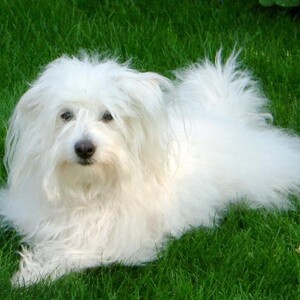
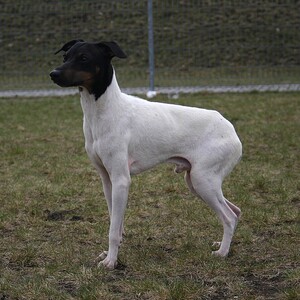
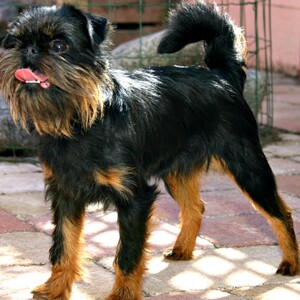
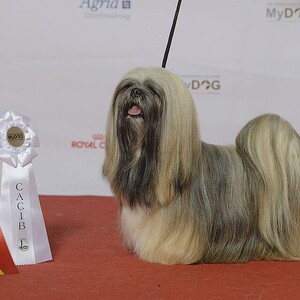
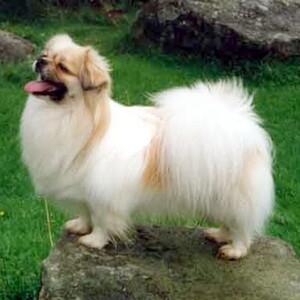
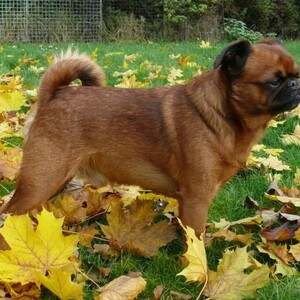
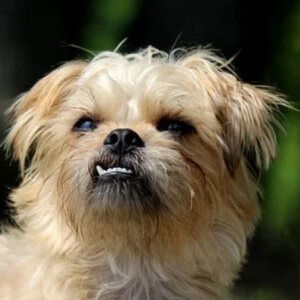
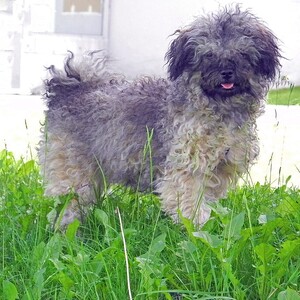
Bolonka. · GuidoR / Wikimedia Commons, CC BY 3.0. Cropped and resized.
The Bolonka (Russkaya Tsvetnaya Bolonka, known in Germany as the Bolonka Zwetna) is a small Russian bichon-type dog, bred in Moscow and Leningrad as a companion dog suited to life in a flat. The AKC describes it as amusing, extremely clever and very loyal to its family, lively but relaxed and sociable, and very good with children. The breed is not recognised by the FCI; the AKC lists it in its Foundation Stock Service.
Quick facts
| Common name | Bolonka (Bolonka Zwetna) |
| Scientific name | Canis lupus familiaris |
| Country of origin | Russia |
| Official recognition | Not recognised by the FCI; listed by the AKC in its Foundation Stock Service; recognised by the Nordic Kennel Union |
| Lifespan | 14–20 years, according to the AKC |
| Size (males) | around 28 cm at the withers; 2.7–4 kg according to the AKC |
| Size (females) | around 28 cm at the withers; 2.7–4 kg according to the AKC |
| Coat type | Long, wavy or curly |
| Common colours | Various; the white variety is called the Franzuskaya Bolonka |
| Energy level | Medium |
| Suited to an apartment? | Yes, very |
| Temperament | Playful, relaxed, clever, loyal, sociable |
| Tendency to aggression | Very low |
| Good with children | Very good, according to the AKC |
| Good with other animals | Very good, according to the AKC |
| Genetic predispositions | Patellar luxation, eye and heart diseases; rarely liver shunt, Legg-Calvé-Perthes disease |
History and origin
According to Wikipedia, in the Soviet period dogs were not imported and small breeds were considered useless. Enthusiasts in Moscow and Leningrad nevertheless created the Bolonka from the ancestors of small dogs such as the Bichon Frisé, the Toy Poodle, the Shih Tzu, the Pekingese and the Bolognese, with the aim of producing a flat dog. Since 1966 it has been called Russkaya Tsvetnaya Bolonka (“Russian coloured lapdog”).
Wikipedia adds that in 1978 a pair of white Bolonkas was given by the USSR to East Germany as a diplomatic gift, and from there the white variety was developed in Germany in the 1980s. The AKC says the breed had almost disappeared until after the Cold War.
How the breed developed
- Soviet period – Created in Moscow and Leningrad.
- 1966 – Receives the name Russkaya Tsvetnaya Bolonka.
- 1978 – A pair is given to East Germany.
- 1980s – Developed in Germany as the Bolonka Zwetna.
Breed rating
| Feature | Stars |
|---|---|
| Training and intelligence | ★★★★★ |
| Easy to train | ★★★★★ |
| Intelligence | ★★★★★ |
| Independence | ★★★☆☆ |
| Stubbornness | ★★★☆☆ |
| Behaviour and temperament | ★★★★★ |
| Affectionate with family | ★★★★★ |
| Friendly with children | ★★★★★ |
| Good with other dogs | ★☆☆☆☆ |
| Good with cats and other animals | ★☆☆☆☆ |
| Loyalty | ★★★☆☆ |
| Tendency to be aggressive | ★☆☆☆☆ |
| Tendency to bark | ★☆☆☆☆ |
| Needs and care | ★★★☆☆ |
| Shedding | ★★★☆☆ |
| Needs frequent grooming | ★★★☆☆ |
| Activity and lifestyle | ★★★★★ |
| Energy level | ★★★★★ |
| Daily exercise needs | ★★☆☆☆ |
| Suited to apartment life | ★☆☆☆☆ |
| Health and longevity | ★★★☆☆ |
| Life expectancy | ★★★☆☆ |
| Predisposition to genetic diseases | ★☆☆☆☆ |
| Working abilities and uses | ★★★★★ |
| Good companion dog | ★★★☆☆ |
| Good companion dog | ★☆☆☆☆ |
Indicative rating: 5 stars means the highest level. It is based on the ratings the American Kennel Club gives the breed; the breed is not recognised by the FCI.
Physical characteristics
It is a small bichon-type dog, at most 28 cm tall and 2.7–4 kg, according to the AKC. The AKC says some are excellent mimics, while others are happy to sit by the door and keep an eye on who comes and goes.
General appearance
The coat is long, wavy or curly. The AKC says that show dogs are trimmed only around the feet, and the coat falls naturally down the back.
| Feature | Bolonka |
|---|---|
| Size | Toy |
| Height at the withers | around 28 cm |
| Weight | 2.7–4 kg (AKC) |
| Coat | Long, wavy |
| Colour | Various |
| Type | Bichon |
The Bolonka comes in a variety of colours (“tsvetnaya” means “coloured”). The white variety is called the Franzuskaya Bolonka.
Training and socialisation
The AKC says it is more independent than most toy dogs and needs early socialisation with people. It is very friendly with children and other animals, but supervision is always a good idea.
It is very clever and does well at obedience, rally and other sports. It may announce everything that happens around it, so it is worth teaching it from an early age when it is appropriate to bark.
Tips for effective training
- Socialise it early. It is more independent than other toy dogs.
- Teach it “quiet”. It announces everything that happens.
- Use rewards. It is very clever.
- Keep puppies from jumping. For the sake of their knees.
Activity needs and lifestyle
The AKC says that, as a classic companion dog, it enjoys walks and play, but does not need a great deal of exercise. It can still be very energetic and playful, though, so it needs a good play session at least twice a week.
| Activity | How often | Why it matters |
|---|---|---|
| Walks | daily | Fitness |
| Vigorous play | at least twice a week | Energy |
| Tricks and indoor games | several times a week | A busy mind |
Tips for a balanced life
- Very well suited to a flat.
- Tie the hair on its head into a topknot.
- Comb the coat several times a week.
Care and health
Coat and skin care
The AKC says it needs regular brushing and care of the eyes, ears, teeth and nails. Comb the coat with a wide-toothed comb several times a week so that it does not tangle. In long-coated dogs, wash the face, moustache and beard daily.
Common health problems
The AKC says routine checks should include the eyes, kneecaps and heart. A tied-up topknot helps prevent scratches to the eyes. Things to watch:
| Condition | Description | Common symptoms |
|---|---|---|
| Patellar luxation | The kneecap slips out of place | Suddenly holds a hind leg up for a few steps, then uses it again |
| Eye diseases | Including progressive retinal atrophy, rarely | Poor sight, irritated eyes |
| Heart disease | Conditions of the heart | Tiredness, coughing |
| Liver shunt | Rare | Slow growth, digestive problems |
Other care
- Do not let puppies jump down from heights.
- Tie up its topknot.
- Brush its teeth often.
Diet and nutrition
The AKC recommends good-quality food suited to the dog's age, and attention to its weight.
Tips for a healthy diet
The table gives a starting estimate, calculated with the formula from the Merck Veterinary Manual. The first two calorie columns show the calories per day for a healthy adult dog. The last column shows what this means in dry food with 3,500–4,000 kcal per kilogram.
| Dog's weight | Calories per day (neutered) | Calories per day (not neutered) | Dry food per day (approximate) |
|---|---|---|---|
| 2.7 kg | 240 kcal | 270 kcal | 60–77 g |
| 3.3 kg | 270 kcal | 310 kcal | 68–89 g |
| 4 kg | 320 kcal | 360 kcal | 80–103 g |
- Give its food in several small meals.
- Treats count towards the daily portion.
- A dog is at the right weight when you can feel its ribs under the coat without pressing hard.
Foods to avoid
Some human foods are dangerous for dogs: chocolate, coffee, grapes and raisins, onions, garlic, xylitol (a sweetener used in chewing gum), macadamia nuts and alcohol.
Reproduction and development
Physical and emotional maturity
In dogs, sexual maturity usually comes between 6 and 12 months. Small breeds become adults faster than large ones, usually at around one year.
Mating and pregnancy
Pregnancy lasts about 63 days, counted from ovulation. Mating a female on her first heat is not recommended. Only healthy dogs of typical breed appearance should be used for breeding.
Caring for the puppies
In small breeds, a litter has 3–4 puppies on average. The puppies are very small and fragile in the first weeks, so they must be kept warm and handled with care. Socialisation starts early: gentle handling, everyday noises and new people.
Interesting facts
- “Coloured lapdog”. That is what Tsvetnaya Bolonka means.
- A diplomatic gift. A pair was given to East Germany in 1978.
- Made for flats. The aim was a dog suited to apartment blocks.
- A mimic. The AKC says some are excellent mimics.
- Very long-lived. The AKC gives 14–20 years.
Frequently asked questions
Is it recognised by the FCI?
No; the AKC lists it in its Foundation Stock Service.
Is it good in a flat?
Yes, it was created for that.
Is it good with children?
Yes; the AKC gives it top marks.
How long does it live?
The AKC gives 14–20 years.