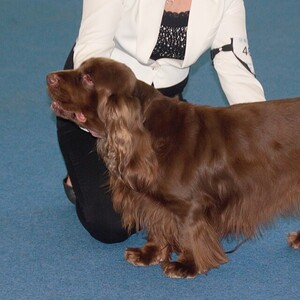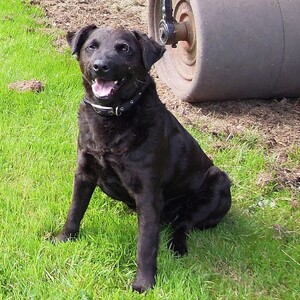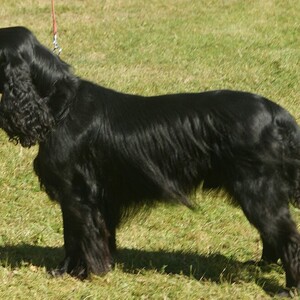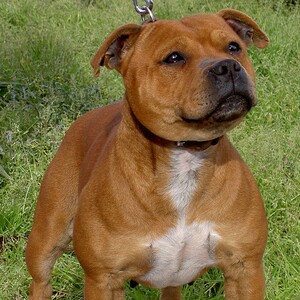
Labrador RetrieverCharacteristics, history, training and care
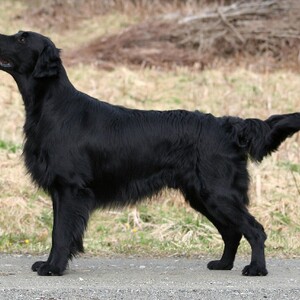
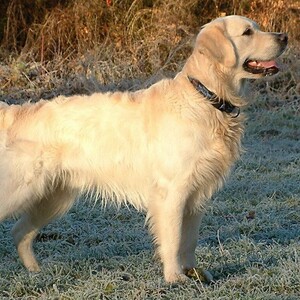
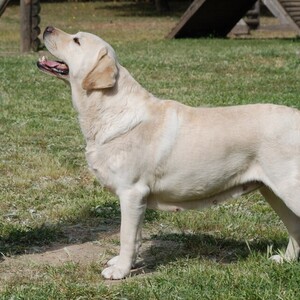
Labrador Retriever. · SixtyWeb / Wikimedia Commons, CC BY-SA 3.0. Cropped and resized.
The Labrador Retriever is a strong, very active British retriever with a short, dense coat in black, yellow or liver/chocolate. The standard describes it as good-tempered, intelligent, eager to please and with no trace of aggression. Wikipedia says it is one of the most widespread dogs in many countries.
Quick facts
| Common name | Labrador Retriever (Labrador, Lab) |
| Scientific name | Canis lupus familiaris |
| Country of origin | United Kingdom |
| Official recognition | FCI, definitively since 24 December 1954 (group 8, retrievers, with working trial; standard no. 122); also recognised by the AKC |
| Lifespan | 11–13 years, according to the AKC |
| Size (males) | ideally 56–57 cm at the withers; 29–36 kg according to the AKC |
| Size (females) | ideally 54–56 cm at the withers; 25–32 kg according to the AKC |
| Coat type | Short, dense, hard to the touch, with a weather-resistant undercoat |
| Common colours | Black, yellow, liver/chocolate |
| Energy level | Very high |
| Suited to an apartment? | Only with a great deal of exercise |
| Temperament | Good-tempered, intelligent, eager to please, friendly |
| Tendency to aggression | Very low |
| Good with children | Very good, according to the AKC |
| Good with other animals | Very good, according to the AKC |
| Genetic predispositions | Hip and elbow dysplasia, eye diseases, exercise-induced collapse, hereditary myopathy |
- Primary category:Dog breeds
- Explore this animal's categories:
History and origin
The FCI standard says that, according to a widely held view, the Labrador comes from the coast of Newfoundland, where fishermen used a similar dog to retrieve fish. Wikipedia says the breed was developed in the United Kingdom from St. John's water dogs brought from the colony of Newfoundland, and that the name comes from the Labrador region.
Wikipedia says that in the 1830s the Earl of Home and his nephews, the Duke of Buccleuch and Lord John Scott, brought the breed's ancestors to Europe as gundogs. The standard notes that the breed was brought over at the end of the 19th century by Colonel Peter Hawker and the Earl of Malmesbury, that the breed club was founded in 1916 and the Yellow Labrador Club in 1925.
How the breed developed
- The 1830s – The breed's ancestors reach Britain from Newfoundland.
- Late 19th century – The breed becomes known at field trials.
- 1916 – The breed club is founded.
- 1925 – The Yellow Labrador Club is founded.
- 24 December 1954 – The FCI recognises the breed.
Breed rating
| Feature | Stars |
|---|---|
| Training and intelligence | ★★★★★ |
| Easy to train | ★★★★★ |
| Intelligence | ★★★★★ |
| Independence | ★★☆☆☆ |
| Stubbornness | ★★☆☆☆ |
| Behaviour and temperament | ★★★★★ |
| Affectionate with family | ★★★★★ |
| Friendly with children | ★★★★★ |
| Good with other dogs | ★★★★★ |
| Good with cats and other animals | ★★★★☆ |
| Loyalty | ★★★★★ |
| Tendency to be aggressive | ★☆☆☆☆ |
| Tendency to bark | ★★★☆☆ |
| Needs and care | ★★★★☆ |
| Shedding | ★★★★☆ |
| Needs frequent grooming | ★★☆☆☆ |
| Activity and lifestyle | ★★★★★ |
| Energy level | ★★★★★ |
| Daily exercise needs | ★★★★★ |
| Suited to apartment life | ★★☆☆☆ |
| Health and longevity | ★★★★☆ |
| Life expectancy | ★★★★☆ |
| Predisposition to genetic diseases | ★★★☆☆ |
| Working abilities and uses | ★★★☆☆ |
| Good hunting dog | ★★★★★ |
| Good companion dog | ★★★★★ |
Indicative rating: 5 stars means the highest level. It is based on the ratings the American Kennel Club gives the breed and on the FCI standard.
Physical characteristics
The standard describes it as a strongly built, compact and very active dog, with a broad skull, a wide, deep chest and a distinctive tail, thick at the base and tapering towards the tip, like an otter's.
General appearance
The coat is a distinctive feature: short, dense, without waves or feathering, hard to the touch, with a weather-resistant undercoat. The AKC says its eyes shine with kindness, and its thick tail always seems to signal the breed's friendliness.
| Feature | Labrador Retriever |
|---|---|
| Size | Large |
| Height at the withers | males: ideally 56–57 cm; females: ideally 54–56 cm |
| Weight | males: 29–36 kg; females: 25–32 kg (AKC) |
| Coat | Short, dense, water-resistant |
| Tail | Thick, an “otter tail” |
| Head | Broad |
The accepted colours are black, yellow and liver/chocolate, solid only. Yellow ranges from light cream to fox red. A small white spot on the chest is permitted.
Training and socialisation
The standard describes it as good-tempered, very agile, intelligent, keen and biddable, with a strong desire to please and no trace of aggression or shyness. It has an excellent nose, a “soft mouth” and loves water.
The AKC says that, as it is strong and very energetic, early socialisation and puppy classes are vital. It should get used to different people, places and situations between 7 weeks and 4 months of age.
Tips for effective training
- Start socialising early. Between 7 weeks and 4 months.
- Use rewards. It is eager to please.
- Give it a job. Retrieving and swimming are its favourites.
- Watch its food. Too many treats lead to weight gain.
Activity needs and lifestyle
The AKC says it is an exuberant, very energetic breed that needs plenty of exercise every day. Without it, it can become hyperactive or destructive. Its favourite activities are retrieving and swimming.
| Activity | How often | Why it matters |
|---|---|---|
| Long walks or running | daily | Very high energy |
| Retrieving | daily | Its favourite activity |
| Swimming | whenever possible | It loves water |
Tips for a balanced life
- It suits active families.
- Do not leave it without exercise: it may destroy things.
- Dry its ears after swimming.
Care and health
Coat and skin care
The AKC gives it a high score for shedding. A brush once a week, and more often during moulting periods, keeps it clean.
Common health problems
The AKC says the breed is generally healthy, and responsible breeders screen their dogs for:
| Condition | Description | Common symptoms |
|---|---|---|
| Hip dysplasia | The hip joint forms incorrectly and, over time, arthritis develops | Limping, difficulty getting up or jumping, hip pain |
| Elbow dysplasia | The elbow joint develops incorrectly and arthritis appears | Limping on the front legs, especially after exercise |
| Progressive retinal atrophy | The retina gradually degenerates | Has trouble seeing at night, then sees less and less well |
| Exercise-induced collapse | A genetic disease: after intense exertion, the dog loses control of its legs | Weakness in the hind legs after intense play |
| Hereditary myopathy | Inherited muscle weakness | Tires quickly, stiff gait |
Other care
- Dry its ears after a bath or a swim.
- Brush its teeth regularly.
- Trim the nails regularly.
Diet and nutrition
The AKC says some dogs gain weight easily, so calories and weight should be monitored. Treats help with training, but too many lead to obesity.
Tips for a healthy diet
The table gives a starting estimate, calculated with the formula from the Merck Veterinary Manual. The first two calorie columns show the calories per day for a healthy adult dog. The last column shows what this means in dry food with 3,500–4,000 kcal per kilogram.
| Dog's weight | Calories per day (neutered) | Calories per day (not neutered) | Dry food per day (approximate) |
|---|---|---|---|
| 25 kg | 1,250 kcal | 1,410 kcal | 310–400 g |
| 30 kg | 1,440 kcal | 1,620 kcal | 360–460 g |
| 36 kg | 1,650 kcal | 1,850 kcal | 410–530 g |
- Split the food into two meals a day.
- Weigh the portions rather than guessing them.
- A dog is at the right weight when you can feel its ribs without pressing hard.
Foods to avoid
Some human foods are dangerous for dogs: chocolate, coffee, grapes and raisins, onions, garlic, xylitol (a sweetener used in chewing gum), macadamia nuts and alcohol.
Reproduction and development
Physical and emotional maturity
In dogs, sexual maturity usually comes between 6 and 12 months, but in large breeds it can be delayed until about two years. The body also reaches its adult form later than in small breeds.
Mating and pregnancy
Pregnancy lasts about 63 days, counted from ovulation. Mating a female on her first heat is not recommended. The FCI standard requires that only healthy dogs of typical breed appearance are used for breeding.
Caring for the puppies
In large breeds, a litter has around 7 puppies on average. Socialisation starts in the first weeks: gentle handling, everyday noises and new people.
Interesting facts
- A fish retriever. The standard says Newfoundland fishermen used similar dogs to retrieve fish.
- An otter tail. Its thick tail helps it in the water.
- A guide dog. Wikipedia says it is very successful as a guide dog.
- A “soft mouth”. It retrieves game without damaging it.
- Very popular. Wikipedia says it is the most widespread dog in Canada.
Frequently asked questions
Where does the name Labrador come from?
From the Labrador region, in the former colony of Newfoundland.
How big does it get?
Males ideally measure 56–57 cm and females 54–56 cm; the AKC gives 25–36 kg.
Is it good with children?
Yes. The AKC gives it the top score for getting on with children.
How much exercise does it need?
A lot: long walks, retrieving and, ideally, swimming every day.
How long does it live?
The AKC gives 11–13 years.