Shiba InuCharacteristics, history, training and care
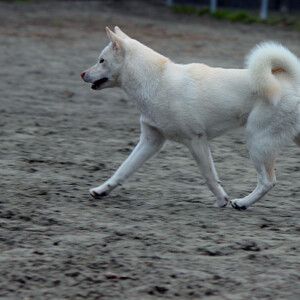
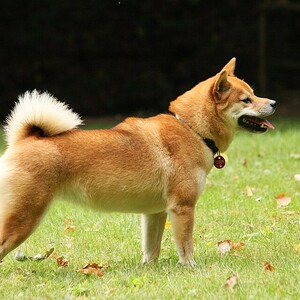
Shiba Inu. · Maja Dumat / Wikimedia Commons, CC BY 2.0. Cropped and resized.
The Shiba Inu is a small, fox-like Japanese dog of the Spitz type, originally used to hunt birds and small animals. Wikipedia says it is the smallest of Japan's six native breeds. The FCI standard describes it as faithful, with keen senses and very alert, and the AKC calls it dignified, brave and deeply loyal.
Quick facts
| Common name | Shiba Inu |
| Scientific name | Canis lupus familiaris |
| Country of origin | Japan |
| Official recognition | FCI, definitively since 18 March 1964 (group 5, Asian Spitz; standard no. 257); also recognised by the AKC |
| Lifespan | 13–16 years, according to the AKC |
| Size (males) | 39.5 cm at the withers (±1.5 cm); about 10 kg according to the AKC |
| Size (females) | 36.5 cm at the withers (±1.5 cm); about 8 kg according to the AKC |
| Coat type | Double: harsh, straight topcoat, soft and dense undercoat |
| Common colours | Red, black and tan, sesame, black sesame, red sesame, all with urajiro |
| Energy level | Medium |
| Suited to an apartment? | Yes, with daily walks |
| Temperament | Faithful, alert, dignified, brave, independent |
| Tendency to aggression | Moderate; may be quarrelsome with other dogs |
| Good with children | Moderate |
| Good with other animals | Moderate; hunting instinct |
| Genetic predispositions | Allergies, hip dysplasia, patellar luxation, eye diseases |
- Primary category:Dog breeds
- Explore this animal's categories:
History and origin
The FCI standard says the Shiba has lived in Japan since ancient times, and the word “shiba” meant “small”, “small dog”. It lived in the mountainous area near the Sea of Japan and was used to hunt small animals and birds. Between 1868 and 1912, with the arrival of English setters and pointers, crossbreeding made the pure Shiba very rare.
From around 1928, hunters and other enthusiasts began to preserve the few pure lines that remained, and the standard was unified in 1934. In 1937 the Shiba was declared a “natural monument” of Japan. Wikipedia says that after the Second World War a distemper epidemic killed many dogs, and today's breed comes from three surviving lines.
How the breed developed
- 1868–1912 – Crosses with English dogs; the pure Shiba becomes rare.
- Around 1928 – Efforts to preserve the breed begin.
- 1934 – The standard is unified.
- 1937 – Declared a natural monument of Japan.
- 18 March 1964 – The FCI recognises the breed.
Breed rating
| Feature | Stars |
|---|---|
| Training and intelligence | ★★★☆☆ |
| Easy to train | ★★★★★ |
| Intelligence | ★★★☆☆ |
| Independence | ★★★★☆ |
| Stubbornness | ★★★☆☆ |
| Behaviour and temperament | ★★★☆☆ |
| Affectionate with family | ★★★★☆ |
| Friendly with children | ★★★☆☆ |
| Good with other dogs | ★★★★☆ |
| Good with cats and other animals | ★★★☆☆ |
| Loyalty | ★★★☆☆ |
| Tendency to be aggressive | ★★★☆☆ |
| Tendency to bark | ★★★☆☆ |
| Needs and care | ★★☆☆☆ |
| Shedding | ★★★☆☆ |
| Needs frequent grooming | ★★★☆☆ |
| Activity and lifestyle | ★★★☆☆ |
| Energy level | ★★★★☆ |
| Daily exercise needs | ★★★☆☆ |
| Suited to apartment life | ★★★★★ |
| Health and longevity | ★★★☆☆ |
| Life expectancy | ★★★★☆ |
| Predisposition to genetic diseases | ★★☆☆☆ |
| Working abilities and uses | ★★☆☆☆ |
| Good companion dog | ★★★★☆ |
| Good companion dog | ★★★☆☆ |
Indicative rating: 5 stars means the highest level. It is based on the ratings the American Kennel Club gives the breed and on the FCI standard.
Physical characteristics
The standard describes it as a small, well-balanced dog with well-developed bone and muscle, a strong constitution and quick, free, beautiful movement. The AKC says its white markings, colour, alert expression and smooth gait make it look like a fox.
General appearance
The coat is double: a harsh, straight topcoat and a soft, dense undercoat. On the tail the hair is slightly longer and stands off. All colours have “urajiro”: whitish areas on the sides of the muzzle, the cheeks, under the jaw and neck, on the chest, belly, under the tail and on the inside of the legs.
| Feature | Shiba Inu |
|---|---|
| Size | Small |
| Height at the withers | males: 39.5 cm; females: 36.5 cm |
| Weight | males: ~10 kg; females: ~8 kg (AKC) |
| Coat | Double |
| Tail | Curled |
| Type | Spitz |
The standard accepts red, black and tan, sesame, black sesame and red sesame. “Sesame” is a mix of black, red and white hairs. All colours must have urajiro, the whitish areas on the muzzle, neck, chest, belly and inside of the legs.
Training and socialisation
The standard describes it as faithful, with keen senses and very alert. The AKC gives it 2 out of 5 for ease of training: it is independent and needs patience and consistency.
The AKC stresses something every owner must know: a Shiba can never be considered safe off the lead outside a fenced area, however much training it has had. An open door or an unlocked gate can put it in danger.
Tips for effective training
- Always keep it on a lead. The AKC says it is not safe off the lead.
- Be patient. It is independent.
- Check gates and doors. It can run off in an instant.
- Socialise it early. With people and other dogs.
Activity needs and lifestyle
The AKC says most Shibas are fairly energetic and enjoy walks. They are not so restless that they “climb the walls” without exercise, but the owner must walk them every day, especially if they have no yard.
| Activity | How often | Why it matters |
|---|---|---|
| Walks on the lead | daily | Fitness |
| Play in a fenced area | several times a week | Energy |
| Hiking | occasionally | It enjoys mountain terrain |
Tips for a balanced life
- It can also live in an apartment.
- Do not let it off the lead outside the yard.
- Brush it often during shedding.
Care and health
Coat and skin care
The AKC says the coat does not tangle, so infrequent brushing does it no harm, but brushing during heavy shedding reduces the hair in the house. Blowing the coat with a powerful dryer helps remove dead hair.
Common health problems
The AKC says the Shiba is generally healthy, and allergies are the most common problem. Watch for:
| Condition | Description | Common symptoms |
|---|---|---|
| Allergies | The most common problem, according to the AKC | Itching, irritated skin |
| Hip dysplasia | The hip joint forms incorrectly and, over time, arthritis develops | Limping, difficulty getting up or jumping, hip pain |
| Patellar luxation | The kneecap slips out of place | Suddenly holds a hind leg up for a few steps, then uses it again |
| Eye diseases | Inherited conditions | Poor vision |
Other care
- Ask for the parents' health tests.
- Check the skin for allergies.
- Go for yearly check-ups.
Diet and nutrition
The AKC says some Shibas are fussy eaters, while others will eat anything; some gain weight easily.
Tips for a healthy diet
The table gives a starting estimate, calculated with the formula from the Merck Veterinary Manual. The first two calorie columns show the calories per day for a healthy adult dog. The last column shows what this means in dry food with 3,500–4,000 kcal per kilogram.
| Dog's weight | Calories per day (neutered) | Calories per day (not neutered) | Dry food per day (approximate) |
|---|---|---|---|
| 8 kg | 530 kcal | 600 kcal | 130–170 g |
| 9 kg | 580 kcal | 650 kcal | 140–190 g |
| 10 kg | 630 kcal | 710 kcal | 160–200 g |
- Treats count towards the daily portion.
- Split the food into two meals a day.
- A dog is at the right weight when you can feel its ribs without pressing hard.
Foods to avoid
Some human foods are dangerous for dogs: chocolate, coffee, grapes and raisins, onions, garlic, xylitol (a sweetener used in chewing gum), macadamia nuts and alcohol.
Reproduction and development
Physical and emotional maturity
In dogs, sexual maturity usually comes between 6 and 12 months. Small breeds become adults faster than large ones, usually at around one year.
Mating and pregnancy
Pregnancy lasts about 63 days, counted from ovulation. Mating a female on her first heat is not recommended. The FCI standard requires that only healthy dogs of typical breed appearance are used for breeding.
Caring for the puppies
In small breeds, a litter has 3–4 puppies on average. The puppies are very small and fragile in the first weeks, so they must be kept warm and handled with care. Socialisation starts early: gentle handling, everyday noises and new people.
Interesting facts
- “The small dog”. The standard says “shiba” meant “small”.
- A natural monument. Japan declared it a natural monument in 1937.
- The most popular in Japan. The AKC says it is the most popular breed in its home country.
- It looks like a fox. Its colour and urajiro give it a fox-like look.
- Only three lines. Today's breed comes from three lines that survived the war.
In popular culture
Doge
Wikipedia says “Doge”, an internet meme from 2013, features Kabosu, a female Shiba Inu. The cryptocurrency Dogecoin is named after this meme.
Cheems
Another Shiba Inu, known as Cheems, went viral during the COVID-19 pandemic.
Frequently asked questions
Can it be let off the lead?
No; the AKC says it is not safe off the lead outside a fenced area.
What is urajiro?
The whitish areas on the muzzle, neck, chest and belly.
How big does it get?
Males measure 39.5 cm, females 36.5 cm.
How long does it live?
The AKC gives 13–16 years.
Is it easy to train?
Not very; it is independent and needs patience.