Teddy Roosevelt TerrierCharacteristics, history, training and care
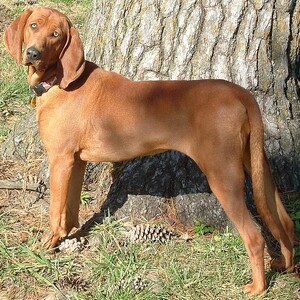
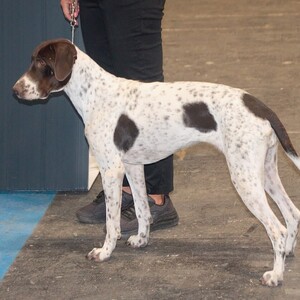
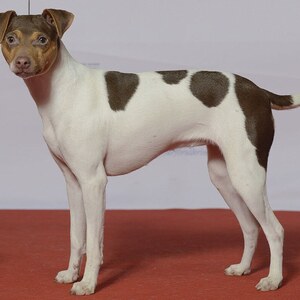
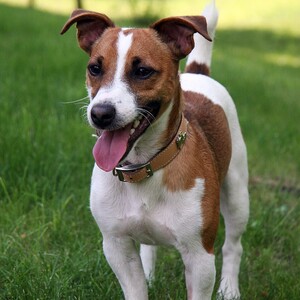
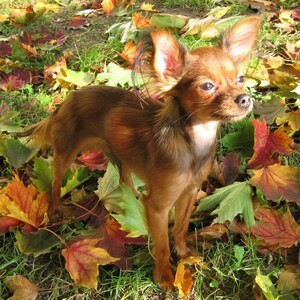
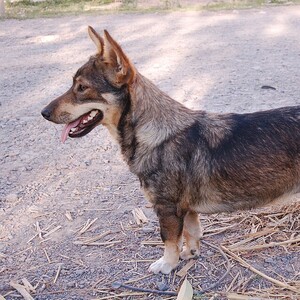
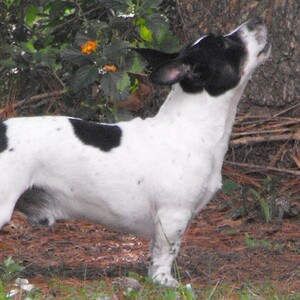
Teddy Roosevelt Terrier. · Dkm1987 / Wikimedia Commons, CC BY-SA 3.0. Cropped and resized.
The Teddy Roosevelt Terrier is a small to medium American hunting terrier, lower to the ground, with shorter legs, more muscular and heavier-boned than its close relative, the Rat Terrier. The AKC describes it as lively, friendly and affectionate with its family, sometimes a one-person dog, with a strong protective instinct. It is not recognised by the FCI.
Quick facts
| Common name | Teddy Roosevelt Terrier |
| Scientific name | Canis lupus familiaris |
| Country of origin | United States |
| Official recognition | Not recognised by the FCI; recognised by the UKC; in the AKC Foundation Stock Service |
| Lifespan | 14–16 years, according to the AKC |
| Size (males) | 20–36 cm at the withers; 3.6–11 kg according to the AKC |
| Size (females) | 20–36 cm at the withers; 3.6–11 kg according to the AKC |
| Coat type | Short |
| Common colours | Several colours |
| Energy level | High |
| Suited to an apartment? | Yes |
| Temperament | Lively, friendly, affectionate, protective, fun |
| Tendency to aggression | Low |
| Good with children | Very good, according to the AKC |
| Good with other animals | Very good, according to the AKC |
| Genetic predispositions | Lens luxation, chondrodystrophy (CDDY), patellar luxation, heart disease |
- Primary category:Dog breeds
- Explore this animal's categories:
History and origin
Wikipedia says the breed shares its history with the American Rat Terrier, the Fox Paulistinha and the Tenterfield Terrier. Its ancestors were the terriers and other dogs brought over by English immigrants and other workers. As farm, hunting and general-purpose dogs, they were not bred to a plan, but for their working qualities.
Its ancestors include the feist, the Bull Terrier, the Smooth Fox Terrier, the Manchester Terrier, the Whippet, the Italian Greyhound and the extinct English White Terrier; they were probably also crossed with Beagles, for a better nose.
How the breed developed
- Origins – The immigrants' terriers reach American farms.
- Today – Recognised by the UKC; in the AKC Foundation Stock Service.
Breed rating
| Feature | Stars |
|---|---|
| Training and intelligence | ★★★★★ |
| Easy to train | ★★★★★ |
| Intelligence | ★★★★★ |
| Independence | ★★★☆☆ |
| Stubbornness | ★★★★☆ |
| Behaviour and temperament | ★★★☆☆ |
| Affectionate with family | ★★★☆☆ |
| Friendly with children | ★★★☆☆ |
| Good with other dogs | ★★★★☆ |
| Good with cats and other animals | ★★★☆☆ |
| Loyalty | ★★★★☆ |
| Tendency to be aggressive | ★☆☆☆☆ |
| Tendency to bark | ★★★☆☆ |
| Needs and care | ★★★☆☆ |
| Shedding | ★★★★☆ |
| Needs frequent grooming | ★★★☆☆ |
| Activity and lifestyle | ★★★★☆ |
| Energy level | ★★★★☆ |
| Daily exercise needs | ★★★☆☆ |
| Suited to apartment life | ★★★★☆ |
| Health and longevity | ★★★★☆ |
| Life expectancy | ★★★★☆ |
| Predisposition to genetic diseases | ★☆☆☆☆ |
| Working abilities and uses | ★★★★★ |
| Good companion dog | ★★★★☆ |
| Good companion dog | ★★★☆☆ |
Indicative rating: 5 stars means the highest level. It is based on the ratings the American Kennel Club gives the breed; the breed is not recognised by the FCI.
Physical characteristics
Wikipedia says it is lower to the ground, with shorter legs, more muscular and heavier-boned than the American Rat Terrier.
General appearance
The coat is short and very easy to look after; it sheds seasonally.
| Feature | Teddy Roosevelt Terrier |
|---|---|
| Size | Small |
| Height at the withers | 20–36 cm (AKC) |
| Weight | 3.6–11 kg (AKC) |
| Coat | Short |
| Legs | Short |
| Type | Hunting terrier |
The Teddy Roosevelt Terrier comes in several colours.
Training and socialisation
The AKC describes it as lively, friendly and affectionate with its family, sometimes a one-person dog, with a strong protective and pack instinct. If raised with them, it gets on well with children, cats and other dogs.
The AKC says it is easy to train, excels at agility and obedience and thrives on praise.
Tips for effective training
- Praise it a lot. It thrives on praise.
- Raise it with children and cats. That way it gets on well with them.
- Try agility. It excels at it.
- Keep it busy. Its energy is almost limitless.
Activity needs and lifestyle
The AKC says it is an energetic breed with seemingly limitless energy: play in a fenced yard, walks several times a day and indoor games.
| Activity | How often | Why it matters |
|---|---|---|
| Walks | several times a day | Energy |
| Play in the yard | daily | Terrier instinct |
| Agility or obedience | weekly | Keeps its mind busy |
Tips for a balanced life
- It can also live in an apartment.
- The fence must be secure.
- Brush it weekly.
Care and health
Coat and skin care
The AKC says it is very easy to groom: a weekly brush with a soft brush or a rubber grooming mitt, and the occasional bath.
Common health problems
The AKC says most are healthy, and responsible breeders test their dogs for:
| Condition | Description | Common symptoms |
|---|---|---|
| Primary lens luxation | The lens of the eye shifts out of place | Red, painful eye |
| Chondrodystrophy (CDDY) | A genetic condition breeders test for | Back pain |
| Patellar luxation | The kneecap slips out of place | Suddenly holds a hind leg up for a few steps, then uses it again |
| Heart disease | Conditions of the heart | Tiredness, coughing |
Other care
- Ask for the parents' genetic tests.
- Keep it from making big jumps.
- Go for yearly check-ups.
Diet and nutrition
The AKC recommends good-quality food suited to the dog's age, and attention to its weight.
Tips for a healthy diet
The table gives a starting estimate, calculated with the formula from the Merck Veterinary Manual. The first two calorie columns show the calories per day for a healthy adult dog. The last column shows what this means in dry food with 3,500–4,000 kcal per kilogram.
| Dog's weight | Calories per day (neutered) | Calories per day (not neutered) | Dry food per day (approximate) |
|---|---|---|---|
| 3.6 kg | 290 kcal | 330 kcal | 72–94 g |
| 7 kg | 480 kcal | 540 kcal | 120–150 g |
| 11 kg | 680 kcal | 760 kcal | 170–220 g |
- Treats count towards the daily portion.
- Split the food into two meals a day.
- A dog is at the right weight when you can feel its ribs without pressing hard.
Foods to avoid
Some human foods are dangerous for dogs: chocolate, coffee, grapes and raisins, onions, garlic, xylitol (a sweetener used in chewing gum), macadamia nuts and alcohol.
Reproduction and development
Physical and emotional maturity
In dogs, sexual maturity usually comes between 6 and 12 months. Small breeds become adults faster than large ones, usually at around one year.
Mating and pregnancy
Pregnancy lasts about 63 days, counted from ovulation. Mating a female on her first heat is not recommended. Only healthy dogs of typical breed appearance should be used for breeding.
Caring for the puppies
In small breeds, a litter has 3–4 puppies on average. The puppies are very small and fragile in the first weeks, so they must be kept warm and handled with care. Socialisation starts early: gentle handling, everyday noises and new people.
Interesting facts
- A cousin of the Rat Terrier. But lower and more muscular.
- Many ancestors. From the Whippet to the Bull Terrier.
- A one-person dog. It sometimes bonds with just one person.
- Limitless energy. So says the AKC.
- Long-lived. The AKC gives 14–16 years.
Frequently asked questions
Is it recognised by the FCI?
No.
How does it differ from the Rat Terrier?
It is lower, with short legs, and more muscular.
Is it good with children?
Yes, especially if raised with them.
How long does it live?
The AKC gives 14–16 years.