HovawartCharacteristics, history, training and care
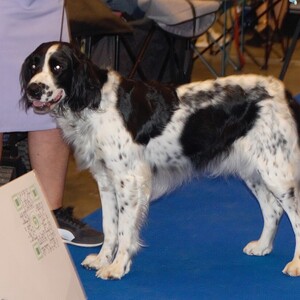
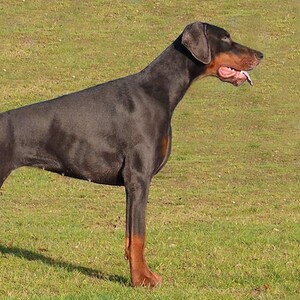
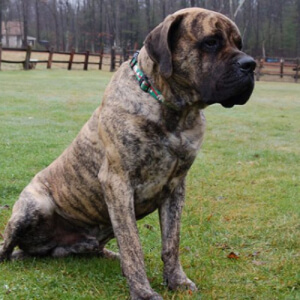
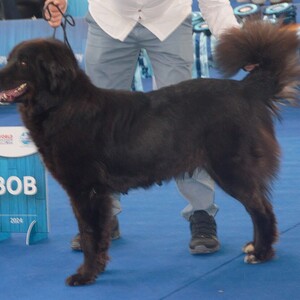
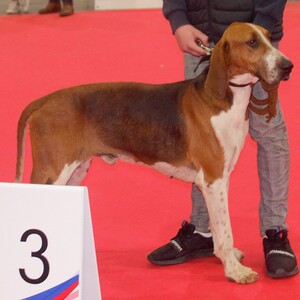
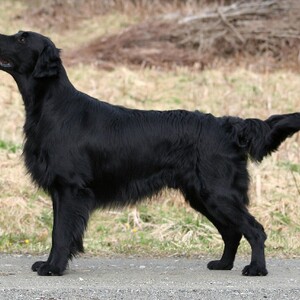
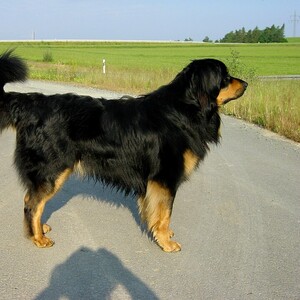
Hovawart. · Udo Schmidt from Deutschland / Wikimedia Commons, CC BY-SA 2.0. Cropped and resized.
The Hovawart is an old German working dog, long-coated, powerful and medium to large in size. The name comes from Middle High German: “hova” means yard or farm, and “wart” means guardian. It is good-natured and well balanced, protective and self-confident, very devoted to its family, and an excellent companion, guard, rescue and tracking dog.
Quick facts
| Common name | Hovawart |
| Scientific name | Canis lupus familiaris |
| Country of origin | Germany |
| Official recognition | FCI, definitively since 21 November 1955 (group 2, molossoid breeds; standard no. 190); recognised as a breed in Germany in 1937 |
| Lifespan | 10–14 years, according to the AKC |
| Size (males) | 63–70 cm at the withers; about 30–41 kg (AKC) |
| Size (females) | 58–65 cm at the withers |
| Coat type | Long, dense, slightly wavy, close-lying, with little undercoat |
| Common colours | Black and gold, black, blond |
| Energy level | Moderate |
| Suited to an apartment? | Not really; it needs space |
| Temperament | Good-natured, well balanced, protective, self-confident |
| Tendency to aggression | Low; the standard disqualifies aggressive dogs |
| Good with children | Good |
| Good with other animals | Good |
| Genetic predispositions | No known diseases specific to the breed; hip dysplasia very rare |
- Primary category:Dog breeds
- Explore this animal's categories:
History and origin
The FCI standard says the Hovawart is a very old German working breed. The name comes from Middle High German: “Hova” (yard, farm, estate) and “wart” (guardian).
From 1922 the breed was rebuilt from dogs of the same type still found on farms, crossed with German Shepherds, Newfoundlands and Leonbergers, among others. It was recognised as a breed in 1937 and as a working dog in 1964. Through careful selection, started in the 1960s, hip dysplasia has been almost eliminated.
How the breed developed
- Middle Ages – The dogs guard German yards and farms.
- 1922 – The rebuilding of the breed from farm dogs begins.
- 1937 – The breed is recognised in Germany.
- 21 November 1955 – The FCI recognises the breed.
- 1964 – It is recognised as a working dog.
- 21 March 2025 – The current FCI standard is published.
Breed rating
| Feature | Stars |
|---|---|
| Training and intelligence | ★★★★☆ |
| Easy to train | ★★★★☆ |
| Intelligence | ★★★★★ |
| Independence | ★★★★☆ |
| Stubbornness | ★★★★☆ |
| Behaviour and temperament | ★★★★☆ |
| Affectionate with family | ★★★★★ |
| Friendly with children | ★★★★☆ |
| Good with other dogs | ★★★★☆ |
| Good with cats and other animals | ★★★☆☆ |
| Loyalty | ★★★★★ |
| Tendency to be aggressive | ★★☆☆☆ |
| Tendency to bark | ★☆☆☆☆ |
| Needs and care | ★★★★☆ |
| Shedding | ★★★☆☆ |
| Needs frequent grooming | ★★☆☆☆ |
| Activity and lifestyle | ★★★★☆ |
| Energy level | ★★★☆☆ |
| Daily exercise needs | ★★★★☆ |
| Suited to apartment life | ★★☆☆☆ |
| Health and longevity | ★★★★☆ |
| Life expectancy | ★★★★☆ |
| Predisposition to genetic diseases | ★☆☆☆☆ |
| Working abilities and uses | ★★★★★ |
| Good guard dog | ★★★★★ |
| Good companion dog | ★★★★☆ |
Indicative rating: 5 stars means the highest level. It is based on the ratings the American Kennel Club gives the breed and on the FCI standard.
Physical characteristics
The standard describes it as a powerful, medium to large, long-coated working dog, slightly longer than it is tall. Males and females differ clearly, especially in the shape of the head and body.
General appearance
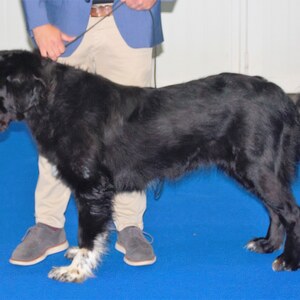
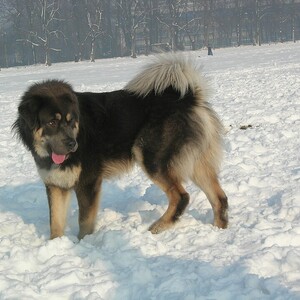
Wikipedia says the oval eyes are brown and the triangular ears hang down. The tail reaches the hock, but not the ground. The coat is feathered on the front of the neck, under the body, on the back of the legs and under the tail.
| Feature | Hovawart |
|---|---|
| Size | Large |
| Height at the withers | males: 63–70 cm; females: 58–65 cm |
| Weight | about 30–41 kg |
| Coat | Long, slightly wavy, close-lying |
| Eyes | Oval, brown |
| Ears | Triangular, hanging |
The Hovawart comes in three colours: black and gold (the most common, according to Wikipedia), black and blond. Large white patches, brown or blue are not accepted.
Training and socialisation
The standard describes it as a versatile working dog with a good, well-balanced nature, a protective instinct, self-confidence and resilience under stress, a medium temperament and a very good nose. Its devotion to its family makes it an excellent companion.
The AKC says the guarding instinct is best managed through socialisation and exposure to different situations. Without guidance, the Hovawart makes its own decisions, which may not be the ones you want. It is intelligent, but also stubborn.
Tips for effective training
- Socialise it thoroughly. The AKC says this is how the guarding instinct is managed.
- Give it a job. Otherwise it will invent one for itself.
- Be consistent. It can be stubborn.
- Try dog sports. It is good at tracking, rescue and obedience.
Activity needs and lifestyle
The AKC says it needs at least a one-hour walk every day, plus 3–4 short outings. A large, fenced garden is preferable, but hikes and dog parks can make up for it.
| Activity | How often | Why it matters |
|---|---|---|
| Long walk | daily, at least an hour | The AKC recommendation |
| Short outings | 3–4 times a day | Toilet breaks |
| Dog sport or tracking | weekly | Mental activity |
Tips for a balanced life
- A large, fenced garden is ideal.
- It suits an active family.
- It copes well with cold.
Care and health
Coat and skin care
The AKC says that, as it has little undercoat, it does not need much grooming. Outside the moulting season, an occasional brush and the odd bath are enough. The nails grow quickly and should be trimmed regularly.
Common health problems
The AKC says Hovawarts are very healthy and long-lived. There are no known diseases specific to the breed, and the rate of hip dysplasia is under 5%, very low for a large breed. Still, it is worth watching for:
| Condition | Description | Common symptoms |
|---|---|---|
| Hip dysplasia | The hip joint forms incorrectly and, over time, arthritis develops | Limping, difficulty getting up or jumping, hip pain |
| Gastric dilatation-volvulus (bloat) | The stomach fills with gas and may twist; this is a veterinary emergency | Swollen belly, trying to vomit without success, drooling, restlessness |
Other care
- Trim the nails regularly.
- Check the ears and teeth weekly.
- Brush it more often during the moulting season.
Diet and nutrition
A large, active dog needs good-quality large-breed food, suited to each stage of life.
Tips for a healthy diet
The table gives a starting estimate, calculated with the formula from the Merck Veterinary Manual. The first two calorie columns show the calories per day for a healthy adult dog. The last column shows what this means in dry food with 3,500–4,000 kcal per kilogram.
| Dog's weight | Calories per day (neutered) | Calories per day (not neutered) | Dry food per day (approximate) |
|---|---|---|---|
| 30 kg | 1,440 kcal | 1,620 kcal | 360–460 g |
| 35 kg | 1,610 kcal | 1,810 kcal | 400–520 g |
| 41 kg | 1,810 kcal | 2,040 kcal | 450–580 g |
- Split the food into two meals a day to reduce the risk of bloat.
- Training treats count towards the daily portion.
- A dog is at the right weight when you can feel its ribs under the coat without pressing hard.
Foods to avoid
Some human foods are dangerous for dogs: chocolate, coffee, grapes and raisins, onions, garlic, xylitol (a sweetener used in chewing gum), macadamia nuts and alcohol.
Reproduction and development
Physical and emotional maturity
In dogs, sexual maturity usually comes between 6 and 12 months, but in large breeds it can be delayed until about two years. The body also reaches its adult form later than in small breeds.
Mating and pregnancy
Pregnancy lasts about 63 days, counted from ovulation. Mating a female on her first heat is not recommended. The FCI standard requires that only healthy dogs of typical breed appearance are used for breeding.
Caring for the puppies
In large breeds, a litter has around 7 puppies on average. Socialisation starts in the first weeks: gentle handling, everyday noises and new people.
Interesting facts
- “Guardian of the yard”. That is how its name translates from Middle High German.
- No dysplasia. Careful selection has made hip dysplasia very rare.
- Three colours. Black and gold, solid black, and blond.
- It barks little. The AKC gives it the lowest score for barking.
- A rescue dog. It is also used for search and rescue and tracking.
Frequently asked questions
What does “Hovawart” mean?
It means “guardian of the yard”, from Middle High German.
How big does it get?
Males measure 63–70 cm and females 58–65 cm at the withers.
Is it a good guard dog?
Yes, it has a protective instinct, but it must be well socialised.
How long does it live?
The AKC gives 10–14 years.