ChinookCharacteristics, history, training and care
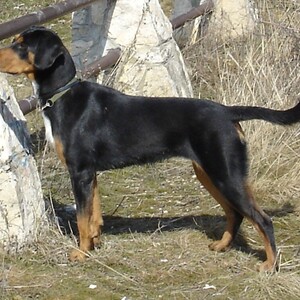
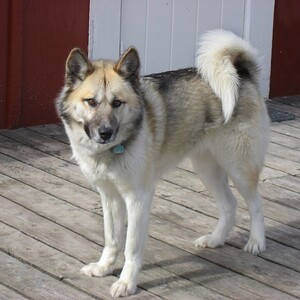
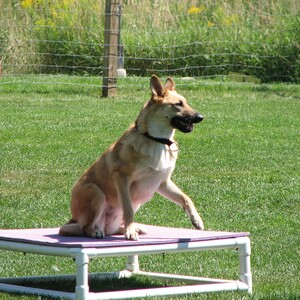
Chinook. · jude / Wikimedia Commons, CC BY 2.0. Cropped and resized.
The Chinook is an American sled dog, created in the early 20th century in New Hampshire, whose official dog it is. It has a tawny double coat. Wikipedia describes it as an affectionate, playful family companion with a special devotion to children, eager to please and easy to train. It is not recognised by the FCI; the AKC recognises it.
Quick facts
| Common name | Chinook |
| Scientific name | Canis lupus familiaris |
| Country of origin | United States (New Hampshire) |
| Official recognition | Not recognised by the FCI; recognised by the AKC and the UKC |
| Lifespan | 12–15 years, according to the AKC |
| Size (males) | 61–66 cm at the withers; 25–41 kg according to the AKC |
| Size (females) | 56–61 cm at the withers; 23–29 kg according to the AKC |
| Coat type | Double, medium-length, fluffy |
| Common colours | Tawny, from pale honey to reddish-gold |
| Energy level | High |
| Suited to an apartment? | Only with plenty of exercise |
| Temperament | Affectionate, playful, devoted to children, sociable |
| Tendency to aggression | Very low |
| Good with children | Very good |
| Good with other animals | Very good with dogs |
| Genetic predispositions | Hip dysplasia, cryptorchidism, digestive problems, allergies, “Chinook seizures” |
- Primary category:Dog breeds
- Explore this animal's categories:
History and origin
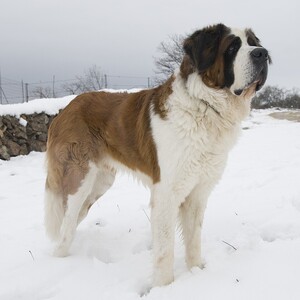
Wikipedia says the breed owes its existence to a single man: Arthur Treadwell Walden of Wonalancet, New Hampshire. It starts with a male born in 1917, named “Chinook”, Walden's lead dog and stud. Chinook's parents were a Greenland dog descended from the lead dog of Peary's expedition to the North Pole and a large Mastiff and Saint Bernard mix.
Walden then crossed Chinook with Belgian Shepherds, German Shepherds and Canadian Eskimo Dogs. The AKC says the Chinook was designed as a dual-purpose sled dog: the strength of freighting dogs and the speed of racing dogs.
How the breed developed
- 1917 – Chinook, the ancestor of the breed, is born.
- Today – The official dog of the state of New Hampshire.
Breed rating
| Feature | Stars |
|---|---|
| Training and intelligence | ★★★★☆ |
| Easy to train | ★★★★☆ |
| Intelligence | ★★★★★ |
| Independence | ★★★★★ |
| Stubbornness | ★★★★☆ |
| Behaviour and temperament | ★★★★☆ |
| Affectionate with family | ★★★★★ |
| Friendly with children | ★★★★★ |
| Good with other dogs | ★★★☆☆ |
| Good with cats and other animals | ★★★★★ |
| Loyalty | ★★★★☆ |
| Tendency to be aggressive | ★★☆☆☆ |
| Tendency to bark | ★★★★☆ |
| Needs and care | ★★★☆☆ |
| Shedding | ★★★★☆ |
| Needs frequent grooming | ★★★☆☆ |
| Activity and lifestyle | ★★★★★ |
| Energy level | ★★★★★ |
| Daily exercise needs | ★★★★☆ |
| Suited to apartment life | ★★★☆☆ |
| Health and longevity | ★★★★☆ |
| Life expectancy | ★★★★☆ |
| Predisposition to genetic diseases | ★☆☆☆☆ |
| Working abilities and uses | ★★★★☆ |
| Good companion dog | ★★★★☆ |
| Good companion dog | ★★★★☆ |
Indicative rating: 5 stars means the highest level. It is based on the ratings the American Kennel Club gives the breed; the breed is not recognised by the FCI.
Physical characteristics
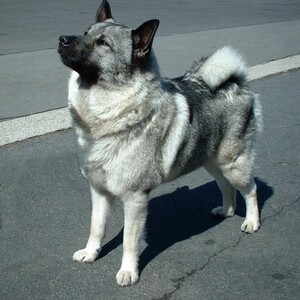
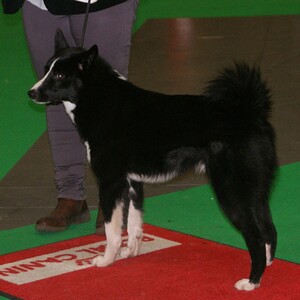
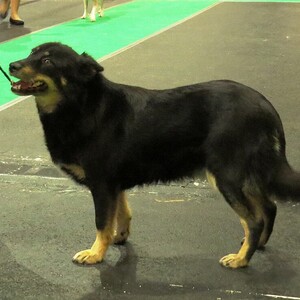
The AKC describes it as muscular and solid, with males of up to 66 cm. Wikipedia says its head is more rectangular than that of other sled dogs, its ears preferably drop, and its tail is like a sabre, not like the plume of the Arctic breeds.
General appearance
The medium-length double coat is fluffy and fairly easy to care for.
| Feature | Chinook |
|---|---|
| Size | Large |
| Height at the withers | males: 61–66 cm; females: 56–61 cm |
| Weight | 23–41 kg (AKC) |
| Coat | Double, medium |
| Colour | Tawny |
| Type | Sled dog |
The UKC standard, quoted by Wikipedia, describes the ideal colour as ranging from pale honey to deep reddish-gold, with dark markings at the inner corners of the eyes, on the ears and on the muzzle. White patches are not allowed.
Training and socialisation
Wikipedia says it is eager to please and to learn, very easy to train, adaptable and versatile. The AKC says it trains easily with positive methods and that, unlike most sled dogs, it can be trusted off the lead.
The AKC gives it the top score for barking, so it is worth teaching it early when to be quiet.
Tips for effective training
- Use positive methods. It learns easily.
- Go to puppy classes. The AKC recommends them.
- Teach it “quiet”. It can be vocal.
- Take it with you. It becomes very attached to its owner.
Activity needs and lifestyle
The AKC says it seems relaxed at home, but has a great deal of energy and thrives on exercise and play: long walks, hikes, bike rides, camping and even swimming.
| Activity | How often | Why it matters |
|---|---|---|
| Long walks or hikes | daily | Energy |
| Sledding or harness work | in winter, occasionally | Instinct |
| Play | daily | Bond with the family |
Tips for a balanced life
- Suited to active families.
- Brush it daily while it is moulting.
- Include it in family outings.
Care and health
Coat and skin care
The AKC says the double coat is fairly easy to care for: weekly brushing, and longer daily sessions during the moulting season.
Common health problems
The AKC says it is a robust breed, but prone to a few problems:
| Condition | Description | Common symptoms |
|---|---|---|
| Hip dysplasia | The hip joint forms incorrectly and, over time, arthritis develops | Limping, difficulty getting up or jumping, hip pain |
| Cryptorchidism | One or both testicles do not descend | Seen at the puppy's check-up |
| Digestive problems and allergies | Common in the breed | Diarrhoea, itching |
| “Chinook seizures” | A condition named after the breed, seen in some dogs | Unusual episodes of movement |
Other care
- Ask for the parents' hip tests.
- Go for yearly check-ups.
- Keep it at the right weight.
Diet and nutrition
The AKC recommends good-quality food suited to the dog's age, and attention to its weight.
Tips for a healthy diet
The table gives a starting estimate, calculated with the formula from the Merck Veterinary Manual. The first two calorie columns show the calories per day for a healthy adult dog. The last column shows what this means in dry food with 3,500–4,000 kcal per kilogram.
| Dog's weight | Calories per day (neutered) | Calories per day (not neutered) | Dry food per day (approximate) |
|---|---|---|---|
| 23 kg | 1,180 kcal | 1,320 kcal | 300–380 g |
| 32 kg | 1,510 kcal | 1,700 kcal | 380–490 g |
| 41 kg | 1,810 kcal | 2,040 kcal | 450–580 g |
- Adjust the portion to its level of effort.
- Do not let it run right after a meal.
- A dog is at the right weight when you can feel its ribs under the coat without pressing hard.
Foods to avoid
Some human foods are dangerous for dogs: chocolate, coffee, grapes and raisins, onions, garlic, xylitol (a sweetener used in chewing gum), macadamia nuts and alcohol.
Reproduction and development
Physical and emotional maturity
In dogs, sexual maturity usually comes between 6 and 12 months, but in large breeds it can be delayed until about two years. The body also reaches its adult form later than in small breeds.
Mating and pregnancy
Pregnancy lasts about 63 days, counted from ovulation. Mating a female on her first heat is not recommended. Only healthy dogs of typical breed appearance should be used for breeding.
Caring for the puppies
In large breeds, a litter has around 7 puppies on average. Socialisation starts in the first weeks: gentle handling, everyday noises and new people.
Interesting facts
- A single ancestor. The male Chinook, born in 1917.
- New Hampshire's dog. The official state dog.
- Reliable off the lead. Unlike other sled dogs.
- Linked to the Peary expedition. Chinook's grandfather came from the expedition to the Pole.
- A tail like a sabre. Not a plume, as in the Arctic breeds.
Frequently asked questions
Is it recognised by the FCI?
No; it is recognised by the AKC and the UKC.
Is it good with children?
Yes; it has a special devotion to children.
Can it be let off the lead?
The AKC says it can be trusted.
How long does it live?
The AKC gives 12–15 years.