Curly-Coated RetrieverCharacteristics, history, training and care
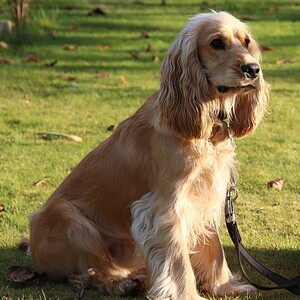
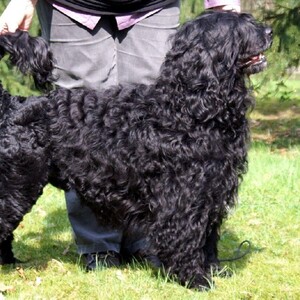
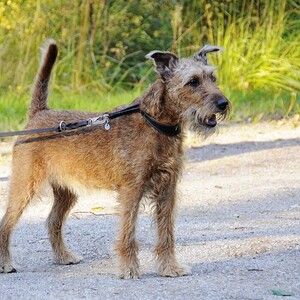
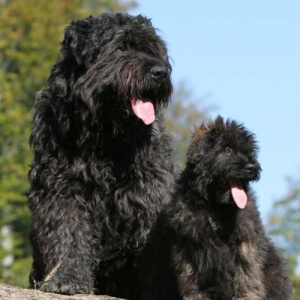
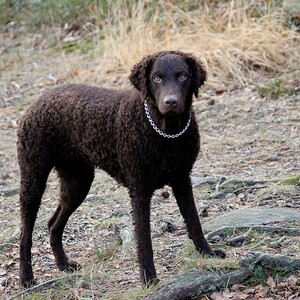
Curly-Coated Retriever. · Mattias Agar / Wikimedia Commons, CC BY-SA 2.0. Cropped and resized.
The Curly-Coated Retriever is an English gundog, the tallest of the retrievers. It is instantly recognisable by its coat of small, tight curls, which protects it from water and brambles. It is intelligent, confident and affectionate with its family, but more independent and reserved than other retrievers.
Quick facts
| Common name | Curly-Coated Retriever (Curly) |
| Scientific name | Canis lupus familiaris |
| Country of origin | United Kingdom (England) |
| Official recognition | FCI, definitively since 10 December 1954 (group 8, retrievers, with working trial; standard no. 110); also recognised by the AKC |
| Lifespan | 10–12 years, according to the AKC; a 2024 British study found 12.2 years |
| Size (males) | ideally 69 cm at the withers (FCI); AKC: 64–69 cm |
| Size (females) | ideally 64 cm at the withers (FCI); AKC: 58–64 cm |
| Weight | about 27–43 kg (AKC) |
| Coat type | Small, tight, crisp curls, no undercoat; short hair on the head and legs |
| Common colours | Solid black or liver (brown) |
| Energy level | High |
| Suited to an apartment? | It can adapt, if it gets plenty of exercise |
| Temperament | Intelligent, steady, confident, independent |
| Tendency to aggression | Low; reserved with strangers |
| Good with children | Very good |
| Good with other animals | Good |
| Genetic predispositions | Hip dysplasia, heart and eye diseases, bloat, some forms of cancer |
- Primary category:Dog breeds
- Explore this animal's categories:
History and origin
The breed developed in England in the 19th century. The AKC says there are no written records of its beginnings, but it is thought to descend from two extinct breeds: the English Water Spaniel and the “Retrieving Setter”. The Irish Water Spaniel and the St John's dog, a small type of Newfoundland, probably also contributed.
It was bred as a gundog for gamekeepers, working on upland game and waterfowl. The Curly and the “Wavy Coated” (today's Flat-Coated Retriever) were the first two retriever breeds to be recognised, as early as around 1860, when the Curly was an attraction at the first dog shows in England.
How the breed developed
- 19th century – The breed develops in England.
- Around 1860 – It appears at the first English dog shows and is among the first recognised retrievers.
- 10 December 1954 – The FCI recognises the breed.
- 8 September 2026 – the current FCI standard is published.
Breed rating
| Feature | Stars |
|---|---|
| Training and intelligence | ★★★★☆ |
| Easy to train | ★★★★☆ |
| Intelligence | ★★★★★ |
| Independence | ★★★★☆ |
| Stubbornness | ★★★☆☆ |
| Behaviour and temperament | ★★★★☆ |
| Affectionate with family | ★★★★★ |
| Friendly with children | ★★★★★ |
| Good with other dogs | ★★★☆☆ |
| Good with cats and other animals | ★★★☆☆ |
| Loyalty | ★★★★☆ |
| Tendency to be aggressive | ★★☆☆☆ |
| Tendency to bark | ★★★☆☆ |
| Needs and care | ★★★★☆ |
| Shedding | ★★☆☆☆ |
| Needs frequent grooming | ★☆☆☆☆ |
| Activity and lifestyle | ★★★★☆ |
| Energy level | ★★★★☆ |
| Daily exercise needs | ★★★★☆ |
| Suited to apartment life | ★★★☆☆ |
| Health and longevity | ★★★★☆ |
| Life expectancy | ★★★☆☆ |
| Predisposition to genetic diseases | ★★★☆☆ |
| Working abilities and uses | ★★★★☆ |
| Good hunting dog | ★★★★★ |
| Good companion dog | ★★★★☆ |
Indicative rating: 5 stars means the highest level. It is based on the ratings the American Kennel Club gives the breed and on the FCI standard.
Physical characteristics
The standard describes it as a strong, upstanding dog with a certain elegance and an unmistakable coat. The body is slightly longer than it is tall. Wikipedia says it looks long-legged, but is balanced, agile and hardy.
General appearance
The head is a long wedge, different from that of other retrievers. The large, oval eyes are dark brown in black dogs and brown in liver dogs. The small ears lie close to the head and are covered in small curls. The tail reaches the hock and is carried straight, level with the back.
| Feature | Curly-Coated Retriever |
|---|---|
| Size | Large |
| Height at the withers | males: ideally 69 cm; females: ideally 64 cm |
| Weight | about 27–43 kg |
| Coat | Small, tight curls, no undercoat |
| Eyes | Large, oval, brown |
| Ears | Small, covered in curls |
Only solid black and liver (brown) are accepted. Any other colour or combination is not accepted.
Training and socialisation
The standard describes it as intelligent, steady, reliable, brave, friendly, confident and independent. It can seem aloof.
The AKC says it needs a firm but gentle owner: too harsh, and the dog withdraws; too soft or unclear, and it stops listening. Avoid too much repetition, as it gets bored.
Tips for effective training
- Make training fun. It quickly gets bored with repetition.
- Be firm but gentle. It is sensitive to harshness.
- Socialise it as a puppy. It can be reserved with strangers.
- Give it a chance to swim. Its coat is made for water.
Activity needs and lifestyle
The AKC says it needs plenty of exercise, but settles down nicely at home. It enjoys running, swimming and playing with the family.
| Activity | How often | Why it matters |
|---|---|---|
| Long walks or running | daily | Burns off energy |
| Swimming and retrieving from water | weekly | The work it was bred for |
| Training or dog sports | several times a week | Mental activity |
Tips for a balanced life
- It suits an active, nature-loving family.
- It does not need a big house, as long as it gets enough exercise.
- Keep it close to the family: it loves human company.
Care and health
Coat and skin care
The AKC says most owners never brush a Curly, because brushing makes the coat frizz badly. It is enough to wet the coat and let it air-dry, which brings out the curls. Females shed roughly every six months; the dead hair is then removed with a metal-toothed rake.
Common health problems
The AKC says most Curlies are healthy, and breeders test hips, eyes and heart. It is worth watching for:
| Condition | Description | Common symptoms |
|---|---|---|
| Hip dysplasia | The hip joint forms incorrectly and, over time, arthritis develops | Limping, difficulty getting up or jumping, hip pain |
| Gastric dilatation-volvulus (bloat) | The stomach fills with gas and may twist; this is a veterinary emergency | Swollen belly, trying to vomit without success, drooling, restlessness |
| Heart disease | Hereditary heart conditions | Tiredness, coughing, laboured breathing |
| Eye diseases | Inherited eye conditions | Poor vision, cloudy eyes |
Other care
- Check the ears after swimming.
- Brush its teeth regularly.
- Trim the nails when they start to touch the floor.
Diet and nutrition
The AKC says most Curlies do well on good-quality dry food. Too many treats lead to obesity.
Tips for a healthy diet
The table gives a starting estimate, calculated with the formula from the Merck Veterinary Manual. The first two calorie columns show the calories per day for a healthy adult dog. The last column shows what this means in dry food with 3,500–4,000 kcal per kilogram.
| Dog's weight | Calories per day (neutered) | Calories per day (not neutered) | Dry food per day (approximate) |
|---|---|---|---|
| 27 kg | 1,330 kcal | 1,490 kcal | 330–430 g |
| 35 kg | 1,610 kcal | 1,810 kcal | 400–520 g |
| 43 kg | 1,880 kcal | 2,120 kcal | 470–610 g |
- Split the food into two meals a day to reduce the risk of bloat.
- Do not let it run right after a meal.
- A dog is at the right weight when you can feel its ribs without pressing hard.
Foods to avoid
Some human foods are dangerous for dogs: chocolate, coffee, grapes and raisins, onions, garlic, xylitol (a sweetener used in chewing gum), macadamia nuts and alcohol.
Reproduction and development
Physical and emotional maturity
In dogs, sexual maturity usually comes between 6 and 12 months, but in large breeds it can be delayed until about two years. The body also reaches its adult form later than in small breeds.
Mating and pregnancy
Pregnancy lasts about 63 days, counted from ovulation. Mating a female on her first heat is not recommended. The FCI standard requires that only healthy dogs of typical breed appearance are used for breeding.
Caring for the puppies
In large breeds, a litter has around 7 puppies on average. Socialisation starts in the first weeks: gentle handling, everyday noises and new people.
Interesting facts
- The tallest retriever. Wikipedia says it is the tallest of the retrievers.
- A waterproof coat. The tight curls repel water and brambles.
- A soft mouth. It holds game gently, without damaging it.
- Among the first retrievers. It was recognised as early as around 1860.
- No brushing. A brush ruins its curls; the coat is cared for with water.
Frequently asked questions
How does it differ from other retrievers?
By its coat of small, tight curls, its wedge-shaped head and its more independent nature.
How big does it get?
The FCI standard gives an ideal of 69 cm for males and 64 cm for females.
Does it need brushing?
No. A brush ruins the curls; the coat is wetted and left to dry.
Is it a family dog?
Yes, it is affectionate and very good with children, but it needs plenty of exercise.
How long does it live?
The AKC gives 10–12 years.