JaguarInteresting facts and information
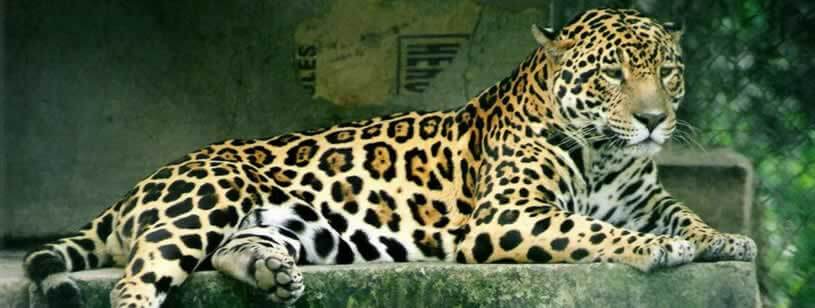
The jaguar (Panthera onca) is the largest living cat native to the Americas. It uses habitats including tropical forests and wetlands and hunts many kinds of animals. Most jaguars have spotted coats, while some are dark-coloured.
Jaguars are versatile, opportunistic hunters that adapt to many habitats, from dense rainforests to savannas and wetlands. Although they are masters of camouflage, their numbers are falling because of deforestation and poaching.
As an important symbol in the beliefs of the Indigenous peoples of Latin America, the jaguar remains one of the most respected and feared animals in the world.
Quick facts
| Common name | Jaguar |
| Scientific name | Panthera onca |
| Typical lifespan | 12 to 15 years in the wild, up to about 20 years in captivity |
| Maximum speed | About 65 km/h in short bursts |
| Dimensions | 1.1 - 1.8 m long (without the tail) |
| Weight | Females: about 56 - 96 kg; males: about 90 - 158 kg in the largest populations |
| Diet type | Carnivore (mammals, reptiles, birds, fish) |
| Main predators | Humans (poaching, habitat destruction) |
| Conservation status | Near Threatened (IUCN) |
| Distribution | South and Central America; rare in the southern USA |
| Habitat | Tropical forests, wetlands, savannas, river banks |
Interesting facts
- A record-breaking bite - For its size, the jaguar has the most powerful bite of any big cat and can bite through the skull of its prey.
- An excellent swimmer - Unlike many other cats, jaguars like water and swim well, hunting fish and caimans.
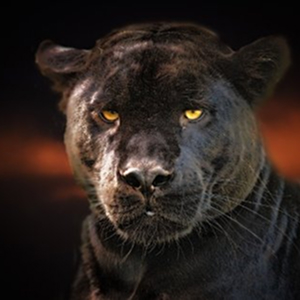
- Black jaguars are still jaguars - Some jaguars (roughly one in ten) are melanistic and look completely black, but their spots can still be seen in good light.
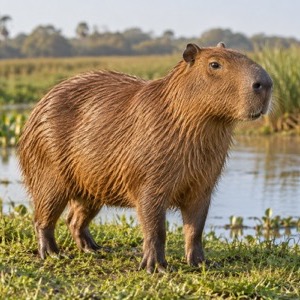
- It can kill prey larger than itself - A jaguar can bring down capybaras, caimans and even cattle and horses.
- It often kills with a bite to the head - While many cats suffocate their prey, the jaguar often bites through the skull or neck, killing it almost instantly.
Records and remarkable features
- The jaguar is the largest cat in the Americas and the third-largest in the world, after the tiger and the lion.
- Relative to its size, it has the strongest bite of any big cat.
Characteristics
The jaguar (Panthera onca) is a sturdy, powerful predator adapted to hunting many different animals. With its compact, muscular body, it relies on strength, agility and camouflage to catch its prey.
Main physical features:
| Feature | Details |
|---|---|
| Size | 1.1 - 1.8 m long (without the tail) |
| Tail | 45 - 75 cm long |
| Weight | Females: about 56 - 96 kg; males: about 90 - 158 kg in the largest populations |
| Colour | Golden-yellow with black rosettes |
| Colour variations | Melanism (black jaguars); albinism is extremely rare |
| Top speed | About 65 km/h in short bursts |
| Bite | The strongest of any big cat relative to body size; able to crush bone |
| Paws | Large and strong, suited to hunting and climbing |
Special adaptations:
- Great muscle power - The jaguar's compact, powerful body lets it bring down large prey.
- Effective camouflage - Its spotted coat matches the patterns of light and shade in the forest, helping it hide from prey.
- Strong teeth and jaws - Its jaws are powerful enough to crack turtle shells and crush bones.
- Jaguars swim and take varied prey, which can include fish, capybaras and caimans.
Habits and behaviour
The jaguar is a solitary predator, active mostly at night and at dusk, which patrols its territory in search of prey. Rather than chasing prey over long distances, it creeps close and strikes suddenly.
Social behaviour:
- Solitary and territorial - Jaguars mark their territory with urine, scratches on trees and loud calls.
- Little contact with others - Males and females usually meet only to mate.
- Communication by sound and scent - Their call is a deep, rasping cough, often compared to the sound of sawing wood.
Feeding and hunting methods:
- A very varied diet - The jaguar is an opportunistic hunter known to eat more than 85 different species.
- Its hunting technique - It approaches its prey slowly and quietly, pounces, and kills with a powerful bite to the skull or neck. It may then drag its prey to a safe place.
- It adapts to its surroundings - In forests it hunts peccaries, monkeys and sloths; in wetlands it catches fish and caimans; and in open country it hunts deer and wild pigs.
Defence and survival strategies:
- Avoiding fights - When another jaguar enters its territory, it usually tries to warn it off with calls before fighting.
- A master of ambush - Unlike the lion, the jaguar does not chase prey over long distances; it relies on surprise attacks.
- Using its surroundings - When threatened, it can escape into dense vegetation, up trees or into water.
Habitat and geographic distribution
The jaguar is adaptable and lives in many environments, but it prefers dense tropical forests and wetlands near water, where its camouflage works best.
Habitat types:
| Habitat | Main regions |
|---|---|
| Tropical rainforests | Amazon, Central America |
| Wetlands and seasonally flooded grasslands | Pantanal (Brazil, Bolivia, Paraguay) |
| Swamps | Orinoco Delta |
| Mountain forests | Lower slopes of the Andes |
| River and lake shores | South and Central America |
Geographic distribution:
- South America - The largest populations live in Brazil, Peru, Bolivia, Venezuela and Colombia.
- Central America - Jaguars live in countries such as Costa Rica, Guatemala, Belize and Mexico.
- The United States - Jaguars once lived in Texas, Arizona and New Mexico; today only occasional individuals are seen near the Mexican border.
- The Amazon - Roughly half of all jaguars are thought to live in the Amazon rainforest.
Impact of climate change and human activities:
- Deforestation and habitat loss - The spread of farmland and logging reduces the jaguars' hunting grounds.
- Conflict with people - Jaguars are often killed by ranchers because they sometimes attack cattle.
- Fragmented populations - Roads, farms and settlements cut jaguar populations off from each other.
- Less prey - Overhunting of capybaras, deer and other animals reduces the jaguars' food.
Jaguars are highly adaptable, but habitat loss is the biggest threat to their survival.
Diet and feeding
The jaguar is an opportunistic carnivore with one of the most varied diets of any big cat. Thanks to its impressive bite, it can hunt large mammals, reptiles and even fish.
Types of food:
| Type of prey | Examples |
|---|---|
| Large mammals | Capybaras, tapirs, deer, peccaries |
| Large reptiles | Caimans, turtles, snakes |
| Birds | Parrots, egrets, waterbirds |
| Fish | Catfish, piranhas |
| Rodents and others | Agoutis, porcupines |
Hunting methods:
- Ambush - The jaguar stalks its prey from a distance, hiding in dense vegetation.
- A fatal bite - Instead of strangling its prey, the jaguar often bites straight through the skull or neck, killing almost instantly.
- Hunting in water - Unlike most cats, the jaguar enters the water to catch fish and caimans.
- Moving its kill - The jaguar may drag its prey into thick cover to keep it away from scavengers.
Thanks to its varied diet, the jaguar plays a key role in its ecosystem, helping to keep prey populations in balance.
Reproduction and life cycle
Jaguars breed slowly, which makes them vulnerable to losses from poaching and deforestation.
Life cycle stages:
| Stage | Approximate timing | What happens |
|---|---|---|
| Mating | Can happen all year round | Males search for females and may compete for them. |
| Pregnancy | 90 - 110 days | The female looks for a safe place to give birth. |
| Birth | 1 - 4 cubs | The cubs are born blind and depend on their mother. |
| Raising the cubs | 6 - 24 months | The cubs learn to hunt and gradually become independent. |
| Maturity | 2 - 4 years | Young jaguars become able to breed. |
| Lifespan | 12-15 years in the wild, up to about 20 years in captivity | In the wild, the main threats are people and habitat loss. |
Reproductive behaviour:
- The female chooses a den - A cave, a fallen tree or dense vegetation, to protect the cubs from predators.
- Cubs depend completely on their mother - They open their eyes at about two weeks and stay with her for up to two years.
- No lasting pairs - Males leave the females after mating and do not help raise the cubs.
Because jaguars breed infrequently and have few young, their populations are very sensitive to habitat loss and hunting.
Name and history
The jaguar is a powerful and respected animal in many Indigenous cultures, where it is a symbol of power, protection and the spirit world.
Origin of the name:
- "Jaguar" - The word comes from the Tupi-Guarani name yaguara (or jaguara); its exact original meaning is uncertain.
- The scientific name Panthera onca was given by Carl Linnaeus in 1758.
- Other names - In Spanish-speaking countries, the jaguar is often called el tigre, and it is sometimes known as the "American tiger".
Taxonomic classification:
| Taxonomic rank | Name |
|---|---|
| Kingdom | Animalia |
| Phylum | Chordata |
| Class | Mammalia |
| Order | Carnivora |
| Family | Felidae |
| Genus | Panthera |
| Species | Panthera onca |
The jaguar in history and culture:
- A symbol of power in pre-Columbian civilisations - The Maya and the Aztecs linked the jaguar with the night, the underworld and rulers.
- Andean cultures - The jaguar appears on pottery, textiles and temples of ancient Andean peoples as a symbol of strength.
- Amazonian legends - Some peoples believed that shamans could turn into jaguars to travel between the spirit world and the everyday world.
- Modern culture - The jaguar is used as a symbol of speed and power, for example by a car brand and by sports teams.
Jaguars are an important part of Indigenous cultures and Latin American mythology, standing for strength, courage and mystery.
Cultural significance and mythology
The jaguar has long been a symbol of power, protection and spirituality in the Indigenous cultures of South and Central America. It was honoured as a sacred animal, a guardian of the forest and a creature linked with the spirit world.
The jaguar in myths and beliefs:
- The Maya and the Aztecs - Saw the jaguar as a symbol of strength and courage. Elite Aztec warriors, the "jaguar warriors", wore jaguar skins as a sign of their rank.
- Andean civilisations - Linked the jaguar with the earth, fertility and the forces of nature.
- Amazonian peoples - Some believe that shamans can take the form of a jaguar to travel between worlds and protect people from evil spirits.
- Lord of the night - In Maya and Aztec beliefs, the jaguar was associated with the night sky and the underworld, and with the power to see in the dark.
- Beliefs about jaguars - Among some Amazonian peoples, dreaming of a jaguar was seen as an important sign.
What the jaguar symbolises:
- Power and authority - Dominance and strength in the jungle.
- Protection - A guardian of nature, linked with the spirits of the forest.
- Darkness and mystery - Linked with the underworld and the unknown, but also with rebirth.
Conservation status and threats
The jaguar is listed as Near Threatened by the International Union for Conservation of Nature (IUCN), and in some regions its numbers are falling quickly because of habitat destruction and illegal killing.
Conservation status
| Region | Situation |
|---|---|
| Amazon | The largest population, but declining where forests are cleared |
| Central America | Small, fragmented populations; many are threatened |
| Mexico and the southern USA | Reduced populations in Mexico; only rare visitors in the USA |
| Pantanal (Brazil, Bolivia, Paraguay) | A large population, threatened by fires and land clearing |
Main threats:
- Habitat loss - Clearing forest for farms and cattle ranches greatly reduces the jaguars' territory.
- Illegal killing - Jaguars are killed for their skins, teeth and other body parts, and by ranchers who see them as a threat to cattle.
- Less prey - Overhunting of capybaras, deer and other animals leaves jaguars with less food.
- Fragmented populations - Roads and dams cut populations off from each other.
- Conflict with people - Jaguars sometimes kill cattle, and ranchers then kill them in return.
Conservation efforts:
- Reserves and national parks - Many countries in the Americas protect jaguar habitat, for example in Madidi National Park (Bolivia) and the Pantanal (Brazil).
- Reintroduction - Some projects are bringing jaguars back to areas where they had disappeared, such as the Iberá wetlands in Argentina.
- Wildlife corridors - Corridors of habitat link fragmented forests so that jaguars can move between them.
- GPS tracking - Researchers follow jaguars to learn about their movements and behaviour.
- Working with ranchers - Conservation groups help farmers protect their cattle and reduce conflict with jaguars.
Protecting its habitat is essential for the jaguar's long-term survival.
In popular culture
Jaguars in literature:
- South American Jungle Tales (Horacio Quiroga, 1918) - A collection of stories about the animals of the forest in northern Argentina.
- The Jaguar Smile (Salman Rushdie, 1987) - A book about the author's journey to Nicaragua.
Jaguars in film and television:
- Go, Diego, Go! - In this children's series, Diego's best animal friend is Baby Jaguar.
Jaguars in video games:
- Tekken - The wrestler King wears a jaguar mask.
The jaguar as a cultural symbol:
- The Jaguar car brand - The British carmaker's leaping-cat emblem stands for speed and elegance.
- Traditional art - Jaguars appear on pottery, textiles and pre-Columbian sculptures.