Clumber SpanielCharacteristics, history, training and care
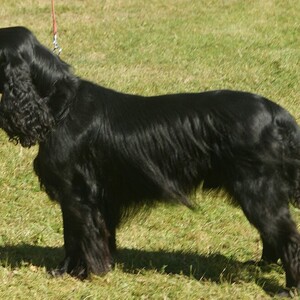
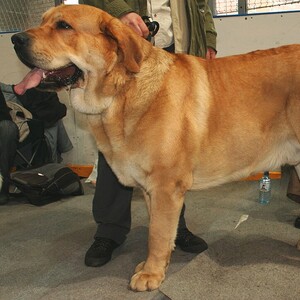
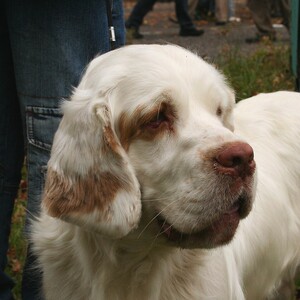
Clumber Spaniel. · Pleple2000 / Wikimedia Commons, CC BY-SA 4.0. Cropped and resized.
The Clumber Spaniel is the heaviest of the English spaniels: a long, low dog with heavy bones and a massive head. It takes its name from Clumber Park, the estate of the Duke of Newcastle. When hunting it works slowly, silently and with an excellent nose, and at home it is gentle, calm and affectionate.
Quick facts
| Common name | Clumber Spaniel (Clumber) |
| Scientific name | Canis lupus familiaris |
| Country of origin | United Kingdom |
| Official recognition | FCI, definitively since 9 December 1954 (group 8, flushing dogs, with working trial; standard no. 109); AKC, since 1884 |
| Lifespan | 10–12 years, according to the AKC; a 2024 British study found 12.3 years |
| Size (males) | about 46–51 cm at the withers (AKC); 29.5–34 kg (FCI) |
| Size (females) | about 43–48 cm at the withers (AKC); 25–29.5 kg (FCI) |
| Coat type | Abundant, dense, silky and straight, with feathering on the legs and chest |
| Common colours | White, with or without lemon or orange markings |
| Energy level | Moderate |
| Suited to an apartment? | It can adapt, if it goes out every day |
| Temperament | Calm, gentle, loyal, dignified; more reserved than other spaniels |
| Tendency to aggression | Very low |
| Good with children | Good; patient |
| Good with other animals | Good, although at first it is reserved with new dogs |
| Genetic predispositions | Hip dysplasia, disc herniation, entropion and ectropion, hypothyroidism |
- Primary category:Dog breeds
- Explore this animal's categories:
History and origin
The history of the breed is uncertain before the middle of the 19th century. One theory says that the Duc de Noailles sent his spaniels, at the time of the French Revolution, to the Duke of Newcastle at Clumber Park, in Nottinghamshire. Another theory links it to the old English spaniels. What is certain is that the breed is named after Clumber Park, and the duke's gamekeeper, William Mansell, is credited with developing it.
Prince Albert, Queen Victoria's husband, and his son, King Edward VII, bred and promoted Clumbers. Until the middle of the 19th century the breed was kept mainly by the nobility. During the First World War breeding stopped, and in 1925 King George V re-established a line in the royal kennels at Sandringham.
How the breed developed
- Late 18th century – The breed takes shape at Clumber Park, in Nottinghamshire.
- 1840 – Queen Victoria writes in her diary about Prince Albert's 7 Clumbers.
- 1844 – The breed reaches North America, in Nova Scotia.
- 1859 – Clumbers appear at shows in England.
- 1884 – The AKC recognises the breed, among the first ten.
- 9 December 1954 – The FCI recognises the breed.
- 2026 – A Clumber named Bruin wins Best in Show at Crufts.
Breed rating
| Feature | Stars |
|---|---|
| Training and intelligence | ★★★★☆ |
| Easy to train | ★★★★☆ |
| Intelligence | ★★★★☆ |
| Independence | ★★★☆☆ |
| Stubbornness | ★★★☆☆ |
| Behaviour and temperament | ★★★★☆ |
| Affectionate with family | ★★★★☆ |
| Friendly with children | ★★★☆☆ |
| Good with other dogs | ★★★☆☆ |
| Good with cats and other animals | ★★★☆☆ |
| Loyalty | ★★★★☆ |
| Tendency to be aggressive | ★☆☆☆☆ |
| Tendency to bark | ★☆☆☆☆ |
| Needs and care | ★★★★☆ |
| Shedding | ★★★☆☆ |
| Needs frequent grooming | ★★☆☆☆ |
| Activity and lifestyle | ★★★★☆ |
| Energy level | ★★★☆☆ |
| Daily exercise needs | ★★★☆☆ |
| Suited to apartment life | ★★★☆☆ |
| Health and longevity | ★★★★☆ |
| Life expectancy | ★★★☆☆ |
| Predisposition to genetic diseases | ★★★★☆ |
| Working abilities and uses | ★★★★☆ |
| Good hunting dog | ★★★★☆ |
| Good companion dog | ★★★★☆ |
Indicative rating: 5 stars means the highest level. It is based on the ratings the American Kennel Club gives the breed and on the FCI standard.
Physical characteristics
The standard describes it as a well-balanced, heavy-boned, active dog with a thoughtful expression, which must be able to work a full day in the field. The body is long, low and very muscular.
General appearance
The head is large and square, with heavy brows. The eyes are dark amber. The large, vine-leaf-shaped ears hang slightly forward. The muzzle often has freckles, and the upper lips hang down, which is why it drools.
| Feature | Clumber Spaniel |
|---|---|
| Size | Medium, but very heavy |
| Height at the withers | about 43–51 cm (AKC) |
| Weight | males: 29.5–34 kg; females: 25–29.5 kg |
| Coat | Dense, silky, straight |
| Eyes | Dark amber |
| Ears | Large, shaped like a vine leaf |
The body is white, with or without lemon markings. Orange markings, small markings on the head and freckles on the muzzle are also allowed. No other colour is accepted.
Training and socialisation
The standard describes it as steady, very intelligent and determined, a silent worker with an excellent nose. The AKC says it can be trained easily, although it has a mind of its own: it stops and thinks before carrying out a command.
It does not respond well to a harsh trainer. Short, interesting sessions with rewards give the best results.
Tips for effective training
- Make training interesting. Otherwise it will find something more fun to do by itself.
- Use rewards in moderation. It loves food and gains weight easily.
- Give it something to carry. It likes to always carry an object in its mouth; choose safe toys.
- Do not overexert it as a puppy. Its joints grow quickly and are sensitive.
Activity needs and lifestyle
Despite its heavy look, the AKC says it can be very active. It enjoys long walks with sniffing breaks and games of fetch with a ball.
| Activity | How often | Why it matters |
|---|---|---|
| Long walks | daily | Exercise and smells |
| Fetching a ball | daily | It loves retrieving objects |
| Scent games | weekly | Use its excellent nose |
Tips for a balanced life
- In summer, protect it from the heat: it is sensitive.
- Do not let it go up and down many stairs as a puppy.
- Outdoors, always keep it in the shade and with fresh water.
Care and health
Coat and skin care
The AKC recommends brushing with a brush and a medium comb once or twice a week and a bath about once a month. The folds on the head should be wiped regularly with a damp cloth, and the heavy ears cleaned often to prevent infections.
Common health problems
The AKC says the breed is generally healthy, but a few problems can occur:
| Condition | Description | Common symptoms |
|---|---|---|
| Hip dysplasia | The hip joint forms incorrectly and, over time, arthritis develops | Limping, difficulty getting up or jumping, hip pain |
| Intervertebral disc disease | A disc between the vertebrae ruptures and presses on the spinal cord | Back or neck pain, unsteady walking on the hind legs; in severe cases, paralysis |
| Entropion and ectropion | Eyelids turned inwards or outwards | Watery, red and irritated eyes |
| Panosteitis | Inflammation of the bones in fast-growing puppies | Temporary lameness, between 6 and 12 months |
| Hypothyroidism | The thyroid gland produces too little hormone | Skin and ear problems, weight gain |
Other care
- Clean the ears regularly.
- Trim the nails once a month.
- The AKC warns that it should not be treated with sulfonamides.
Diet and nutrition
The AKC says it is very important for a Clumber not to become overweight, because extra weight strains the joints. Clumbers are very greedy.
Tips for a healthy diet
The table gives a starting estimate, calculated with the formula from the Merck Veterinary Manual. The first two calorie columns show the calories per day for a healthy adult dog. The last column shows what this means in dry food with 3,500–4,000 kcal per kilogram.
| Dog's weight | Calories per day (neutered) | Calories per day (not neutered) | Dry food per day (approximate) |
|---|---|---|---|
| 25 kg | 1,250 kcal | 1,410 kcal | 310–400 g |
| 30 kg | 1,440 kcal | 1,620 kcal | 360–460 g |
| 34 kg | 1,580 kcal | 1,770 kcal | 400–510 g |
- Never give it cooked bones or fatty table scraps.
- Training treats count towards the daily portion.
- A dog is at the right weight when you can feel its ribs under the coat without pressing hard.
Foods to avoid
Some human foods are dangerous for dogs: chocolate, coffee, grapes and raisins, onions, garlic, xylitol (a sweetener used in chewing gum), macadamia nuts and alcohol.
Reproduction and development
Physical and emotional maturity
In dogs, sexual maturity usually comes between 6 and 12 months. Most breeds become adults at around 13–15 months.
Mating and pregnancy
Pregnancy lasts about 63 days, counted from ovulation. Mating a female on her first heat is not recommended. The FCI standard requires that only healthy dogs of typical breed appearance are used for breeding.
Caring for the puppies
In dogs, a litter has 5–6 puppies on average, and the number rises with the size of the breed. Socialisation starts in the first weeks: gentle handling, everyday noises and new people.
Interesting facts
- The heaviest spaniel. It is the largest and heaviest of the English spaniels.
- A royal dog. Prince Albert, Edward VII and George V all bred Clumbers.
- Always something in its mouth. Wikipedia says it feels the need to carry an object almost all the time.
- A vulnerable breed. The Kennel Club considers it a vulnerable British breed, with fewer than 300 puppies registered a year.
- Crufts champion. In 2026, a Clumber named Bruin won Best in Show at Crufts.
In popular culture
Queen Victoria's diary
On 16 October 1840, Queen Victoria wrote in her diary about Prince Albert's 7 Clumbers: “They are such dear, pretty dogs.” Francis Wheatley's painting “The Return From Shooting” (1788) shows the Duke of Newcastle with four Clumbers.
Frequently asked questions
Where does the name Clumber come from?
From Clumber Park, in Nottinghamshire, the estate of the Duke of Newcastle, where the breed took shape.
How big does it get?
It measures about 43–51 cm at the withers; males weigh 29.5–34 kg and females 25–29.5 kg.
Is it a family dog?
Yes. The AKC says it is a patient friend to children and an affectionate companion.
Does it drool?
Yes, because of its hanging lips.
How long does it live?
The AKC gives 10–12 years; a 2024 British study found an average of 12.3 years.