Maremma SheepdogCharacteristics, history, training and care
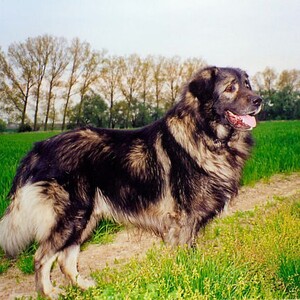
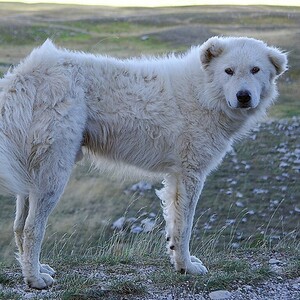
Maremma Sheepdog. · MGerety / Wikimedia Commons, CC BY-SA 3.0. Cropped and resized.
The Maremma Sheepdog is a large, powerful and rustic Italian dog, white, with a long, harsh coat and a head that recalls the polar bear's. For centuries, shepherds in Abruzzo and Maremma have used it to protect sheep from wolves. The standard describes it as a discerning guardian, devoted to its master and to everyone around him.
Quick facts
| Common name | Maremma Sheepdog (Maremmano, Pastore Abruzzese, Maremma and the Abruzzes Sheepdog) |
| Scientific name | Canis lupus familiaris |
| Country of origin | Italy |
| Official recognition | FCI, definitively since 13 March 1956 (group 1, sheepdogs; standard no. 201) |
| Lifespan | No published data for the breed; very large breeds live 8–13 years on average |
| Size (males) | 67–73.5 cm at the withers; 40–52 kg |
| Size (females) | 62–70 cm at the withers; 35–45 kg |
| Coat type | Long, harsh, almost like horsehair, with a collar around the neck |
| Common colours | Solid white; shades of ivory, pale orange or lemon tolerated |
| Energy level | Moderate |
| Suited to an apartment? | No |
| Temperament | Discerning, devoted, protective |
| Tendency to aggression | High towards intruders; a serious guardian |
| Good with children | Average; with supervision |
| Good with other animals | Very good with the flock and the family's animals |
| Genetic predispositions | No known breed-specific diseases; hip dysplasia and bloat, as in all large dogs |
- Primary category:Dog breeds
- Explore this animal's categories:
History and origin
The FCI standard says this ancient breed descends from the flock guardians still used in Abruzzo, where sheep farming is still flourishing, and from the dogs that once lived in the Tuscan Maremma and in Lazio. Especially after 1860, transhumance encouraged natural crossing between the two primitive types.
Wikipedia says Roman writers such as Columella and Varro also described white flock dogs. The first standard was written in 1924, and until 1958 the Maremmano and the Abruzzese were considered separate breeds; on 1 January 1958 they were merged. Today, these dogs also guard livestock in Australia, Israel, New Zealand and the United States.
How the breed developed
- Roman antiquity – Columella and Varro describe white flock dogs.
- After 1860 – Transhumance mixes the Abruzzo and Maremma types.
- 1924 – The first standard is written.
- 1 January 1958 – The two types are merged into a single breed.
- 13 March 1956 – The FCI recognises the breed.
Breed rating
| Feature | Stars |
|---|---|
| Training and intelligence | ★★★☆☆ |
| Easy to train | ★★★☆☆ |
| Intelligence | ★★★★☆ |
| Independence | ★★★★★ |
| Stubbornness | ★★★★☆ |
| Behaviour and temperament | ★★★★☆ |
| Affectionate with family | ★★★★★ |
| Friendly with children | ★★★☆☆ |
| Good with other dogs | ★★★☆☆ |
| Good with cats and other animals | ★★★☆☆ |
| Loyalty | ★★★★★ |
| Tendency to be aggressive | ★★★☆☆ |
| Tendency to bark | ★★★☆☆ |
| Needs and care | ★★★★☆ |
| Shedding | ★★★☆☆ |
| Needs frequent grooming | ★★☆☆☆ |
| Activity and lifestyle | ★★★☆☆ |
| Energy level | ★★★☆☆ |
| Daily exercise needs | ★★★★☆ |
| Suited to apartment life | ★☆☆☆☆ |
| Health and longevity | ★★★☆☆ |
| Life expectancy | ★★★☆☆ |
| Predisposition to genetic diseases | ★★☆☆☆ |
| Working abilities and uses | ★★★★★ |
| Good guard dog | ★★★★★ |
| Good companion dog | ★★★☆☆ |
Indicative rating: 5 stars means the highest level. The breed has no AKC profile, so the rating is based on the FCI standard.
Physical characteristics
The standard describes it as a large, powerful dog, rustic in appearance yet majestic. It is built like a heavy dog, with a body longer than it is tall. The head is large and flat, conical in shape, and recalls that of the polar bear.
General appearance
The coat is very abundant: the long, rather harsh hair, almost like a horse's, lies close to the body and may be slightly wavy. It forms a thick collar around the neck and reaches 8 cm on the body. The hair is short on the muzzle, skull, ears and the front of the legs.
| Feature | Maremma Sheepdog |
|---|---|
| Size | Very large |
| Height at the withers | males: 67–73.5 cm; females: 62–70 cm |
| Weight | males: 40–52 kg; females: 35–45 kg |
| Coat | Long, harsh, with a collar |
| Head | Large, conical, like a polar bear's |
| Colour | White |
The colour is solid white. Shades of ivory, pale orange or lemon are tolerated, but only within certain limits.
Training and socialisation
The standard says its main role, as guardian and defender of flocks and property, shapes its character: it carries out its tasks with discernment and with devotion to its master and to everyone around him.
Like any independent flock guardian, it needs early socialisation, a calm and consistent owner and a well-fenced territory.
Tips for effective training
- Socialise it from puppyhood. It is a serious guardian.
- Be calm and consistent. It is independent.
- Give it a territory. Guarding is in its nature.
- Do not isolate it. It is devoted to the whole family.
Activity needs and lifestyle
It is a mountain and pasture dog that needs space, daily walks and a large, fenced yard.
| Activity | How often | Why it matters |
|---|---|---|
| Long walks | daily | Exercise |
| Time in a large, fenced yard | daily | It guards its territory |
| Hikes | occasionally | A mountain dog |
Tips for a balanced life
- The fence must be high and solid.
- It is not suited to beginners.
- In summer, give it shade and water.
Care and health
Coat and skin care
The long, harsh coat is brushed weekly, and more often when it sheds. The standard says the undercoat is abundant only in winter.
Common health problems
There are no published health studies for the breed and no known breed-specific diseases. As with any very large dog, it is worth watching for:
| Condition | Description | Common symptoms |
|---|---|---|
| Hip dysplasia | The hip joint forms incorrectly and, over time, arthritis develops | Limping, difficulty getting up or jumping, hip pain |
| Gastric dilatation-volvulus (bloat) | The stomach fills with gas and may twist; this is a veterinary emergency | Swollen belly, trying to vomit without success, drooling, restlessness |
Other care
- Check the ears regularly.
- Check for ticks after outings on pasture.
- Trim the nails if they do not wear down on their own.
Diet and nutrition
A very large dog needs food suited to large breeds, especially while it is growing.
Tips for a healthy diet
The table gives a starting estimate, calculated with the formula from the Merck Veterinary Manual. The first two calorie columns show the calories per day for a healthy adult dog. The last column shows what this means in dry food with 3,500–4,000 kcal per kilogram.
| Dog's weight | Calories per day (neutered) | Calories per day (not neutered) | Dry food per day (approximate) |
|---|---|---|---|
| 35 kg | 1,610 kcal | 1,810 kcal | 400–520 g |
| 45 kg | 1,950 kcal | 2,190 kcal | 490–630 g |
| 52 kg | 2,170 kcal | 2,440 kcal | 540–700 g |
- Split the food into two meals a day to reduce the risk of bloat.
- Do not let it run right after a meal.
- Puppies need food suited to large breeds.
Foods to avoid
Some human foods are dangerous for dogs: chocolate, coffee, grapes and raisins, onions, garlic, xylitol (a sweetener used in chewing gum), macadamia nuts and alcohol.
Reproduction and development
Physical and emotional maturity
In dogs, sexual maturity usually comes between 6 and 12 months, but in large breeds it can be delayed until about two years. Very large breeds become adults only at around 2 years.
Mating and pregnancy
Pregnancy lasts about 63 days, counted from ovulation. Mating a female on her first heat is not recommended. The FCI standard requires that only healthy dogs of typical breed appearance are used for breeding.
Caring for the puppies
In large breeds, a litter has around 7 puppies on average. The puppies grow very fast, so they need growth food suited to large breeds. Socialisation starts in the first weeks.
Interesting facts
- A polar bear's head. The standard compares the shape of its head to that of the polar bear.
- It guards penguins. Wikipedia says that since 2006 it has guarded a colony of little penguins in Australia.
- Two breeds that became one. The Maremmano and the Abruzzese were merged in 1958.
- Described by the Romans. Columella and Varro wrote about white flock dogs.
- Hair like a horse's. Its coat is harsh, almost like horsehair.
In popular culture
The penguin guardians of Middle Island
Wikipedia says that since 2006, Maremma dogs have been used on Middle Island, near Warrnambool in Australia, to protect a colony of little penguins from foxes.
Frequently asked questions
Where does the name come from?
From the Maremma and Abruzzo regions of Italy.
How big does it get?
Males measure 67–73.5 cm and weigh 40–52 kg; females measure 62–70 cm and weigh 35–45 kg.
Is it a family dog?
It is devoted to its family, but it is a serious guardian, for experienced owners.
What does it guard?
Mainly sheep, but also other animals and property.