Bergamasco ShepherdCharacteristics, history, training and care
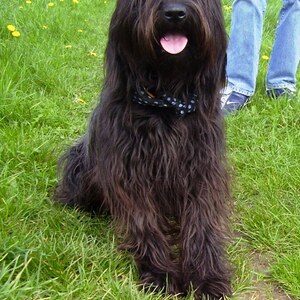
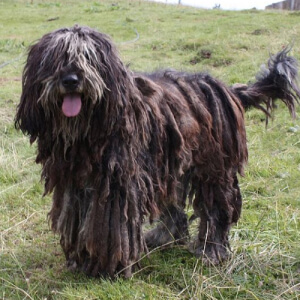
The Bergamasco Shepherd is an Italian herding breed known for a coat that forms flat mats or flocks. Its coat requires care suited to its stage of development. As with other working dogs, exercise, training and attention to individual health remain important.
Quick facts
| Common name | Bergamasco Shepherd |
| Scientific name | Canis lupus familiaris |
| Country of origin | Italy |
| Official Recognition | Recognized by FCI, AKC, UKC |
| Typical lifespan | About 13-15 years |
| Dimensions (Male) | About 58-62 cm / 32-38 kg |
| Dimensions (Female) | About 54-58 cm / 26-32 kg |
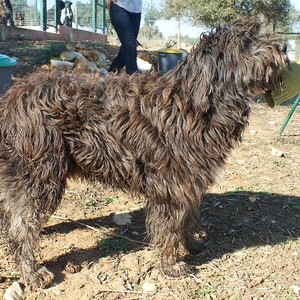
| Coat type | Long coat that develops flat mats or flocks |
| Common colours | Shades of grey, from light to dark, sometimes with merle patches; solid black |
| Energy Level | Moderate |
| Suitable for an apartment? | Depends on exercise, training, health and the individual dog |
| Temperament | Smart, calm, independent |
| Behaviour towards unfamiliar people and dogs | Individual behaviour varies; socialisation, training and management matter |
| Compatibility with children | Depends on the individual; adult supervision and suitable handling are essential |
| Compatibility with other animals | Depends on socialisation, prey drive and the animals involved |
| Health considerations | Hip dysplasia, eye problems, bloat |
- Primary category:Dog breeds
- Explore this animal's categories:
History and Origin
The Bergamasco Shepherd is an old Italian herding breed from the Alps around Bergamo, where it has long worked with shepherds and their flocks.
Evolution of the breed
- Possible eastern ancestors - A popular theory says its ancestors came from the Middle East with travelling shepherds and traders thousands of years ago, but this has not been proven.
- Adapted to the Alps - The Bergamasco was bred to work in harsh mountain weather, moving and watching over sheep.
- A unique coat - Its coat forms flat felted mats called "flocks", which protect it from cold and wet.
- Saved from extinction - After the Second World War the breed became very rare; Italian breeder Dr. Maria Andreoli did much to save it, and the AKC recognised it in 2015.
Breed Evaluation
The Bergamasco Shepherd is an independent, calm and loyal dog, good for families who want an intelligent companion with an unusual coat. These are general editorial ratings, not measured scores; individual dogs vary.
| Characteristic | Stars |
|---|---|
| Training and Intelligence | ★★★★☆ |
| Easy to train | ★★★★☆ |
| Intelligence | ★★★★★ |
| Level of independence | ★★★★☆ |
| Level of stubbornness | ★★★☆☆ |
| Behavior and Temperament | ★★★★★ |
| Affectionate with family | ★★★★★ |
| Friendly with children | ★★★★★ |
| Compatible with other dogs | ★★★★☆ |
| Compatible with cats and other animals | ★★★★☆ |
| Degree of loyalty | ★★★★★ |
| Tendency to be aggressive | ★☆☆☆☆ |
| Tendency to bark | ★★★☆☆ |
| Needs and Care | ★★★☆☆ |
| Shedding level | ★☆☆☆☆ |
| Requires frequent care | ★★★☆☆ |
| Activity and Lifestyle | ★★★☆☆ |
| Energy level | ★★★☆☆ |
| Daily exercise requirement | ★★★☆☆ |
| Suitable for apartment living | ★★★★☆ |
| Health and Longevity | ★★★★★ |
| Life expectancy | ★★★★★ |
| Predisposition to genetic diseases | ★★☆☆☆ |
| Work and Utility Features | ★★★★☆ |
| Good guard dog | ★★★★☆ |
| Good companion dog | ★★★★★ |
Physical Characteristics
The Bergamasco Shepherd is a medium-large, strong, muscular dog, famous for its unique weatherproof coat.
General appearance
- A strong, muscular body, built for work.
- A long coat made of three types of hair that forms flat, felted mats ("flocks"), protecting it from cold and wet.
- Medium-sized, hanging ears covered with thick hair.
- Large brown eyes, usually hidden by long hair, with a gentle expression.
- A long tail, carried low and covered with thick hair.
| Characteristic | Bergamasco Shepherd |
|---|---|
| Size | Medium to large (about 54-62 cm at the shoulder) |
| Weight | About 26-38 kg |
| Coat | Long, forming flat felted mats (flocks) |
| Muzzle | Medium length, blunt |
| Shedding tendency | Very low |
| Build | Strong and sturdy |
The Bergamasco Shepherd has a distinctive look, built for hard work, but it is also a calm, reliable companion.
Training and Socialization
The Bergamasco Shepherd is intelligent but independent, so training must be consistent and based on cooperation rather than strict commands. It has a good memory and learns quickly, but may become stubborn if training is repetitive.
Tips for effective training
- Start early - Socialisation and basic commands should start from about 8 weeks to prevent shyness.
- Gentle but consistent methods - It responds best to rewards, but needs a calm, confident owner.
- Avoid too much repetition - This breed gets bored quickly, so training should be varied and interesting.
- Wide socialisation - As a watchful dog, it should get used to new people, animals and places to prevent suspicion.
- An independent thinker - Bred to work with flocks, the Bergamasco often thinks for itself rather than waiting for commands.
This breed is not ideal for inexperienced owners, but with good socialisation and training it becomes an excellent, balanced family dog.
Activity and Lifestyle Needs
The Bergamasco Shepherd is not an extremely active breed, but it needs regular exercise and mental stimulation.
| Activity | Recommended duration |
|---|---|
| Daily walks | About 45-60 min |
| Interactive games | About 20-30 min |
| Training and mental stimulation | About 15-20 min |
| Herding or other work | Good, but not essential |
Recommendations for a balanced lifestyle
- Best in a house with a garden - It does not need a lot of space, but it likes access to the outdoors.
- Can live in an apartment - If it gets enough daily activity, it can adapt to a smaller home.
- Very attached to its family - It does not like being alone for long and may become anxious.
- Likes mental games - It needs mental challenges and company more than intense exercise.
Without enough stimulation, the Bergamasco may become dull or stubborn, but it is rarely destructive.
Care and Health
Although its coat may look hard to manage, the Bergamasco does not need regular brushing and is generally a healthy, hardy breed.
Fur and skin care
- Forming the flocks - Between about 8 and 18 months, the coat starts to mat, and the owner must separate the mats by hand into flat flocks so they do not form one large mat.
- No brushing - Once the flocks have formed, the coat should not be brushed, only checked for dirt and debris.
- Rare baths - The coat should be washed only a few times a year, and drying it fully takes a long time.
- Ear and claw care - As with any dog, ears should be checked regularly and claws trimmed when needed.
Common health problems
| Condition | Description | Common symptoms |
|---|---|---|
| Hip dysplasia | An inherited joint problem that can affect mobility | Limping, joint pain |
| Eye problems | Such as progressive retinal atrophy | Poor vision in dim light |
| Bloat (gastric torsion) | An emergency, more likely after eating quickly | Swollen belly, restlessness |
Other aspects of care
- Weight control - As a medium-large dog, it should be fed carefully to avoid extra weight.
- Regular veterinary visits - Yearly check-ups help monitor the joints and eyes.
In general, the Bergamasco Shepherd is a hardy breed with few health problems and a life expectancy of about 13-15 years.
Diet and Nutrition
The Bergamasco Shepherd is not a fussy eater, but it needs a balanced diet matched to its moderate energy needs.
Recommendations for a healthy diet
Choose a complete, balanced diet suited to age, size and health. Plan home-prepared diets and supplements with a qualified veterinarian; raw pet food can carry harmful bacteria.
| Food type | Daily Amount (Adults) | Frequency |
|---|---|---|
| Premium dry food | Individual amount; follow complete-food guidance and veterinary advice | 2 meals/day |
| Home cooked food | Individual amount; follow complete-food guidance and veterinary advice | 2 meals/day |
| Raw food: bacterial contamination is a concern | Individual amount; follow complete-food guidance and veterinary advice | 2 meals/day |
Forbidden foods
Chocolate, grapes and raisins, onions and xylitol - toxic to dogs. ; Cooked bones - can splinter and cause intestinal blockage. ; Fatty food - can lead to digestive problems and pancreatitis. ; Overfeeding - can cause weight gain, which affects the joints.
The Bergamasco should be fed according to its activity level to prevent joint problems and obesity.
Reproduction and Development
Breeding requires veterinary planning, suitable health screening and care for the mother and puppies. Pregnancy and birth can involve complications.
Physical and emotional maturity
- Physical maturity: It is usually fully grown at about 18-24 months, but its coat keeps developing until about 3 years or more.
- Emotional maturity: It usually becomes more settled and confident at about 2-3 years.
Mating and Gestation
- Breeding decisions require veterinary assessment of maturity, health and suitable screening; a fixed age does not establish that breeding is appropriate.
- Duration of gestation: Approximately 58-68 days, usually about 63 days.
- Average number of puppies: Usually about 6-10 puppies.
Puppy care
- The first 3 weeks: Puppies depend completely on their mother for warmth, milk and protection.
- Between 4-8 weeks: They begin to explore and meet people and other dogs; early socialisation is essential.
- Moving to a new home: When puppies go to their new homes, basic training and socialisation should continue.
Thanks to its calm temperament, a Bergamasco puppy usually adapts quickly to family life and learns house rules fairly easily.
Curiosities and Interesting Facts
- Three kinds of hair - Its coat is made of a soft undercoat, longer "goat hair" and woolly hair, which together form the flocks.
- A protective coat - The thick flocks protect it from cold and wet, and may also help protect it from bites.
- Very little shedding - Dead hair is trapped in the flocks, so the Bergamasco leaves little hair around the house.
- Quiet but alert - It does not bark without reason, but reacts quickly if it senses danger to its family.
- Puppies look different - Bergamasco puppies have a soft, fluffy coat; the flocks only start to form at about one year old.
- Rare - Although it is a good family dog, the Bergamasco is still rare in most countries.
The Dog in Popular Culture
The Bergamasco Shepherd is not famous worldwide, but its unique coat makes it stand out wherever it goes.
The shepherd Bergamasco in modern media and culture
- A symbol of Alpine shepherding - The breed is part of the heritage of Italian mountain farming and appears at shepherd festivals and working-dog shows.
- A head-turner at dog shows - Its unusual coat makes it easy to recognise at international dog shows.
Importance in modern culture
- A traditional working dog - Even though it is no longer widely used with flocks, it remains a symbol of European shepherding traditions.
- Adaptable - Unlike many herding dogs, the Bergamasco adapts well to calm family life.