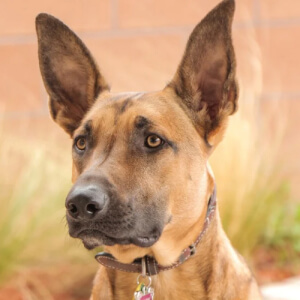
Belgian MalinoisCharacteristics, history, training and care
The Belgian Malinois is a variety of Belgian Shepherd Dog with a strong working background. It is active and alert, and is used in several working roles. Its exercise and training needs require substantial time and experience.
Quick facts
| Common name | Belgian Malinois |
| Scientific name | Canis lupus familiaris |
| Country of origin | Belgium |
| Official Recognition | Recognized by FCI (as a Belgian Shepherd variety) and AKC |
| Typical lifespan | About 12-14 years |
| Dimensions (Male) | About 60-66 cm / 25-30 kg |
| Dimensions (Female) | About 56-62 cm / 20-25 kg |
| Coat type | Short, dense, double layered |
| Common colours | Fawn to mahogany with black tips and a black mask |
| Energy Level | Very high |
| Suitable for an apartment? | Depends on exercise, training, health and the individual dog |
| Temperament | Smart, alert, protective |
| Behaviour towards unfamiliar people and dogs | Individual behaviour varies; socialisation, training and management matter |
| Compatibility with children | Depends on the individual; adult supervision and suitable handling are essential |
| Compatibility with other animals | Depends on socialisation, prey drive and the animals involved |
| Health considerations | Hip and elbow dysplasia, eye problems, bloat |
- Primary category:Dog breeds
- Explore this animal's categories:
History and Origin
The Belgian Malinois is one of the four types of Belgian Shepherd, together with the Tervuren, the Groenendael and the Laekenois. It is one of the most widely used breeds for police, military and protection work.
Evolution of the breed
- Belgium, late 19th century - In 1891, Professor Adolphe Reul and the new Belgian Shepherd Dog Club began to sort Belgian herding dogs into types; the short-haired fawn dogs from the area of Mechelen (Malines in French) became the Malinois.
- A service dog - Belgian Shepherds served in the First World War as messenger, ambulance and guard dogs.
- Police and military work - Today the Malinois is one of the most common dogs in police and military units around the world, including the US Secret Service and special forces.
- International recognition - The FCI recognises the Malinois as a variety of the Belgian Shepherd Dog, while the AKC has recognised it as a separate breed since 1959.
Breed Evaluation
The Belgian Malinois is an athletic, intelligent and extremely hard-working dog, suited only to active, experienced owners. These are general editorial ratings, not measured scores; individual dogs vary.
| Characteristic | Stars |
|---|---|
| Training and Intelligence | ★★★★★ |
| Easy to train | ★★★★★ |
| Intelligence | ★★★★★ |
| Level of independence | ★★★☆☆ |
| Level of stubbornness | ★★★☆☆ |
| Behavior and Temperament | ★★★★★ |
| Affectionate with family | ★★★★★ |
| Friendly with children | ★★★★☆ |
| Compatible with other dogs | ★★★☆☆ |
| Compatible with cats and other animals | ★★★☆☆ |
| Degree of loyalty | ★★★★★ |
| Tendency to be aggressive | ★★★☆☆ |
| Tendency to bark | ★★★☆☆ |
| Needs and Care | ★★★★☆ |
| Shedding level | ★★★☆☆ |
| Requires frequent care | ★★★☆☆ |
| Activity and Lifestyle | ★★★★★ |
| Energy level | ★★★★★ |
| Daily exercise requirement | ★★★★★ |
| Suitable for apartment living | ★☆☆☆☆ |
| Health and Longevity | ★★★★☆ |
| Life expectancy | ★★★★☆ |
| Predisposition to genetic diseases | ★★★☆☆ |
| Work and Utility Features | ★★★★★ |
| Good guard dog | ★★★★★ |
| It's a good working dog | ★★★★★ |
Physical Characteristics
The Belgian Malinois is an elegant, strong and athletic dog with great agility and stamina.
General appearance
- A square, muscular body, light and athletic rather than heavy.
- A short, dense double coat that protects it from the weather.
- Pointed, erect, triangular ears that give it an alert expression.
- A long tail, carried low at rest and raised when the dog is excited.
- Dark brown, almond-shaped eyes with a watchful, determined look.
| Characteristic | Belgian Malinois |
|---|---|
| Size | Medium to large (about 56-66 cm at the shoulder) |
| Weight | About 20-30 kg |
| Coat | Short, dense, double |
| Muzzle | Medium length, tapering |
| Shedding tendency | Moderate, heavier seasonally |
| Build | Light, strong and agile |
The Belgian Malinois is an outstanding working dog, valued for its strength, speed and intelligence.
Training and Socialization
The Belgian Malinois learns extremely fast. However, because of its very high energy and drive, it needs structured, consistent training every day.
Tips for effective training
- Early socialisation - Without good socialisation, it can become over-protective or anxious with strangers and other animals.
- Structured training - It responds best to clear commands and challenging tasks such as obedience, tracking and detection.
- Positive, reward-based training - Harsh methods do not work well, as the Malinois is very clever and sensitive.
- Mental work - As a working dog, it gets bored quickly without puzzles, scent work or training games.
- Recall and impulse control - It has a strong chase drive, so it must learn to respond immediately to commands.
The Belgian Malinois is an excellent student, but it needs an active, experienced owner who gives it a clear purpose and regular challenges.
Activity and Lifestyle Needs
The Belgian Malinois is an extremely active breed that needs a lot of physical and mental exercise to stay balanced.
| Activity | Recommended duration |
|---|---|
| Long walks | At least 60-90 min |
| Running / jogging | About 30 min (adult dogs) |
| Interactive games | About 30 min |
| Training and dog sports | About 30 min or more |
Recommendations for a balanced lifestyle
- Not suited to apartments - It needs a lot of space and regular, intense exercise.
- Great at dog sports - It excels in agility, obedience, tracking, herding and protection sports.
- Can become destructive if bored - Without enough activity, it may chew, bark excessively or develop obsessive behaviours.
- Needs mental challenges - Besides exercise, it needs daily training, or it can become frustrated and anxious.
The Belgian Malinois needs a lot of involvement from its owner and does not suit a quiet lifestyle.
Care and Health
The Belgian Malinois is a strong, generally healthy breed, but some inherited and joint problems should be monitored.
Fur and skin care
- Weekly brushing - Its short coat needs little care, but regular brushing removes dead hair.
- Baths only when needed - It has little doggy smell and should not be washed too often.
- Ear and claw checks - Ears should be checked regularly and claws trimmed.
Common health problems
| Condition | Description | Common symptoms |
|---|---|---|
| Hip and elbow dysplasia | Abnormal development of the joints | Limping, stiff joints |
| Bloat (gastric torsion) | Higher risk because of its deep chest | Swollen belly, difficulty breathing |
| Eye problems | Such as progressive retinal atrophy and pannus | Poor vision, especially in dim light |
Other aspects of care
- Regular veterinary checks - Help monitor the joints and eyes.
- Healthy weight - A balanced diet and regular exercise help prevent obesity and joint problems.
- Watch for overwork - It is so driven that it may keep working even when tired or hurt.
The Belgian Malinois is a healthy, hardy breed, but its joints and digestion should be monitored.
Diet and Nutrition
The Belgian Malinois needs a balanced diet with good-quality protein to support its very high activity.
Recommendations for a healthy diet
Choose a complete, balanced diet suited to age, size and health. Plan home-prepared diets and supplements with a qualified veterinarian; raw pet food can carry harmful bacteria.
| Food type | Daily Amount (Adults) | Frequency |
|---|---|---|
| Premium dry food | Individual amount; follow a complete diet’s guidance and veterinary advice | 2 meals/day |
| Home cooked food | Individual amount; follow complete-food guidance and veterinary advice | 2 meals/day |
| Raw food: bacterial contamination is a concern | Individual amount; follow complete-food guidance and veterinary advice | 2 meals/day |
Forbidden foods
Chocolate, grapes and raisins, onions and xylitol - toxic to dogs. / Cooked bones - can splinter and cause intestinal blockage. / Fatty and processed food - can cause digestive problems. / Large meals and hard exercise right after eating - increase the risk of bloat.
The Belgian Malinois should be fed according to its activity level, avoiding overfeeding and digestive problems.
Reproduction and Development
Breeding requires veterinary planning, suitable health screening and care for the mother and puppies. Pregnancy and birth can involve complications.
Physical and emotional maturity
- Physical maturity: It reaches adult size at about 12-18 months, but continues to fill out until about 2 years.
- Emotional maturity: It usually becomes more focused and settled at about 2-3 years.
Mating and Gestation
- Breeding decisions require veterinary assessment of maturity, health and suitable screening; reaching a fixed age does not establish that breeding is appropriate.
- Duration of gestation: Approximately 58-68 days, usually about 63 days.
- Average number of puppies: Usually about 6-10 puppies.
Puppy care
- The first 3 weeks: Puppies depend completely on their mother for warmth and milk.
- Between 4-8 weeks: They begin to explore and play with littermates and people; early socialisation is essential.
- Moving to a new home: When puppies go to their new homes, basic training and socialisation should continue.
The Belgian Malinois grows quickly, and good food and suitable exercise are essential for healthy development.
Curiosities and Interesting Facts
- A special forces dog - The Malinois is used by many military special units, including the US Navy SEALs.
- Cairo - A Malinois called Cairo took part in the 2011 raid in Pakistan in which Osama bin Laden was killed.
- Named after a city - The name Malinois comes from Malines, the French name of the Belgian city of Mechelen.
- Fast learner - The Malinois learns new commands very quickly and is famous for its drive to work.
- Not for everyone - Because it is so active and driven, the Malinois is not suitable for beginners or quiet households.
- Great stamina - A well-trained Malinois can work for hours.
- Detection dog - Its excellent nose makes it ideal for finding drugs, explosives and missing people.
The Dog in Popular Culture
The Belgian Malinois has become famous through its work with police and the military, and through films.
Belgian Malinois in media and law enforcement
- Cairo - The Malinois of the US Navy SEAL team in the 2011 raid became one of the most famous military dogs in the world.
- Films - Malinois star in films such as "Max" (2015) and "Dog" (2022), both about former military dogs.
- Police dogs - The Malinois is one of the most common breeds in police K9 units worldwide, used for protection, tracking and detection.
The importance in military and civil culture
- Used by armies and police around the world - In the USA, France, Germany, Belgium and many other countries, the Malinois is a favourite dog for specialised units.