Campeiro BulldogCharacteristics, history, training and care
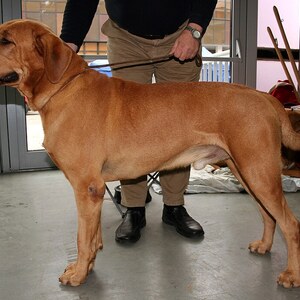
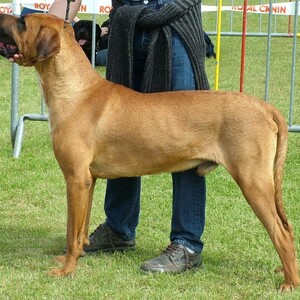
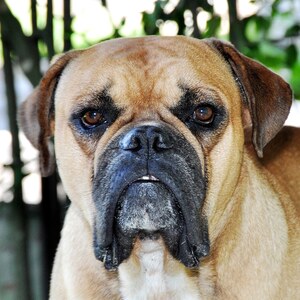
Campeiro Bulldog. · André Lage Freitas / Wikimedia Commons, CC BY-SA 3.0. Cropped and resized.
The Campeiro Bulldog is a medium-sized Brazilian molossoid, sturdy and powerful, with a broad head and strong jaws. It was used on farms to catch and drive stray cattle. It is calm, vigilant, loyal to its owner and barks little.
Quick facts
| Common name | Campeiro Bulldog (Buldogue Campeiro) |
| Scientific name | Canis lupus familiaris |
| Country of origin | Brazil (south of the country) |
| Official recognition | FCI, provisionally since 2025 (group 2, standard no. 374, published on 6 August 2025); Brazilian Kennel Club, since 2001 |
| Lifespan | No published data for the breed; large breeds usually live 10–13 years |
| Size (males) | 51–58 cm at the withers; about 36–42 kg |
| Size (females) | 49–56 cm at the withers; about 31–37 kg |
| Coat type | Short, smooth, of medium texture |
| Common colours | All colours except merle |
| Energy level | Moderate |
| Suited to an apartment? | Not really; it suits a house with a yard |
| Temperament | Calm, vigilant, loyal, persevering, docile |
| Tendency to aggression | Low with people; can be aggressive towards other dogs |
| Good with children | Good with the family |
| Good with other animals | Average to poor with other dogs |
| Genetic predispositions | No breed-specific diseases are known |
- Primary category:Dog breeds
- Explore this animal's categories:
History and origin
The Campeiro Bulldog descends from bulldogs brought to Brazil by European immigrants and developed in the south of the country. The word “campeiro” means “from the fields”, in other words from the countryside.
It was used to find, catch and drive cattle that had strayed into fields and forests, and also as a guard and companion for country people. It was also used in slaughterhouses. When this was banned in the 1970s, the breed almost disappeared. A private rescue programme began in the mid-1970s.
How the breed developed
- The period of European immigration – European immigrants bring bulldogs to southern Brazil.
- 1970s – The use of dogs in slaughterhouses is banned, and the breed almost disappears.
- Mid-1970s – A private programme to save the breed begins.
- 2001 – The Brazilian Kennel Club recognises the breed.
- 2025 – The FCI recognises the breed provisionally.
Breed rating
| Feature | Stars |
|---|---|
| Training and intelligence | ★★★★☆ |
| Easy to train | ★★★★☆ |
| Intelligence | ★★★★☆ |
| Independence | ★★★☆☆ |
| Stubbornness | ★★★☆☆ |
| Behaviour and temperament | ★★★★☆ |
| Affectionate with family | ★★★★★ |
| Friendly with children | ★★★★☆ |
| Good with other dogs | ★★☆☆☆ |
| Good with cats and other animals | ★★☆☆☆ |
| Loyalty | ★★★★★ |
| Tendency to be aggressive | ★★☆☆☆ |
| Tendency to bark | ★★☆☆☆ |
| Needs and care | ★★☆☆☆ |
| Shedding | ★★☆☆☆ |
| Needs frequent grooming | ★☆☆☆☆ |
| Activity and lifestyle | ★★★☆☆ |
| Energy level | ★★★☆☆ |
| Daily exercise needs | ★★★☆☆ |
| Suited to apartment life | ★★☆☆☆ |
| Health and longevity | ★★★★☆ |
| Life expectancy | ★★★★☆ |
| Predisposition to genetic diseases | ★★☆☆☆ |
| Working abilities and uses | ★★★★☆ |
| Good guard and cattle dog | ★★★★☆ |
| Good companion dog | ★★★★☆ |
Indicative rating: 5 stars means the highest level. The breed has no AKC profile; the rating is based on the FCI standard (“calm, vigilant, very docile, barks little”).
Physical characteristics
It is a medium-sized, short-haired, compact, sturdy and imposing dog. The head is broad, with strong jaws; the lower jaw juts slightly forward, just enough to hold an ox.
General appearance
The muzzle is broad and strong, neither too short nor too long. The small, triangular ears hang or fold backwards. The tail is short from birth and thick at the base.
| Feature | Campeiro Bulldog |
|---|---|
| Size | Medium to large |
| Height at the withers | males: 51–58 cm; females: 49–56 cm |
| Weight | males: about 36–42 kg; females: about 31–37 kg |
| Coat | Short, smooth |
| Ears | Small, triangular |
| Tail | Short from birth |
The standard accepts all colours except merle (an irregularly mottled coat).
Training and socialisation
The standard describes it as very docile and easily adaptable, controllable, calm and barking little. Its temperament should be firm and controlled, so that it always obeys its owner.
Wikipedia notes that it can be aggressive towards other dogs, so early socialisation is important.
Tips for effective training
- Socialise it early with other dogs. This is the most important thing for this breed.
- Be calm and consistent. It obeys a confident owner well.
- Use rewards. It is docile and learns easily.
- Supervise meetings with unfamiliar dogs. Especially with dogs of the same sex.
Activity needs and lifestyle
It has moderate energy. Daily walks and play in the yard are enough.
| Activity | How often | Why it matters |
|---|---|---|
| Walks on the lead | daily | Exercise and socialisation |
| Play in a fenced yard | daily | Burns off energy |
| Obedience exercises | a few minutes a day | Strengthen control |
Tips for a balanced life
- In summer, avoid exertion in the hottest hours.
- The fence must be solid.
- It suits a family that can supervise meetings with other dogs.
Care and health
Coat and skin care
The short, smooth coat is very easy to look after, with a brush once a week.
Common health problems
There are no known hereditary diseases specific to the breed. The standard disqualifies dogs with breathing difficulties, to keep the breed healthy.
Other care
- Trim the nails regularly.
- Check the ears and teeth once a week.
- Protect it from intense heat.
Diet and nutrition
A muscular dog needs good-quality food. Keep an eye on its weight so that it does not get fat.
Tips for a healthy diet
The table gives a starting estimate, calculated with the formula from the Merck Veterinary Manual. The first two calorie columns show the calories per day for a healthy adult dog. The last column shows what this means in dry food with 3,500–4,000 kcal per kilogram.
| Dog's weight | Calories per day (neutered) | Calories per day (not neutered) | Dry food per day (approximate) |
|---|---|---|---|
| 31 kg | 1,470 kcal | 1,660 kcal | 370–470 g |
| 36 kg | 1,650 kcal | 1,850 kcal | 410–530 g |
| 42 kg | 1,850 kcal | 2,080 kcal | 460–590 g |
- Give it its food in two meals a day.
- Fresh water should always be available.
- A dog is at the right weight when you can feel its ribs without pressing hard.
Foods to avoid
Some human foods are dangerous for dogs: chocolate, coffee, grapes and raisins, onions, garlic, xylitol (a sweetener used in chewing gum), macadamia nuts and alcohol.
Reproduction and development
Physical and emotional maturity
In dogs, sexual maturity usually comes between 6 and 12 months, but in large breeds it can be delayed until about two years. The body also reaches its adult form later than in small breeds.
Mating and pregnancy
Pregnancy lasts about 63 days, counted from ovulation. Mating a female on her first heat is not recommended. The FCI standard requires that only healthy dogs of typical breed appearance are used for breeding.
Caring for the puppies
In large breeds, a litter has around 7 puppies on average. Socialisation starts in the first weeks: gentle handling, everyday noises and new people.
Interesting facts
- “Campeiro” means “from the fields”. The name links the breed to the rural setting in which it developed.
- Jaws made for cattle. The lower jaw juts slightly forward, just enough to hold an ox.
- It barks little. The standard describes it as a calm dog that barks little.
- Saved from extinction. After its use in slaughterhouses was banned, the breed almost disappeared.
- A tail short from birth. The standard calls for a naturally short tail.
Frequently asked questions
What is a Campeiro Bulldog?
A Brazilian molossoid used on farms to catch and drive cattle.
How big does it get?
Males measure 51–58 cm and females 49–56 cm; they weigh about 31–42 kg.
Does it get along with other dogs?
Not always. It can be aggressive towards other dogs, so it needs socialisation.
Is it officially recognised?
Yes, by the Brazilian Kennel Club since 2001 and provisionally by the FCI since 2025.