RottweilerCharacteristics, history, training and care
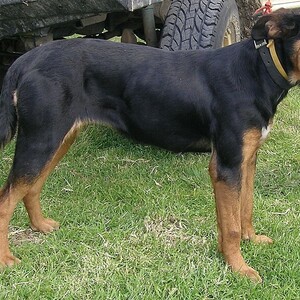
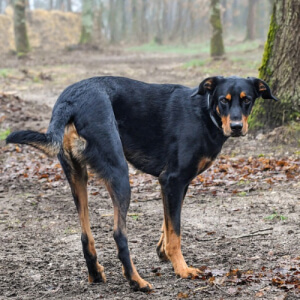
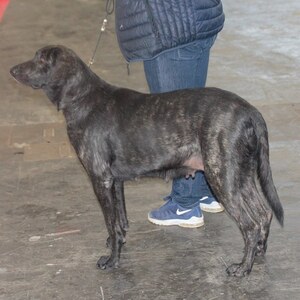
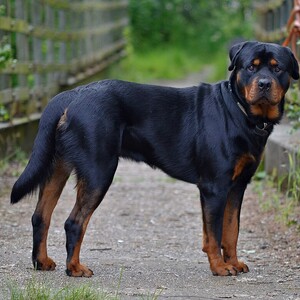
Rottweiler. · Phil Sangwell / Wikimedia Commons, CC BY 2.0. Cropped and resized.
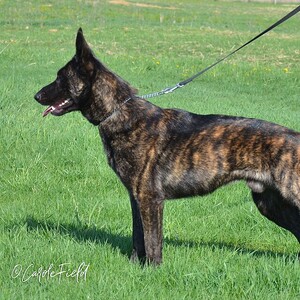
The Rottweiler is a large, robust and powerful German dog, black with well-defined tan markings. It was the “Rottweil butcher's dog”, used to drive and guard cattle, and later as a police dog. The standard describes it as good-natured, placid in basic disposition, very devoted, obedient and eager to work.
Quick facts
| Common name | Rottweiler |
| Scientific name | Canis lupus familiaris |
| Country of origin | Germany |
| Official recognition | FCI, definitively since 1 January 1955 (group 2, molossoid breeds, mastiff type, with working trial; standard no. 147); also recognised by the AKC |
| Lifespan | 9–10 years, according to the AKC |
| Size (males) | 61–68 cm at the withers; about 50 kg |
| Size (females) | 56–63 cm at the withers; about 42 kg |
| Coat type | Medium, harsh, dense, flat, with an undercoat |
| Common colours | Black with tan markings |
| Energy level | Moderate |
| Suited to an apartment? | Not really |
| Temperament | Good-natured, placid, devoted, obedient, fearless |
| Tendency to aggression | Low if well bred; a serious guard dog |
| Good with children | Average; with supervision |
| Good with other animals | Average |
| Genetic predispositions | Hip and elbow dysplasia, eye diseases, bleeding disorders, heart disease, cancer |
- Primary category:Dog breeds
- Explore this animal's categories:
History and origin
The FCI standard says the Rottweiler is considered one of the oldest dog breeds, with origins in Roman times. These dogs crossed the Alps with the Roman legions, protecting people and driving cattle. In the Rottweil region they mixed naturally with the local dogs.
The breed took its name from the old free town of Rottweil and was known as the “Rottweil butcher's dog”. Butchers bred it purely for work: as a guard dog, a cattle-driving dog and even a draught dog. At the beginning of the 20th century, when the police needed dogs, the Rottweiler proved very well suited and was officially recognised as a police dog.
How the breed developed
- Roman times – The dogs cross the Alps with the legions.
- Rottweil – They become the “butchers' dogs”.
- Early 20th century – They are used as police dogs.
- 1 January 1955 – The FCI recognises the breed.
Breed rating
| Feature | Stars |
|---|---|
| Training and intelligence | ★★★★★ |
| Easy to train | ★★★★★ |
| Intelligence | ★★★★☆ |
| Independence | ★★★★☆ |
| Stubbornness | ★★★☆☆ |
| Behaviour and temperament | ★★★★☆ |
| Affectionate with family | ★★★★★ |
| Friendly with children | ★★★☆☆ |
| Good with other dogs | ★★★☆☆ |
| Good with cats and other animals | ★★☆☆☆ |
| Loyalty | ★★★★★ |
| Tendency to be aggressive | ★★★☆☆ |
| Tendency to bark | ★☆☆☆☆ |
| Needs and care | ★★★☆☆ |
| Shedding | ★☆☆☆☆ |
| Needs frequent grooming | ★★★☆☆ |
| Activity and lifestyle | ★★★☆☆ |
| Energy level | ★★★★☆ |
| Daily exercise needs | ★★★★☆ |
| Suited to apartment life | ★☆☆☆☆ |
| Health and longevity | ★★☆☆☆ |
| Life expectancy | ★★★☆☆ |
| Predisposition to genetic diseases | ★★★☆☆ |
| Working abilities and uses | ★★★★★ |
| Good guard dog | ★★★★★ |
| Good companion dog | ★★★★☆ |
Indicative rating: 5 stars means the highest level. It is based on the ratings the American Kennel Club gives the breed and on the FCI standard.
Physical characteristics
The AKC says a male stands 61–69 cm of muscle at the withers, while females are slightly smaller and lighter. The short, glossy black coat with rust markings completes the picture of imposing strength.
General appearance
The coat has a medium-length, harsh, dense, flat topcoat and an undercoat that must not show through. The hair is slightly longer on the hind legs. The skull is of medium length and fairly broad between the ears.
| Feature | Rottweiler |
|---|---|
| Size | Large |
| Height at the withers | males: 61–68 cm; females: 56–63 cm |
| Weight | males: ~50 kg; females: ~42 kg |
| Coat | Medium, harsh, dense |
| Colour | Black and tan |
| Gait | Effortless trot |
The colour is black, with clearly defined, rich tan markings on the cheeks, muzzle, throat, chest, legs, above the eyes and under the base of the tail. White markings are disqualifying.
Training and socialisation
The standard describes it as good-natured, placid in basic disposition, very devoted, obedient, biddable and eager to work. It is self-assured, steady and fearless and reacts very attentively to its surroundings.
The AKC says a well-bred, well-trained Rottweiler is calm. As a natural herding dog, it must be trained and socialised from puppyhood. The AKC gives it the top score for trainability and mental stimulation needs.
Tips for effective training
- Start socialisation in puppyhood. The AKC says it is essential.
- Be calm and consistent. It needs a self-confident owner.
- Give it a job. It easily learns carting, herding and tracking.
- Go to obedience classes. As an adult, it will be very strong.
Activity needs and lifestyle
The AKC says it loves to swim, walk and trot, especially with its people. It is muscular and athletic and must exercise every day. It easily learns to pull a cart and does well at herding, tracking and obedience.
| Activity | How often | Why it matters |
|---|---|---|
| Solid walks | several times a day | Exercise |
| Swimming | whenever possible | It loves it |
| Obedience or tracking | weekly | Mental stimulation |
Tips for a balanced life
- It suits experienced owners.
- In summer, keep it out of the heat.
- It needs a fenced yard.
Care and health
Coat and skin care
The AKC says it should be brushed weekly and bathed regularly. It sheds moderately for most of the year and more heavily twice a year, usually in spring and autumn. The teeth should be brushed and the nails trimmed regularly.
Common health problems
The AKC says the breed is generally healthy, but some genetic problems can be passed on to puppies:
| Condition | Description | Common symptoms |
|---|---|---|
| Hip dysplasia | The hip joint forms incorrectly and, over time, arthritis develops | Limping, difficulty getting up or jumping, hip pain |
| Elbow dysplasia | The elbow joint develops incorrectly and arthritis appears | Limping on the front legs, especially after exercise |
| Eye diseases | Inherited eye conditions | Watery eyes, poor vision |
| Bleeding disorders | The blood clots poorly | Bleeding that is hard to stop |
| Heart disease | Heart malformations | Tires quickly, breathes with difficulty |
Other care
- Brush its teeth regularly.
- Trim the nails regularly.
- Ask for the parents' hip, eye and heart tests.
Diet and nutrition
The AKC says some dogs gain weight easily, so calories and weight should be watched.
Tips for a healthy diet
The table gives a starting estimate, calculated with the formula from the Merck Veterinary Manual. The first two calorie columns show the calories per day for a healthy adult dog. The last column shows what this means in dry food with 3,500–4,000 kcal per kilogram.
| Dog's weight | Calories per day (neutered) | Calories per day (not neutered) | Dry food per day (approximate) |
|---|---|---|---|
| 38 kg | 1,710 kcal | 1,930 kcal | 430–550 g |
| 45 kg | 1,950 kcal | 2,190 kcal | 490–630 g |
| 55 kg | 2,260 kcal | 2,540 kcal | 560–730 g |
- Split the food into two meals a day.
- Do not let it run right after a meal.
- A dog is at the right weight when you can feel its ribs without pressing hard.
Foods to avoid
Some human foods are dangerous for dogs: chocolate, coffee, grapes and raisins, onions, garlic, xylitol (a sweetener used in chewing gum), macadamia nuts and alcohol.
Reproduction and development
Physical and emotional maturity
In dogs, sexual maturity usually comes between 6 and 12 months, but in large breeds it can be delayed until about two years. The body also reaches its adult form later than in small breeds.
Mating and pregnancy
Pregnancy lasts about 63 days, counted from ovulation. Mating a female on her first heat is not recommended. The FCI standard requires that only healthy dogs of typical breed appearance are used for breeding.
Caring for the puppies
In large breeds, a litter has around 7 puppies on average. Socialisation starts in the first weeks: gentle handling, everyday noises and new people.
Interesting facts
- The butcher's dog. That is what it was called in Rottweil.
- With the Roman legions. Its ancestors crossed the Alps with the Romans.
- A police dog. It was officially recognised as a police dog.
- It pulls carts. The AKC says it easily learns carting.
- It barks little. The AKC gives it the lowest score for barking.
Frequently asked questions
Where does the name come from?
From the town of Rottweil, in southern Germany.
How big does it get?
Males measure 61–68 cm and weigh ~50 kg; females measure 56–63 cm and weigh ~42 kg.
Is it aggressive?
A well-bred Rottweiler is calm, but it remains a serious guard dog.
How long does it live?
The AKC gives 9–10 years.