Braque du BourbonnaisCharacteristics, history, training and care
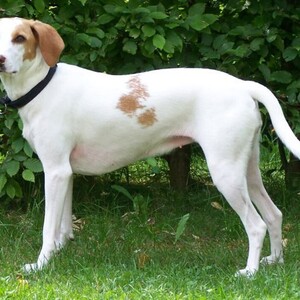
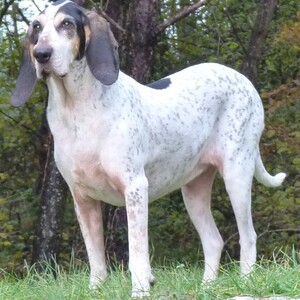
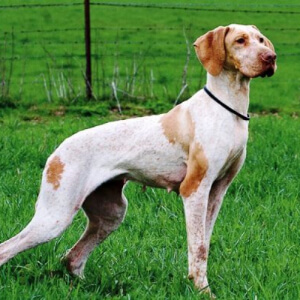
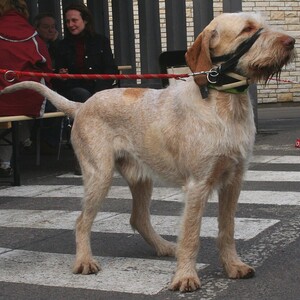
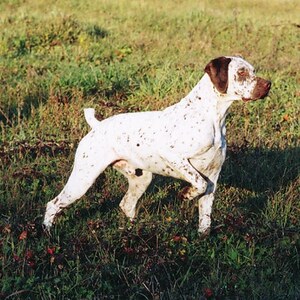
Braque du Bourbonnais. · Mic comte / Wikimedia Commons, CC BY-SA 3.0. Cropped and resized.
The Braque du Bourbonnais is a medium-sized French pointing dog, compact and muscular, with a white coat finely speckled with brown or fawn. It has been known since 1598. At home it is gentle and affectionate, and in the field it is passionate and intelligent.
Quick facts
| Common name | Braque du Bourbonnais (Bourbonnais Pointing Dog) |
| Scientific name | Canis lupus familiaris |
| Country of origin | France (province of Bourbonnais) |
| Official recognition | FCI, definitively since 29 June 1955 (group 7, pointing dogs, with working trial; standard no. 179); AKC, in the Foundation Stock Service since May 2011 |
| Lifespan | 10–12 years |
| Size (males) | 51–57 cm at the withers |
| Size (females) | 48–55 cm at the withers |
| Weight | about 16–24 kg |
| Coat type | Fine, dense and short |
| Common colours | White finely speckled with brown or fawn; roan |
| Energy level | High |
| Suited to an apartment? | Not really; it needs exercise several times a day |
| Temperament | Gentle, affectionate, intelligent, eager to please |
| Tendency to aggression | Very low |
| Good with children | Good |
| Good with other animals | Good |
| Genetic predispositions | No breed-specific diseases are known |
- Primary category:Dog breeds
- Explore this animal's categories:
History and origin
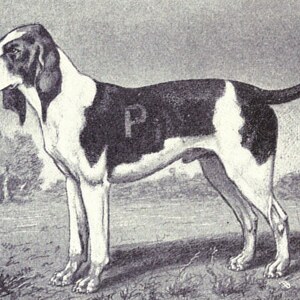
The Braque du Bourbonnais was already known in 1598, when it appears in Aldrovandi's “Natural History”. Old writers described it as a pleasant companion for the hunter, hardy and healthy, with a white coat covered in small brown or fawn spots.
In the 1930s, breeders wanted to impose a “faded lilac” colour and require puppies to be born without a tail. This strict selection put the breed in danger: between 1963 and 1973 not a single dog was registered. In 1970, Michel Comte began rebuilding the breed.
How the breed developed
- 1598 – The breed appears in Aldrovandi's “Natural History”.
- 1930s – Overly strict selection for colour and tail puts the breed in danger.
- 29 June 1955 – The FCI recognises the breed.
- 1963–1973 – Not a single dog is entered in the French register.
- 1970 – Michel Comte begins rebuilding the breed.
- 1981 – The breed club is re-established.
- 1988 – The first Braque du Bourbonnais arrives in the United States.
- May 2011 – The AKC accepts it into the Foundation Stock Service.
Breed rating
| Feature | Stars |
|---|---|
| Training and intelligence | ★★★★☆ |
| Easy to train | ★★★★★ |
| Intelligence | ★★★★☆ |
| Independence | ★★☆☆☆ |
| Stubbornness | ★★☆☆☆ |
| Behaviour and temperament | ★★★★☆ |
| Affectionate with family | ★★★☆☆ |
| Friendly with children | ★★★☆☆ |
| Good with other dogs | ★★★★☆ |
| Good with cats and other animals | ★★★☆☆ |
| Loyalty | ★★★★☆ |
| Tendency to be aggressive | ★☆☆☆☆ |
| Tendency to bark | ★★☆☆☆ |
| Needs and care | ★★☆☆☆ |
| Shedding | ★★☆☆☆ |
| Needs frequent grooming | ★☆☆☆☆ |
| Activity and lifestyle | ★★★★☆ |
| Energy level | ★★★★☆ |
| Daily exercise needs | ★★★★☆ |
| Suited to apartment life | ★★★☆☆ |
| Health and longevity | ★★★★☆ |
| Life expectancy | ★★★★☆ |
| Predisposition to genetic diseases | ★★☆☆☆ |
| Working abilities and uses | ★★★★★ |
| Good hunting dog (pointing) | ★★★★★ |
| Good companion dog | ★★★★☆ |
Indicative rating: 5 stars means the highest level. It is based on the ratings the American Kennel Club gives the breed and on the FCI standard.
Physical characteristics
It is a medium-sized, sturdy, compact and muscular pointer that gives an impression of strength as well as elegance. Females are leaner and more elegant than males.
General appearance
The large, almost round eyes are hazel or dark amber, depending on the coat colour. The ears hang against the cheeks. Some dogs are born without a tail.
| Feature | Braque du Bourbonnais |
|---|---|
| Size | Medium |
| Height at the withers | males: 51–57 cm; females: 48–55 cm |
| Weight | about 16–24 kg |
| Coat | Fine, dense and short |
| Eyes | Large, hazel or dark amber |
| Tail | Some are born without a tail |
The white is covered with small brown spots (once called “wine lees”) or fawn spots (called “peach blossom”). A mix of white and coloured hairs, known as roan, is also accepted. Black is not allowed.
Training and socialisation
The AKC gives it top marks for trainability: it is intelligent and eager to please its owner. In the field it is serious, adaptable and passionate.
It responds well to rewards and varied exercises.
Tips for effective training
- Use rewards. It learns quickly when praised.
- Vary its activities. Swimming, retrieving, frisbee or hiking.
- Practise the recall. In the field, scents can distract it.
- Try dog sports. Agility, obedience and rally give it exercise and mental stimulation.
Activity needs and lifestyle
The AKC recommends play in a fenced yard or walks several times a day. Swimming, hiking and fetching a ball or frisbee help it burn off energy.
| Activity | How often | Why it matters |
|---|---|---|
| Walks | several times a day | Burns off energy |
| Swimming or hiking | weekly | Varied exercise |
| Fetching a ball or frisbee | daily | Uses its hunting instinct |
Tips for a balanced life
- The yard must be fenced.
- Indoor games (hide-and-seek, ball games) help on rainy days.
- It suits active families.
Care and health
Coat and skin care
The fine, short coat should be brushed now and then and bathed occasionally. The AKC points out that its nails grow quickly and are strong, so they must be trimmed regularly.
Common health problems
The AKC says most dogs of this breed are healthy. Good breeders test their dogs to reduce the risk of disease in puppies.
Other care
- Trim the nails regularly so they do not split.
- Check the ears so that wax and dirt do not build up.
- Brush its teeth regularly.
Diet and nutrition
The AKC warns that some dogs put on weight easily. Keep an eye on calories and treats.
Tips for a healthy diet
The table gives a starting estimate, calculated with the formula from the Merck Veterinary Manual. The first two calorie columns show the calories per day for a healthy adult dog. The last column shows what this means in dry food with 3,500–4,000 kcal per kilogram.
| Dog's weight | Calories per day (neutered) | Calories per day (not neutered) | Dry food per day (approximate) |
|---|---|---|---|
| 16 kg | 900 kcal | 1,010 kcal | 220–290 g |
| 20 kg | 1,060 kcal | 1,190 kcal | 260–340 g |
| 24 kg | 1,210 kcal | 1,370 kcal | 300–390 g |
- Give it its food in two meals a day.
- Training treats count towards the daily portion.
- A dog is at the right weight when you can feel its ribs without pressing hard.
Foods to avoid
Some human foods are dangerous for dogs: chocolate, coffee, grapes and raisins, onions, garlic, xylitol (a sweetener used in chewing gum), macadamia nuts and alcohol.
Reproduction and development
Physical and emotional maturity
In dogs, sexual maturity usually comes between 6 and 12 months. Most breeds become adults at around 13–15 months.
Mating and pregnancy
Pregnancy lasts about 63 days, counted from ovulation. Mating a female on her first heat is not recommended. The FCI standard requires that only healthy dogs of typical breed appearance are used for breeding.
Caring for the puppies
In dogs, a litter has 5–6 puppies on average, and the number rises with the size of the breed. Socialisation starts in the first weeks: gentle handling, everyday noises and new people.
Interesting facts
- “Wine lees” and “peach blossom”. These were the names of the two traditional colours of the spots.
- Ten years without a single puppy. Between 1963 and 1973 not one Braque du Bourbonnais was registered.
- Saved by one man. Michel Comte rebuilt the breed from 1970 and ran the club until 2001.
- Popular in America. In some years more puppies are registered in the United States than in France.
- It can be born without a tail. Some dogs have no tail from birth.
In popular culture
In Aldrovandi's “Natural History”
The Braque du Bourbonnais appears as early as 1598 in the “Natural History” of the Italian naturalist Ulisse Aldrovandi. The mention shows how old the breed is.
Frequently asked questions
How big does it get?
Males measure 51–57 cm and females 48–55 cm; they weigh about 16–24 kg.
What colour is it?
White finely speckled with brown or fawn.
Is it easy to train?
Yes. It is intelligent and eager to please its owner.
How long does it live?
Its life expectancy is 10–12 years.