Smilodon (saber-toothed cat)Smilodon — habitat, diet and reproduction
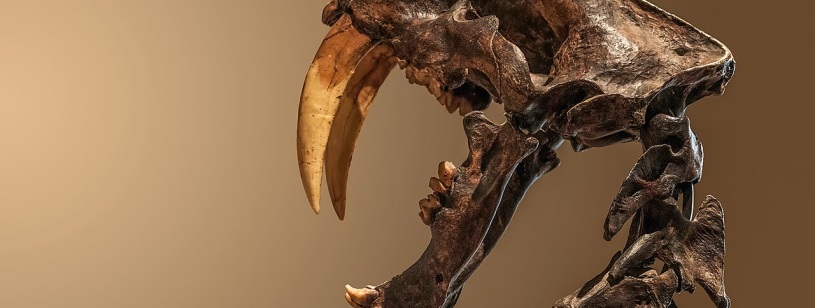
Smilodon skull on display at the Museum of Zoology of the University of São Paulo. · Wilfredor / CC BY-SA 4.0 (https://creativecommons.org/licenses/by-sa/4.0). Cropped and resized.
The saber-toothed cat, known scientifically as Smilodon, was a large cat of the Americas with two long, curved upper canines like sabres. It lived about 2.5 million to 10,000 years ago and hunted large Ice Age animals. Although often called a “tiger”, it was not closely related to modern tigers.
Quick facts
| Common name | Saber-toothed cat |
| Scientific name | Smilodon (genus of three species) |
| Lifespan | Not known precisely |
| Length | Body about 1.5–2 m, with a short tail |
| Weight | From about 55 kg (S. gracilis) to 220–400 kg (S. populator) |
| Diet | Carnivore: bison, horses, camels, ground sloths, young mammoths |
| Predators | Adults had none; they competed with other large carnivores |
| Conservation status | Extinct (EX), about 10,000 years ago |
| Distribution | North and South America |
| Habitat | Forests, savannas and grasslands |
| Family | Felidae (subfamily Machairodontinae) |
| Canines | Up to about 28 cm |
- Primary category:Mammals
- Explore this animal's categories:
Interesting facts
- The largest canines could reach about 28 cm, part of them rooted in the jaw.
- Smilodon could open its mouth to a very wide angle, about 120 degrees.
- At La Brea in Los Angeles, fossils of thousands of Smilodon trapped in asphalt pools have been found.
- Smilodon is the official state fossil of California.
Characteristics
Smilodon was more robust than today’s lions and tigers, with very powerful forelimbs and a short tail. Its muscular neck suited strong downward bites.
The upper canines were long and flattened, with finely serrated edges. They could break if twisted sideways, so the cat first pinned prey with its forelimbs.
Behaviour
Researchers think Smilodon hunted by ambush rather than long chases. It grabbed prey with its paws, wrestled it down and bit the throat, cutting blood vessels.
Some fossils with healed injuries show that wounded individuals survived for a long time, perhaps helped by others, so some researchers think Smilodon lived in groups like lions.
Habitat and distribution
Smilodon gracilis lived in eastern North America, Smilodon fatalis in North America and western South America, and the largest, Smilodon populator, in eastern South America.
It lived in forests, savannas and grasslands alongside other extinct large animals. It belonged to the cat family but to a separate, extinct branch.
Diet and feeding
Smilodon hunted large animals: bison, wild horses, American camels, ground sloths and probably young mammoths.
Chemical analyses of bones show it preferred prey from forests and wooded areas. Its long canines let it kill animals larger than itself quickly.
Reproduction and life cycle
Little is known about its reproduction. Like living cats, females probably had a few cubs that stayed with their mother until they learned to hunt.
Fossils show cubs first had milk teeth, and the long permanent canines grew slowly over about three years.
Name and history
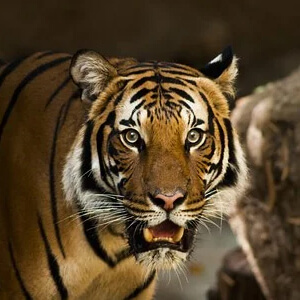
The name Smilodon comes from Greek and means “knife tooth”. Calling it a “tiger” is misleading, as it was not closely related to tigers but belonged to the saber-toothed cats.
Smilodon appears in many films and cartoons about the Ice Age and is the symbol of the La Brea Tar Pits museum.
Conservation and threats
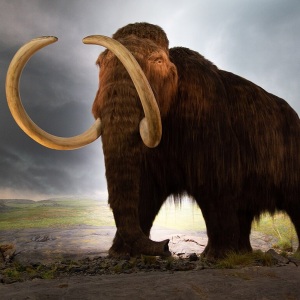
Smilodon became extinct about 10,000 years ago, together with many other large animals of the Americas. Probable causes are climate change at the end of the Ice Age, the loss of large prey and the arrival of humans.
Today its fossils help us understand how large predators coped with past changes.
Frequently asked questions
Was the saber-toothed cat a tiger?
No. It belonged to a separate, extinct branch of saber-toothed cats, not closely related to tigers.
How long were Smilodon’s teeth?
The upper canines reached about 28 cm in the largest individuals, including the part in the jaw.
When did Smilodon go extinct?
About 10,000 years ago, at the end of the Ice Age.
Where did Smilodon live?
In North and South America.