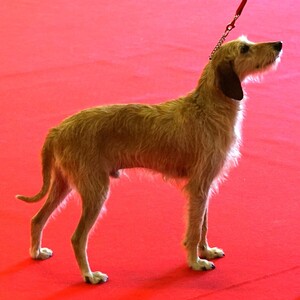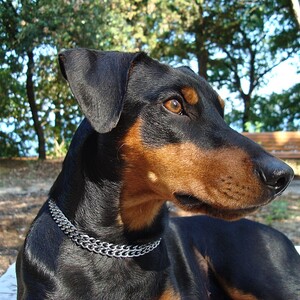
Bavarian Mountain HoundCharacteristics, history, training and care
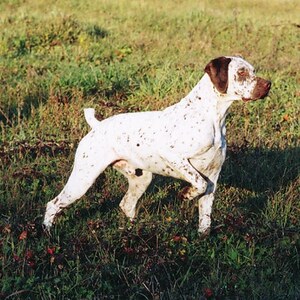
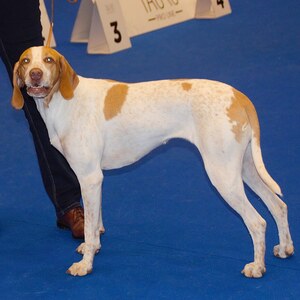
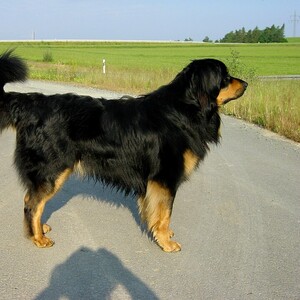
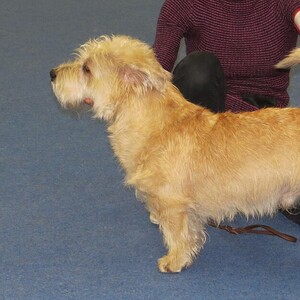
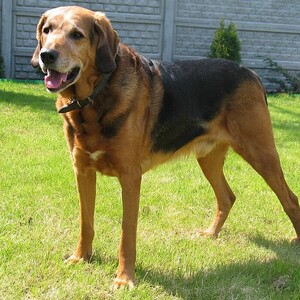
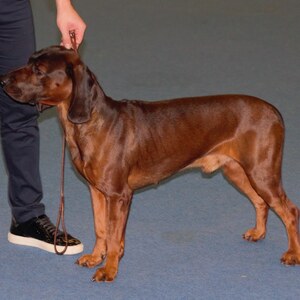
Bavarian Mountain Hound. · Canarian / Wikimedia Commons, CC BY-SA 4.0. Cropped and resized.
The Bavarian Mountain Hound is a medium-sized German dog that specialises in finding wounded game by following the blood trail. It is used mainly by foresters and gamekeepers. It is devoted to its owner, reserved with strangers and needs a lot of space and work.
Quick facts
| Common name | Bavarian Mountain Hound (in German: Bayerischer Gebirgsschweißhund) |
| Scientific name | Canis lupus familiaris |
| Country of origin | Germany |
| Official recognition | FCI, definitively since 14 November 1959 (Group 6, leash hounds, with a working trial; standard no. 217); also recognised by the AKC |
| Lifespan | 12–15 years |
| Size (males) | 47–52 cm at the withers; ideally 20–30 kg |
| Size (females) | 44–48 cm at the withers; ideally 17–25 kg |
| Coat type | Dense, lying close to the body, moderately harsh, slightly glossy |
| Common colours | Deep red, deer red, reddish brown, fawn, reddish grey; sometimes brindle |
| Energy level | High |
| Suited to an apartment? | No; the AKC says it is not suited to city life |
| Temperament | Devoted, independent, curious, friendly |
| Tendency to aggression | Low |
| Good with children | Average |
| Good with other animals | Average; strong hunting instinct |
| Genetic predispositions | No breed-specific diseases are known |
- Primary category:Dog breeds
- Explore this animal's categories:
History and origin
All German scent hounds descend from the old hunting dogs called “Bracken”. The calmest and most persistent of them were kept on a lead and used to pick up the lost trail of game. From them, between the 18th and 19th centuries, the Hanoverian Scent Hound was developed.
After the revolution of 1848, the great hunting estates were broken up, and hunters needed a dog to search for wounded game “after the shot”. The Hanoverian Scent Hound was too heavy for the mountains, so Baron Karg-Bebenburg of Reichenhall created a lighter dog after 1870, by crossing Hanoverian Scent Hounds with red mountain hounds.
How the breed developed
- 18th–19th centuries – The Hanoverian Scent Hound, the breed's ancestor, is developed.
- After 1848 – Hunters need dogs that can find wounded game.
- After 1870 – Baron Karg-Bebenburg creates the Bavarian Mountain Hound.
- 1912 – The breed club is founded in Munich, the only one recognised in Germany.
- 14 November 1959 – The FCI recognises the breed.
- 22 August 2017 – The current FCI standard is published.
Breed rating
| Feature | Stars |
|---|---|
| Training and intelligence | ★★★★☆ |
| Easy to train | ★★★★☆ |
| Intelligence | ★★★★☆ |
| Independence | ★★★★☆ |
| Stubbornness | ★★★☆☆ |
| Behaviour and temperament | ★★★☆☆ |
| Affectionate with family | ★★★☆☆ |
| Friendly with children | ★★★☆☆ |
| Good with other dogs | ★★★☆☆ |
| Good with cats and other animals | ★★☆☆☆ |
| Loyalty | ★★★★★ |
| Tendency to be aggressive | ★☆☆☆☆ |
| Tendency to bark | ★★☆☆☆ |
| Needs and care | ★★★☆☆ |
| Shedding | ★★★☆☆ |
| Needs frequent grooming | ★★☆☆☆ |
| Activity and lifestyle | ★★★★☆ |
| Energy level | ★★★★★ |
| Daily exercise needs | ★★★★★ |
| Suited to apartment life | ★☆☆☆☆ |
| Health and longevity | ★★★★☆ |
| Life expectancy | ★★★★☆ |
| Predisposition to genetic diseases | ★★☆☆☆ |
| Working abilities and uses | ★★★★★ |
| Good tracking dog | ★★★★★ |
| Good companion dog | ★★★☆☆ |
Indicative rating: 5 stars means the highest level. It is based on the ratings the American Kennel Club gives the breed and on the FCI standard.
Physical characteristics
It is a medium-sized, fairly light, athletic and muscular dog. The topline rises slightly from the withers towards the rear. Males and females must be clearly different.
General appearance
The head is fairly broad, with a well-defined stop. The heavy, high-set ears reach at most to the nose. The medium-length tail is carried horizontally or slightly down.
| Feature | Bavarian Mountain Hound |
|---|---|
| Size | Medium |
| Height at the withers | males: 47–52 cm; females: 44–48 cm |
| Ideal weight | males: 20–30 kg; females: 17–25 kg |
| Coat | Dense, moderately harsh; longer on the belly, legs and tail |
| Eyes | Dark brown, with a clear, alert expression |
| Ears | Heavy, broad, rounded, lying close to the head |
The accepted colours are deep red, deer red, reddish brown, fawn to biscuit, and reddish grey like a deer's winter coat. The muzzle and ears are darker. A small light patch on the chest, called the “Bracke star”, is allowed.
Training and socialisation
The AKC gives it a good score for trainability. It is a specialist: it needs an owner who will train it to search for wounded game and use it for that work.
Its sense of smell is so keen that it can tell the wounded animal it is tracking from other animals of the same species.
Tips for effective training
- Train it on a trail. Artificial blood trails are the basis of training for this breed.
- Be consistent and calm. It is sensitive and devoted to its owner.
- Give its mind work to do. Without activity, it gets bored.
- Socialise it. It is reserved with strangers; get it used to new people.
Activity needs and lifestyle
The AKC says the breed is not suited to city life or to the occasional hunter. Most are kept by foresters and gamekeepers.
| Activity | How often | Why it matters |
|---|---|---|
| Trail work | several times a week | It is the job it was bred for |
| Long walks in nature | daily | It needs a lot of exercise |
| Running in an area with a high fence | daily | Burns off energy |
Tips for a balanced life
- The fence must be high: if it gets bored, it may climb over it or dig.
- It is not a kennel dog; it prefers to be with the family.
- Without hunting, it needs a lot of physical and mental activity.
Care and health
Coat and skin care
Brush the dense coat regularly. Its nails grow quickly and are strong, so they need trimming often to stop them splitting.
Common health problems
There are no known hereditary diseases specific to the breed. Annual vet check-ups and parasite control are important for a dog that works in the woods.
Other care
- Check the ears regularly so that wax and dirt do not build up.
- Brush its teeth regularly.
- Check for ticks after every outing.
Diet and nutrition
A dog that works hard needs more energy. Some dogs put on weight easily, so keep an eye on its weight.
Tips for a healthy diet
The table gives a starting estimate, calculated with the formula from the Merck Veterinary Manual. The first two calorie columns show the calories per day for a healthy adult dog. The last column shows what this means in dry food with 3,500–4,000 kcal per kilogram.
| Dog's weight | Calories per day (neutered) | Calories per day (not neutered) | Dry food per day (approximate) |
|---|---|---|---|
| 17 kg | 940 kcal | 1,050 kcal | 240–300 g |
| 22 kg | 1,140 kcal | 1,280 kcal | 280–370 g |
| 28 kg | 1,360 kcal | 1,530 kcal | 340–440 g |
- Give it its food in two meals a day.
- Increase the portion during periods of intense work.
- A dog is at the right weight when you can feel its ribs without pressing hard.
Foods to avoid
Some human foods are dangerous for dogs: chocolate, coffee, grapes and raisins, onions, garlic, xylitol (a sweetener used in chewing gum), macadamia nuts and alcohol.
Reproduction and development
Physical and emotional maturity
In dogs, sexual maturity usually comes between 6 and 12 months. Most breeds become adults at around 13–15 months.
Mating and pregnancy
Pregnancy lasts about 63 days, counted from ovulation. Mating a female on her first heat is not recommended. The FCI standard requires that only healthy dogs of typical breed appearance are used for breeding.
Caring for the puppies
In dogs, a litter has 5–6 puppies on average, and the number rises with the size of the breed. Socialisation starts in the first weeks: gentle handling, everyday noises and new people.
Interesting facts
- It recognises the wounded animal. It can tell wounded game from other animals of the same species.
- It has a star on its chest. The light patch on the chest is called the “Bracke star”.
- It works “after the shot”. It was bred to search for wounded game after a shot has been fired.
- It has a compulsory working trial. The standard requires its abilities to be confirmed at hunting trials.
- A single club. The Munich club, founded in 1912, is the only one recognised for the breed in Germany.
Frequently asked questions
What does a Bavarian Mountain Hound do?
It searches for wounded game by following the blood trail, even on difficult mountain terrain.
How big does it get?
Males measure 47–52 cm and weigh 20–30 kg; females measure 44–48 cm and weigh 17–25 kg.
Is it a family dog?
It is devoted to its family, but needs work and space. It is not suited to the city.
How long does it live?
Its life expectancy is 12–15 years.