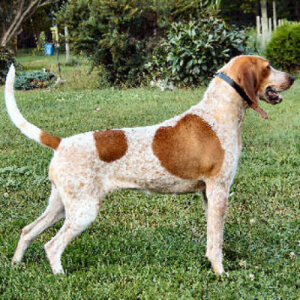
American English CoonhoundCharacteristics, history, training and care
Quick facts
| Common name | American English Coonhound |
| Scientific name | Canis lupus familiaris |
| Country of origin | United States of America |
| Official Recognition | Recognized by UKC, AKC |
| Typical lifespan | About 11-12 years |
| Dimensions (Male) | About 61-69 cm |
| Dimensions (Female) | About 56-64 cm |
| Weight (Male) | About 25-34 kg |
| Weight (Females) | About 20-29 kg |
| Coat type | Short, dense, hard |
| Common colours | Red and white ticked, blue and white ticked, tricolour with ticking, red and white, black and white |
| Energy Level | Very high |
| Suitable for apartment? | Depends on exercise, training, health and the individual dog |
| Temperament | Friendly, alert, determined |
| Behaviour towards unfamiliar people and dogs | Individual behaviour varies; socialisation, training and management matter |
| Compatibility with children | Depends on the individual; adult supervision and suitable handling are essential |
| Compatibility with other animals | Depends on socialisation, prey drive and the animals involved |
| Genetic predispositions | Hip dysplasia, progressive retinal atrophy, ear infections |
- Primary category:Dog breeds
- Explore this animal's categories:
History and Origin
The American English Coonhound descends from English Foxhounds brought to North America by settlers in the 17th and 18th centuries. American hunters selected tough, fast dogs with a good nose to hunt raccoons and other animals at night, often over rough ground.
Development of the breed
- The 1700s - Settlers in Virginia and Maryland used English hounds, which were adapted to American terrain and game.
- The 19th century - Hunters bred dogs that could follow a cold trail at night and "tree" raccoons, holding them in a tree until the hunter arrived.
- Official recognition - The breed was registered by the UKC in 1905 (as the English Coonhound) and fully recognised by the AKC in 2011.
Breed Evaluation
The American English Coonhound is a fast, energetic and friendly dog, but it needs a lot of exercise and an owner who understands hounds. These editorial ratings provide a general guide. Individual dogs vary with health, training and environment.
| Characteristic | Stars |
|---|---|
| Training and Intelligence | ★★★★☆ |
| Easy to train | ★★★★☆ |
| Intelligence | ★★★★★ |
| Level of independence | ★★★☆☆ |
| Level of stubbornness | ★★★☆☆ |
| Behavior and Temperament | ★★★★★ |
| Affectionate with family | ★★★★★ |
| Friendly with children | ★★★★★ |
| Compatible with other dogs | ★★★★☆ |
| Compatible with cats and other animals | ★★★☆☆ |
| Degree of loyalty | ★★★★★ |
| Tendency to be aggressive | ★☆☆☆☆ |
| Tendency to bark | ★★★★☆ |
| Needs and Care | ★★★★☆ |
| Shedding level | ★★★☆☆ |
| Requires frequent care | ★★☆☆☆ |
| Activity and Lifestyle | ★★★★★ |
| Energy level | ★★★★★ |
| Daily exercise requirement | ★★★★★ |
| Suitable for apartment living | ★☆☆☆☆ |
| Health and Longevity | ★★★★☆ |
| Life expectancy | ★★★★☆ |
| Predisposition to genetic diseases | ★★★☆☆ |
| Work and Utility Features | ★★★★★ |
| Good hunting dog | ★★★★★ |
| Good companion dog | ★★★★☆ |
Physical Characteristics
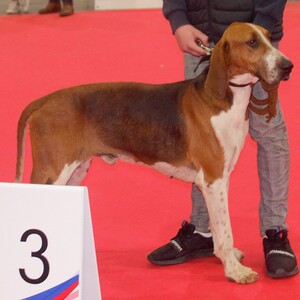
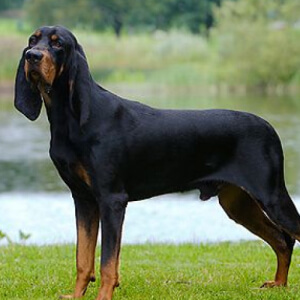
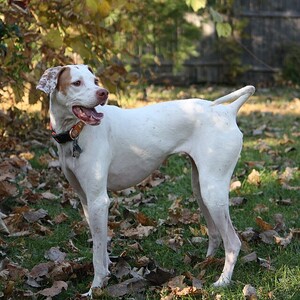
The American English Coonhound is an athletic, well-balanced hound built for speed and stamina.
General appearance
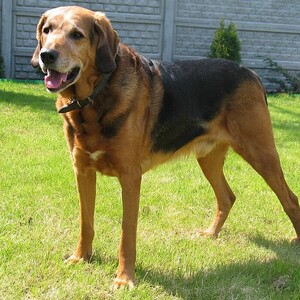
- A strong, muscular body with a deep chest, built for speed and agility.
- A short, dense, hard coat that protects it in bad weather and thick undergrowth.
- A broad head with long, hanging ears, similar to a Foxhound's.
- A long, strong tail, carried high when the dog is working.
- Dark brown eyes with a soft, pleading expression.
| Characteristic | American English Coonhound |
|---|---|
| Size | Medium to large (about 53-69 cm at the shoulder) |
| Weight | About 20-34 kg |
| Coat | Short, dense, hard |
| Muzzle | Fairly long, square |
| Shedding tendency | Moderate |
| Build | Strong but agile |
The American English Coonhound is built for hunting and endurance and can follow a trail for hours.
Training and Socialization
The American English Coonhound is clever and willing, but also independent, so training must be patient and consistent. With its strong hunting instinct, it needs early socialisation and good training to become a balanced companion.
Tips for effective training
- Early socialisation - Puppies should meet new people, animals and places from an early age to prevent shyness.
- Reward-based training - It responds very well to food and praise, but can become stubborn if methods are too harsh.
- Basic and advanced commands - It can learn obedience commands and also enjoys scent work and tracking.
- Managing the nose - As a scent hound, it may follow a trail and ignore its owner, so it should be walked on a lead or in a secure area, and recall should be practised often.
- Managing barking - It has a loud, ringing voice used to tell hunters where the prey is; without training, this can disturb neighbours.
The American English Coonhound is intelligent but independent, so training must be consistent and very patient.
Activity and Lifestyle Needs
This breed is very active and needs plenty of exercise and mental stimulation to stay balanced.
| Activity | Recommended duration |
|---|---|
| Daily walks and runs | At least 60-90 min |
| Scent and tracking games | Several times a week |
| Interactive games | About 30 min |
| Obedience training | About 15-20 min/day |
Recommendations for a balanced lifestyle
- Not ideal for apartments - It needs space to run and does not suit a quiet, indoor lifestyle.
- Can become destructive - Without enough activity, it may dig, chew things or howl.
- Good for active families - It suits people who enjoy hiking, running and outdoor activities.
- Handles warm weather fairly well - It was developed in the American South, but still needs shade and water in hot weather.
The American English Coonhound is not suited to a quiet lifestyle; it needs regular exercise and things to sniff and explore.
Care and Health
The American English Coonhound is a hardy, active breed with easy grooming needs, but owners should watch for some health problems.
Fur and skin care
- Brushing once a week - The short coat needs little care, but regular brushing removes dead hair.
- Baths when needed - It does not need frequent washing, only after hunting or when very dirty; hounds can have a typical "houndy" smell.
- Ear checks - Its long, hanging ears can trap moisture, so they should be checked and cleaned regularly.
Common health problems
| Condition | Description | Possible signs |
|---|---|---|
| Hip and elbow dysplasia | Abnormal development of the joints | Lameness, difficulty getting up |
| Progressive retinal atrophy | An inherited disease that gradually destroys the retina | Difficulty seeing in the dark |
| Ear infections | Hanging ears can trap moisture | Scratching, head shaking, discharge |
Other aspects of care
- Regular veterinary checks - Help monitor the joints and eyes.
- Fresh water - As an active dog, it should always have fresh water.
- Weight control - Regular exercise and a balanced diet help prevent weight gain.
Diet and Nutrition
The American English Coonhound is an athletic, active dog that needs a balanced diet with good-quality protein.
Recommendations for a healthy diet
Choose a complete, balanced diet for the dog’s age, size and health. Plan home-prepared diets or supplements with a qualified veterinarian. Raw pet food can carry harmful bacteria.
| Food type | Daily Amount (Adults) | Frequency |
|---|---|---|
| Premium dry food | Individual amount; follow a complete diet’s guidance and veterinary advice | 2 meals/day |
| Home cooked food | Individual amount; follow a complete diet’s guidance and veterinary advice | 2 meals/day |
| Raw food: bacterial contamination is a concern | Individual amount; follow complete-food guidance and veterinary advice | 2 meals/day |
Forbidden foods
Chocolate, grapes and raisins, onions and xylitol - toxic to dogs. / Cooked bones - can splinter and cause internal injuries. / Salty foods - not suitable for dogs. / Too much milk - can cause digestive problems.
The American English Coonhound needs a balanced diet matched to its activity to keep its energy and health.
Reproduction and Development
Breeding can involve health risks. Responsible breeders use appropriate health screening and veterinary advice rather than assuming that a breed is free of reproductive problems.
Physical and emotional maturity
- Physical maturity: The coonhound reaches adult size at about 12-18 months, but continues to fill out until about 2 years.
- Emotional maturity: It stays playful and active all its life, but usually becomes calmer and less impulsive after 2-3 years.
Mating and Gestation
- Breeding decisions - A veterinarian should assess health, maturity and relevant screening. A fixed age alone does not establish that a dog should be bred.
- Duration of gestation: Approximately 58-68 days, usually about 63 days.
- Average number of puppies: Usually about 6-8 puppies per litter.
Puppy care
- The first 3 weeks: Puppies depend completely on their mother and need a warm, safe place.
- Between 4-8 weeks: They begin to eat solid food, and socialisation becomes very important to prevent shy or anxious behaviour.
- Moving to a new home - Timing depends on health, development and local requirements. Continue careful socialisation and veterinary care.
Curiosities and Interesting Facts
- A night hunter - This dog was bred to hunt raccoons and opossums at night, and some are also used to track bears, mountain lions and wild boar.
- A great nose - It can follow a "cold" trail that is several hours old.
- Great stamina - It can run for hours over long distances and difficult ground.
- A special voice - Its loud, ringing bark, called a "bawl" or "chop", helps hunters find it from far away.
- Many names - The breed was once called the "English Fox and Coonhound" and is related to the Bluetick and Treeing Walker Coonhounds.
- A gentle family dog - Although it is a keen hunter, it is usually friendly and gentle at home if well socialised.
The Dog in Popular Culture
The American English Coonhound is not as famous as some breeds, but it is an important part of American hunting culture.
Importance in American culture
- A favourite of Southern hunters - Coonhounds are closely linked with the tradition of night-time raccoon hunting, especially in the southern United States.
- Coonhound events - Coonhounds compete in "nite hunts", field trials and bench shows organised by clubs such as the UKC.