CougarInteresting facts and information
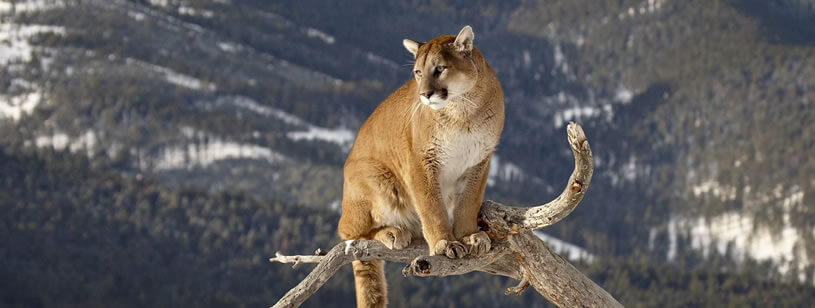
The cougar (Puma concolor), also called the puma or mountain lion, is a wild cat of the Americas. It hunts a variety of prey and uses habitats ranging from forests to dry, open country. Adults are usually solitary.
With a range stretching from Canada to Patagonia, the cougar is one of the most adaptable wild cats and lives in forests, mountains, deserts, swamps and open plains. It is not threatened globally, but in some regions its populations are declining because of habitat loss, hunting and conflict with farmers.
Quick facts
| Common name | Cougar (puma, mountain lion) |
| Scientific name | Puma concolor |
| Typical lifespan | About 8-13 years in the wild, up to about 20 years in captivity |
| Maximum speed | About 65-70 km/h in short sprints |
| Height at the shoulder | About 60-90 cm |
| Total length | About 1.5-2.4 m (including tail) |
| Weight | About 30-100 kg (males are larger than females) |
| Diet type | Carnivore (deer and other hoofed animals, rodents, hares, birds) |
| Main predators | Humans; wolves, bears and jaguars may occasionally kill cubs or compete for prey |
| Conservation status | Least Concern globally (IUCN); some local populations, such as the Florida panther, are endangered |
| Geographical distribution | From western Canada to southern South America |
| Social behaviour | Solitary, territorial |
| Special adaptations | Powerful jumps, great agility, strength and stealth |
Interesting facts
- A big cat that purrs - Cougars cannot roar like lions and tigers; instead, they purr, hiss, growl and make high-pitched whistles and screams.
- Champion jumpers - A cougar can leap about 5 metres up into a tree and cover about 12 metres in a single bound, using its long tail for balance.
- Silent hunters - Soft pads on their paws let cougars creep up on prey without a sound.
- The cougar is one of the largest wild cats in the Americas. It is not the second-largest terrestrial predator across all mammal groups.
- Devoted mothers - Cougar cubs stay with their mother for about 1-2 years, learning to hunt.
- A huge range - The cougar has the largest range of any wild land mammal in the Americas, from Canada's Yukon to the southern Andes of Patagonia.
- Few natural enemies - Adult cougars are rarely attacked by other animals, but wolf packs, bears and jaguars may chase them away from their kills.
Records and remarkable features
- The cougar (Puma concolor), also called the puma or mountain lion, is a wild cat of the Americas. It hunts a variety of prey and uses habitats ranging from forests to dry, open country. Adults are usually solitary.
- The cougar holds a world record for the animal with the most names: it has been called by more than 40 different names in English, including puma, mountain lion, panther and catamount.
- It is the largest member of the "small cat" subfamily, the group that also includes the domestic cat.
Characteristics
The cougar is a strong, athletic and very agile cat, with a body built for hunting and surviving in many environments.
Appearance
- A long, muscular body - Cougars have a slim, flexible body and powerful hind legs that let them jump and sprint.
- A plain coat - Their short fur is tawny, from reddish-brown to silvery grey, which helps them blend into forests, mountains and grasslands.
- A round head and rounded ears - Their keen hearing picks up the faint sounds of prey.
- A long tail - Up to about 90 cm long, with a dark tip, it helps with balance when running and jumping.
- Large paws - Their big, soft paws let them move quietly and help them walk on snow.
Special adaptations
- Great strength - A cougar can bring down prey several times its own weight, such as deer and, occasionally, elk.
- Camouflage - Their plain coat helps them hide in many landscapes, from forests to deserts.
- Fast sprints - Cougars can run at about 65-70 km/h over short distances.
- Excellent night vision - Their eyes are adapted for hunting at dusk, dawn and night.
Habits and behaviour
Cougars are solitary, territorial cats with skilled hunting methods and a well-defined way of life.
Social behaviour
- They live alone - Adult cougars avoid each other, except during mating and when mothers raise their cubs.
- Large territories - A male's home range can cover several hundred square kilometres, up to about 1,000 km², and often overlaps those of several females.
- Scent marks - Cougars mark their territory with scrapes in the ground, urine and droppings, and by scratching trees.
- Long childhood - Cubs stay with their mother until they are about 1-2 years old.
Hunting and defence techniques
- Surprise attacks - Cougars stalk their prey silently and then pounce.
- A killing bite - They usually kill with a powerful bite to the neck or the back of the head.
- Moving quietly - Thanks to their paw pads, they can get close even to wary prey.
- Avoiding fights - When challenged by wolves or bears, cougars usually give up their kill and leave.
- Hiding food - After a large kill, a cougar often drags the carcass to a hidden spot and covers it with leaves and soil to eat over several days.
Habitat and geographic distribution
Cougars are the most widespread wild cats in the Americas, living in forests, mountains, grasslands, swamps and deserts.
| Region | Subspecies | Preferred habitat |
|---|---|---|
| Western North America | Puma concolor couguar | Mountains, forests, deserts |
| Florida | Puma concolor couguar (Florida panther population) | Swamps, pine forests |
| Central America | Puma concolor couguar | Tropical forests, mountains |
| South America | Puma concolor concolor | Rainforests, grasslands, the Andes, Patagonian steppe |
Types of habitat
- Mountains and mountain forests - Cougars often live in rocky, wooded areas of the Rocky Mountains and the Andes.
- Tropical forests - They live in the forests of Central America and the Amazon, where they share their range with jaguars.
- Deserts and grasslands - Cougars live in dry areas, such as the deserts of the south-western USA and the steppes of Patagonia.
Human impact and threats
- Habitat loss - The spread of towns and farms shrinks cougar territory and cuts it into pieces.
- Conflict with farmers - Cougars that kill sheep, goats or cattle are often shot.
- Roads - Many cougars are killed by cars, especially in Florida and California.
Diet and feeding
The cougar is a carnivore that hunts many kinds of animals, depending on its habitat. It prefers large hoofed animals, but it also eats smaller prey when necessary.
What do cougars eat?
| Type of food | Examples |
|---|---|
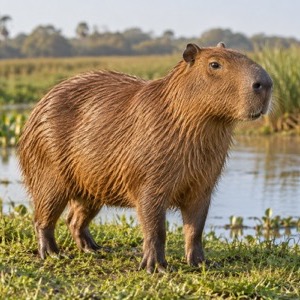
| Large mammals | Deer, elk, bighorn sheep, guanacos, capybaras |
| Small mammals | Hares, rabbits, porcupines, raccoons, rodents |
| Birds | Wild turkeys, rheas, other ground birds |
| Reptiles | Iguanas, lizards, small caimans in some areas |
| Carrion | Occasionally, dead animals |
Hunting techniques
- Ambush - Cougars creep close to their prey and then make a powerful leap or short sprint.
- A killing bite - Once they catch their prey, they kill it with a bite to the neck or the base of the skull.
- Caching - They often hide a large kill under leaves or soil and return to it for several days.
- Flexible diet - When large prey is scarce, cougars hunt rodents, hares and birds.
Adapting to the food supply
- In North America, cougars feed mainly on deer.
- In tropical forests, they eat more small and medium-sized animals, such as agoutis and capybaras.
- In Patagonia, they hunt guanacos and hares.
Reproduction and life cycle
Cougars can breed at any time of year, although in many areas most cubs are born in spring and summer.
| Feature | Details |
|---|---|
| Age at maturity | About 1.5-3 years |
| Breeding season | All year round, with a peak in some areas |
| Pregnancy | About 90-96 days |
| Cubs per litter | 1-6 (usually 2-3) |
| Time with the mother | About 1-2 years |
| Lifespan | About 8-13 years in the wild, up to about 20 years in captivity |
Breeding process
- Males find females by following their scent and calls.
- The female gives birth in a hidden den, such as a rock crevice, a cave or thick vegetation.
- Cubs are born blind, with spotted fur and blue eyes; the spots fade over the first year.
- The mother protects her cubs fiercely and teaches them to hunt before they leave to find their own territory.
Survival strategies
- Cubs stay hidden for their first weeks to avoid predators.
- Young males often travel hundreds of kilometres to find an empty territory, avoiding older males.
- Females raise their cubs alone, without help from the males.
Name and history
The cougar was an important animal for many Indigenous peoples of the Americas, admired for its strength, agility and hunting skill.
Origin of the name
- "Puma" comes from Quechua, the language of the Inca Empire.
- "Cougar" comes, through French, from a South American word for the animal in the Tupi language.
- "Mountain lion" is a common name in North America, and in Florida the cat is called a "panther", although it is not related to leopards.
The cougar in human history
- The Incas - According to tradition, the city of Cusco was laid out in the shape of a puma.
- Native American peoples - Many peoples saw the mountain lion as a powerful hunter and guardian; for the Zuni, the mountain lion is the guardian of the north.
- European settlement - Settlers saw cougars as a danger to livestock and killed them in great numbers, wiping them out from most of eastern North America.
The cougar in folklore
Cultural significance and mythology
- The Inca puma - The puma was a symbol of strength and power in the Andes and appears in Inca art and architecture.
- Zuni fetishes - The Zuni people of New Mexico carve small stone fetishes of the mountain lion, the hunter-guardian of the north.
- P-22 - A famous cougar that lived for years in Griffith Park, in the middle of Los Angeles, became a symbol of urban wildlife and inspired the building of one of the world's largest wildlife bridges over a motorway.
Conservation status and threats
The cougar is not threatened globally, but in some regions its populations are small or declining because of habitat loss, hunting and conflict with people.
| Status | Population | Regions |
|---|---|---|
| Least Concern (IUCN) | Puma concolor as a species | North, Central and South America |
| Endangered (US law) | Florida panther, a small population of about 120-230 adults | Southern Florida, USA |
| Extinct | Eastern cougar, officially declared extinct by US authorities in 2018 | Eastern North America |
| Declining locally | Populations in parts of Central and South America | Areas with heavy deforestation and hunting |
Main threats
- Habitat loss and fragmentation - Urban growth and logging shrink cougar territory and bring cougars into contact with people.
- Hunting and poaching - In some regions, cougars are killed illegally or in retaliation for livestock losses.
- Conflict with farmers - Cougars sometimes kill livestock, and farmers kill them in return.
- Fewer prey animals - When deer and other prey are overhunted, cougars have less to eat.
- Roads and wildfires - Traffic and large fires are serious dangers, especially in Florida and California.
Conservation efforts
- Protected areas - National parks such as Yellowstone (USA), Torres del Paine (Chile) and Serra dos Órgãos (Brazil) are refuges for cougars.
- Genetic rescue - In 1995, eight female cougars from Texas were released in Florida to save the inbred Florida panther, and the population grew.
- Hunting laws - In many countries, cougar hunting is strictly controlled or banned.
- Wildlife crossings - Underpasses and bridges help cougars cross motorways safely, such as the large wildlife bridge over a motorway near Los Angeles.
In popular culture
- Puma - The German sportswear company Puma, founded in 1948, has a leaping cougar as its logo.
- Sports teams - Many American university teams, such as those of Brigham Young University and Washington State University, are called the Cougars.
- Cars - The Mercury Cougar was a famous American car first made in 1967.