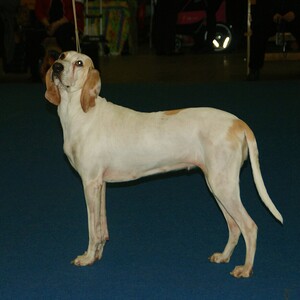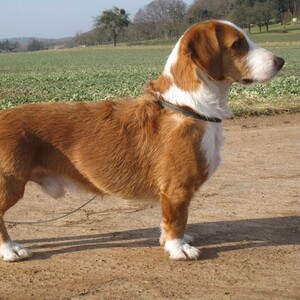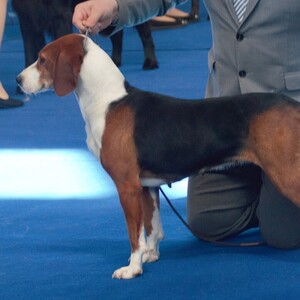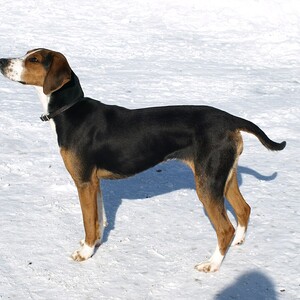
Treeing Tennessee BrindleCharacteristics, history, training and care
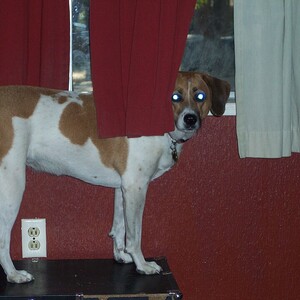
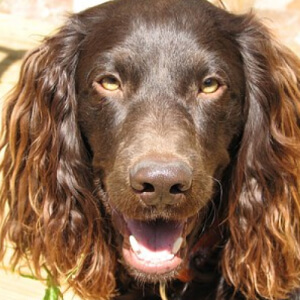
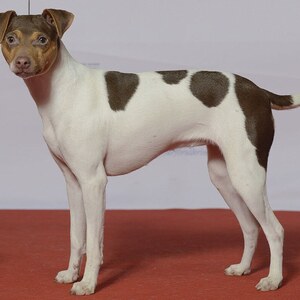
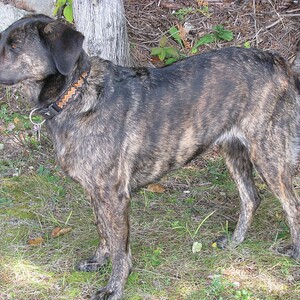
Treeing Tennessee Brindle. · Hummelong / Wikimedia Commons, CC BY-SA 3.0. Cropped and resized.
The Treeing Tennessee Brindle is an American cur-type hunting dog with a brown coat “brindled” with black, from the area of the Appalachian and Ozark Mountains. The AKC says it was bred for a very good nose, a strong voice on the trail and an unusual ability to tree its quarry, and describes it as loyal, alert and intelligent. It is not recognised by the FCI; it has been in the AKC Foundation Stock Service since 1995.
Quick facts
| Common name | Treeing Tennessee Brindle |
| Scientific name | Canis lupus familiaris |
| Country of origin | United States |
| Official recognition | Not recognised by the FCI; in the AKC Foundation Stock Service since 1995 |
| Lifespan | 10–12 years, according to the AKC |
| Size (males) | 41–61 cm at the withers; 14–23 kg according to the AKC |
| Size (females) | 41–61 cm at the withers; 14–23 kg according to the AKC |
| Coat type | Short and smooth |
| Common colours | Brindle (brown with black stripes) |
| Energy level | Medium |
| Suited to an apartment? | Not really |
| Temperament | Loyal, alert, intelligent |
| Tendency to aggression | Low |
| Good with children | Moderate |
| Good with other animals | Very good with dogs, according to the AKC |
| Genetic predispositions | No breed-specific diseases are known |
- Primary category:Dog breeds
- Explore this animal's categories:
History and origin
Wikipedia says the breed's development began in the early 1960s with the Reverend Earl Phillips, who wrote a column in a hunting dog magazine. Through it he learned of the brindle curs, hunting dogs with a brown coat with black “tiger stripes”, highly valued for their qualities.
In 1967 he contacted the owners again to found an association to preserve and promote the brindle cur, and the Treeing Tennessee Brindle Breeders Association was born in Illinois. The foundation dogs came mainly from the area between the Ozark and Appalachian Mountains.
How the breed developed
- Early 1960s – Earl Phillips gathers information on brindle curs.
- 1967 – The breeders' association is founded.
- 1995 – It enters the Foundation Stock Service (AKC).
Breed rating
| Feature | Stars |
|---|---|
| Training and intelligence | ★★★☆☆ |
| Easy to train | ★★★★★ |
| Intelligence | ★★★☆☆ |
| Independence | ★★★☆☆ |
| Stubbornness | ★★★☆☆ |
| Behaviour and temperament | ★★★☆☆ |
| Affectionate with family | ★★★★☆ |
| Friendly with children | ★★★★☆ |
| Good with other dogs | ★★★★☆ |
| Good with cats and other animals | ★★★★★ |
| Loyalty | ★★★☆☆ |
| Tendency to be aggressive | ★★★☆☆ |
| Tendency to bark | ★★★★☆ |
| Needs and care | ★★★☆☆ |
| Shedding | ★★★★☆ |
| Needs frequent grooming | ★★★☆☆ |
| Activity and lifestyle | ★★★☆☆ |
| Energy level | ★★★★☆ |
| Daily exercise needs | ★★★★☆ |
| Suited to apartment life | ★★★☆☆ |
| Health and longevity | ★★★☆☆ |
| Life expectancy | ★★★★☆ |
| Predisposition to genetic diseases | ★★☆☆☆ |
| Working abilities and uses | ★★★★☆ |
| Good hunting dog | ★★★★☆ |
| Good companion dog | ★★★★☆ |
Indicative rating: 5 stars means the highest level. It is based on the ratings the American Kennel Club gives the breed; the breed is not recognised by the FCI.
Physical characteristics
It is a medium-sized hunting dog, 41–61 cm and 14–23 kg according to the AKC, with a short, brindle coat.
General appearance
The coat is short and smooth and easy to look after.
| Feature | Treeing Tennessee Brindle |
|---|---|
| Size | Medium |
| Height at the withers | 41–61 cm (AKC) |
| Weight | 14–23 kg (AKC) |
| Coat | Short, smooth |
| Colour | Brindle |
| Type | Hunting cur |
Wikipedia says it has a brown coat “brindled” with black, hence the name “brindle”.
Training and socialisation
The AKC describes it as loyal, alert and intelligent. It was bred to give open voice on the trail, with a good bark, and to tree its quarry.
The AKC gives it top marks for barking, so it does not suit places where noise is a problem.
Tips for effective training
- Think of the neighbours. It barks a lot.
- Practise the recall. It follows its nose.
- Use rewards. It is intelligent.
- Keep its mind busy. The AKC gives 4 out of 5 for its need for mental stimulation.
Activity needs and lifestyle
The AKC says it needs regular physical and mental exercise: play in a fenced yard, walks several times a day or indoor games.
| Activity | How often | Why it matters |
|---|---|---|
| Walks | several times a day | Fitness |
| Trail work | several times a week | Instinct |
| Play in the yard | daily | Energy |
Tips for a balanced life
- Suits hunters.
- The fence must be secure.
- Check the ears often.
Care and health
Coat and skin care
The AKC says the short, smooth coat should be brushed weekly with a soft brush or a grooming mitt, with the occasional bath.
Common health problems
The AKC says most are healthy. As with any hunting dog, it is worth watching for:
| Condition | Description | Common symptoms |
|---|---|---|
| Hip dysplasia | The hip joint forms incorrectly and, over time, arthritis develops | Limping, difficulty getting up or jumping, hip pain |
| Ear infections | Infections of the ears | Head shaking, bad smell |
Other care
- Check for ticks after outings.
- Check the ears regularly.
- Go for yearly check-ups.
Diet and nutrition
The AKC recommends good-quality food suited to the dog's age, and attention to its weight.
Tips for a healthy diet
The table gives a starting estimate, calculated with the formula from the Merck Veterinary Manual. The first two calorie columns show the calories per day for a healthy adult dog. The last column shows what this means in dry food with 3,500–4,000 kcal per kilogram.
| Dog's weight | Calories per day (neutered) | Calories per day (not neutered) | Dry food per day (approximate) |
|---|---|---|---|
| 14 kg | 810 kcal | 910 kcal | 200–260 g |
| 18 kg | 980 kcal | 1,100 kcal | 240–310 g |
| 23 kg | 1,180 kcal | 1,320 kcal | 300–380 g |
- Adjust the portion to its level of effort.
- Do not let it run right after a meal.
- A dog is at the right weight when you can feel its ribs without pressing hard.
Foods to avoid
Some human foods are dangerous for dogs: chocolate, coffee, grapes and raisins, onions, garlic, xylitol (a sweetener used in chewing gum), macadamia nuts and alcohol.
Reproduction and development
Physical and emotional maturity
In dogs, sexual maturity usually comes between 6 and 12 months. Most breeds become adults at around 13–15 months.
Mating and pregnancy
Pregnancy lasts about 63 days, counted from ovulation. Mating a female on her first heat is not recommended. Only healthy dogs of typical breed appearance should be used for breeding.
Caring for the puppies
In dogs, a litter has 5–6 puppies on average, and the number rises with the size of the breed. Socialisation starts in the first weeks: gentle handling, everyday noises and new people.
Interesting facts
- Tiger stripes. A brown coat with black stripes.
- Saved by a clergyman. The Reverend Earl Phillips gathered the dogs.
- A magazine column. That is how he learned of them.
- From the Appalachians and the Ozarks. That is where the foundation dogs came from.
- It hunts up trees. It corners its quarry up high.
Frequently asked questions
Is it recognised by the FCI?
No.
What does “brindle” mean?
Striped: brown with black stripes.
Does it bark a lot?
Yes; the AKC gives 5 out of 5.
How long does it live?
The AKC gives 10–12 years.