MudiCharacteristics, history, training and care
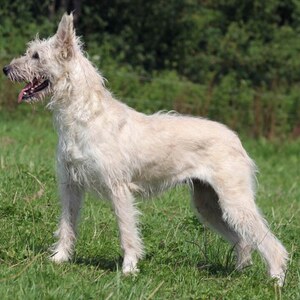
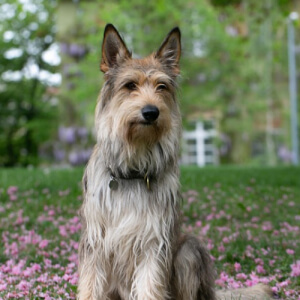
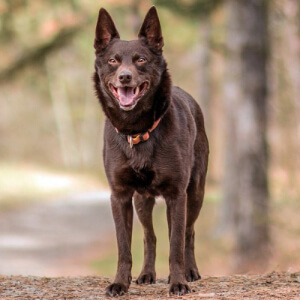
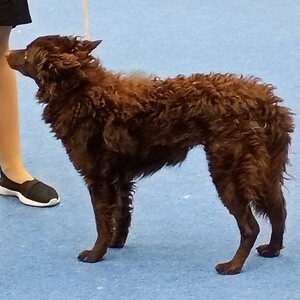
Mudi. · Canarian / Wikimedia Commons, CC BY 4.0. Cropped and resized.
The Mudi is a medium-sized Hungarian herding dog with a wedge-shaped head, erect ears and a wavy or slightly curly coat. It is brave, so shepherds use it with large, difficult cattle, but also as a watchdog and companion. The standard describes it as extremely eager to learn, lively, courageous, alert and adaptable.
Quick facts
| Common name | Mudi |
| Scientific name | Canis lupus familiaris |
| Country of origin | Hungary |
| Official recognition | FCI, definitively since 25 March 1963 (group 1, sheepdogs; standard no. 238); AKC, since 2022 |
| Lifespan | 12–14 years, according to the AKC |
| Size (males) | 41–47 cm at the withers (ideally 43–45 cm) |
| Size (females) | 38–44 cm at the withers (ideally 40–42 cm) |
| Weight | 8–13 kg, according to the AKC |
| Coat type | Wavy or slightly curly, dense, glossy; short on the head and legs |
| Common colours | Black, white, fawn, ash, brown, merle |
| Energy level | Very high |
| Suited to an apartment? | Only with a great deal of activity |
| Temperament | Eager to learn, lively, courageous, alert, adaptable |
| Tendency to aggression | Low |
| Good with children | Average |
| Good with other animals | Average |
| Genetic predispositions | No breed-specific diseases mentioned in the sources used |
- Primary category:Dog breeds
- Explore this animal's categories:
History and origin
The FCI standard says the breed emerged in the 18th and 19th centuries from crosses between Hungarian herding dogs and, most probably, various prick-eared German herding dogs. The AKC says Hungarians kept sheepdogs from the end of the 9th century, but breeding by breed began only in the second half of the 19th century.
Wikipedia says the Mudi was “discovered” as a breed in 1936 by Dr Dezső Fenyés and almost disappeared during the Second World War. The AKC recognised it in 2022, and in the same year it made its debut at the Westminster show.
How the breed developed
- 18th–19th centuries – It emerges from crosses between Hungarian herding dogs.
- 1936 – Dr Dezső Fenyés describes it as a breed.
- Second World War – The breed almost disappears.
- 25 March 1963 – The FCI recognises the breed.
- 5 January 2022 – The AKC recognises the breed.
Breed rating
| Feature | Stars |
|---|---|
| Training and intelligence | ★★★★★ |
| Easy to train | ★★★★★ |
| Intelligence | ★★★★★ |
| Independence | ★★★☆☆ |
| Stubbornness | ★★☆☆☆ |
| Behaviour and temperament | ★★★★☆ |
| Affectionate with family | ★★★★★ |
| Friendly with children | ★★★☆☆ |
| Good with other dogs | ★★★☆☆ |
| Good with cats and other animals | ★★★☆☆ |
| Loyalty | ★★★★★ |
| Tendency to be aggressive | ★★☆☆☆ |
| Tendency to bark | ★★★★☆ |
| Needs and care | ★★★☆☆ |
| Shedding | ★★☆☆☆ |
| Needs frequent grooming | ★☆☆☆☆ |
| Activity and lifestyle | ★★★★★ |
| Energy level | ★★★★★ |
| Daily exercise needs | ★★★★☆ |
| Suited to apartment life | ★★★☆☆ |
| Health and longevity | ★★★★☆ |
| Life expectancy | ★★★★☆ |
| Predisposition to genetic diseases | ★★☆☆☆ |
| Working abilities and uses | ★★★★☆ |
| Good herding dog | ★★★★★ |
| Good companion dog | ★★★★☆ |
Indicative rating: 5 stars means the highest level. It is based on the ratings the American Kennel Club gives the breed and on the FCI standard.
Physical characteristics
The standard describes it as a medium-sized herding dog with a wedge-shaped head and erect ears. The topline slopes clearly towards the rear. The head is the most typical part of the breed and should show an alert animal, always energetic, cheerful and intelligent.
General appearance
The head and the front of the legs have short, straight, smooth hair. On the rest of the body, the coat is evenly very wavy or slightly curly, dense and always glossy, 3–7 cm long, with whorls and ridges in places.
| Feature | Mudi |
|---|---|
| Size | Medium |
| Height at the withers | males: 41–47 cm; females: 38–44 cm |
| Weight | 8–13 kg (AKC) |
| Coat | Wavy, glossy, 3–7 cm |
| Head | Wedge-shaped |
| Ears | Erect |
The accepted colours are black, white, fawn (from beige to red), ash (blue), brown, diluted brown and “cifra” (merle). Small white markings are tolerated but not desirable.
Training and socialisation
The AKC says the Mudi is vocal, alert, energetic, intelligent, obedient and adaptable, and always enthusiastic about any job. That is why it is very easy to train and eager to please. Being moderately suspicious, it is also an excellent watchdog.
The standard says it is so brave that shepherds use it with large, difficult cattle and even for driving wild boar.
Tips for effective training
- Give it a job. It is always enthusiastic about a task.
- Use rewards. It learns very quickly.
- Teach it not to bark at everything. It is vocal.
- Try flyball or frisbee. The AKC says it excels at them.
Activity needs and lifestyle
The AKC says it is very energetic: indoors it is calm and relaxed, but outside it loves to run. It excels at flyball, obedience, herding and frisbee, jumps extraordinarily well and can get up to mischief, especially when it comes to digging.
| Activity | How often | Why it matters |
|---|---|---|
| Running | daily | Very high energy |
| Flyball or frisbee | several times a week | It excels at them |
| Herding or training | weekly | Herding instinct |
Tips for a balanced life
- It suits very active people.
- The fence must be high: it jumps very well.
- Give it a place where it is allowed to dig.
Care and health
Coat and skin care
The wavy coat is easy to look after: the AKC gives it a low score for grooming needs and shedding. An occasional brush and a bath when needed are enough.
Common health problems
The sources used do not mention any breed-specific diseases. Responsible breeders still screen their dogs, however, and regular vet check-ups remain important.
Other care
- Check the ears regularly.
- Trim the nails regularly.
- Go for regular check-ups and parasite treatments.
Diet and nutrition
The AKC says some dogs gain weight easily, so calories and weight should be watched.
Tips for a healthy diet
The table gives a starting estimate, calculated with the formula from the Merck Veterinary Manual. The first two calorie columns show the calories per day for a healthy adult dog. The last column shows what this means in dry food with 3,500–4,000 kcal per kilogram.
| Dog's weight | Calories per day (neutered) | Calories per day (not neutered) | Dry food per day (approximate) |
|---|---|---|---|
| 8 kg | 530 kcal | 600 kcal | 130–170 g |
| 10.5 kg | 650 kcal | 730 kcal | 160–210 g |
| 13 kg | 770 kcal | 860 kcal | 190–250 g |
- Give it its food in two meals a day.
- Adjust the portion to its level of effort.
- A dog is at the right weight when you can feel its ribs under the coat without pressing hard.
Foods to avoid
Some human foods are dangerous for dogs: chocolate, coffee, grapes and raisins, onions, garlic, xylitol (a sweetener used in chewing gum), macadamia nuts and alcohol.
Reproduction and development
Physical and emotional maturity
In dogs, sexual maturity usually comes between 6 and 12 months. Most breeds become adults at around 13–15 months.
Mating and pregnancy
Pregnancy lasts about 63 days, counted from ovulation. Mating a female on her first heat is not recommended. The FCI standard requires that only healthy dogs of typical breed appearance are used for breeding.
Caring for the puppies
In dogs, a litter has 5–6 puppies on average, and the number rises with the size of the breed. Socialisation starts in the first weeks: gentle handling, everyday noises and new people.
Interesting facts
- It drives wild boar. The standard says it is also used for driving wild boar.
- An exceptional jumper. The AKC says it jumps extraordinarily well.
- “Cifra”. That is the Hungarian name for the merle colour.
- A rare breed. The AKC says there are only a few thousand of these dogs in the world.
- Debut at Westminster. It first appeared at Westminster in 2022.
Frequently asked questions
Which breeds is the Mudi related to?
Wikipedia says it is closely related to the Puli and the Pumi.
How big does it get?
Males measure 41–47 cm and females 38–44 cm; the AKC gives 8–13 kg.
Is it easy to train?
Yes. The AKC gives it top marks for ease of training.
How long does it live?
The AKC gives 12–14 years.