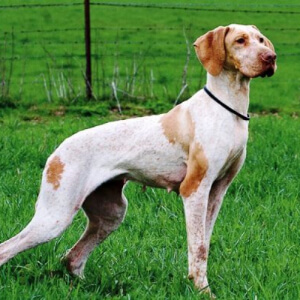
Ariege PointerCharacteristics, history, training and care
Quick facts
| Common name | Ariege Pointer |
| Scientific name | Canis lupus familiaris |
| Country of origin | France |
| Official Recognition | Recognized by FCI |
| Typical lifespan | About 12-14 years |
| Dimensions (Male) | About 60-67 cm / 25-30 kg |
| Dimensions (Female) | About 56-65 cm / 25-28 kg |
| Coat type | Short, dense, fine |
| Common colours | White with orange or chestnut markings, often with ticking |
| Energy Level | Very high |
| Suitable for apartment? | Suitability depends on exercise, training, safe management and the individual dog |
| Temperament | Sociable, intelligent, active |
| Behaviour towards unfamiliar people and dogs | Individual behaviour varies; appropriate socialisation, training and management matter |
| Compatibility with children | Depends on the individual; adult supervision and suitable handling are essential |
| Compatibility with other animals | Depends on socialisation, prey drive and the animals involved |
| Genetic predispositions | Hip dysplasia, ear infections |
- Primary category:Dog breeds
- Explore this animal's categories:
History and Origin
The Ariege Pointer (Braque de l'Ariège) is an old French pointing breed from the Ariège region, near the Pyrenees in south-western France. It was developed to find game birds and "point" them, standing still to show the hunter where they are.
Evolution of the breed
- The 19th century - The breed developed from old French pointers, possibly with some influence from Southern French and Spanish pointing dogs.
- Near extinction - After the World Wars the breed became very rare; in the late 20th century French enthusiasts revived it, using the remaining dogs and related French pointers.
- Official recognition - The FCI recognises the breed in Group 7 (pointing dogs); it is still little known outside France. It is used to hunt birds such as partridge and pheasant, and sometimes rabbit and hare.
Breed Evaluation
The Ariege Pointer is an intelligent, hard-working and energetic dog, best suited to hunting and outdoor life. These are general editorial ratings, not measured scores; individual dogs vary.
| Characteristic | Stars |
|---|---|
| Training and Intelligence | ★★★★★ |
| Easy to train | ★★★★★ |
| Intelligence | ★★★★★ |
| Level of independence | ★★★☆☆ |
| Level of stubbornness | ★★★☆☆ |
| Behavior and Temperament | ★★★★★ |
| Affectionate with family | ★★★★★ |
| Friendly with children | ★★★★★ |
| Compatible with other dogs | ★★★★☆ |
| Compatible with Cat and other animals | ★★★☆☆ |
| Degree of loyalty | ★★★★★ |
| Tendency to be aggressive | ★☆☆☆☆ |
| Tendency to bark | ★★★☆☆ |
| Needs and Care | ★★★★☆ |
| Shedding level | ★★★☆☆ |
| Requires frequent care | ★★★☆☆ |
| Activity and Lifestyle | ★★★★★ |
| Energy level | ★★★★★ |
| Daily exercise requirement | ★★★★★ |
| Suitable for apartment living | ★☆☆☆☆ |
| Health and Longevity | ★★★★☆ |
| Life expectancy | ★★★★★ |
| Predisposition to genetic diseases | ★★★☆☆ |
| Work and Utility Features | ★★★★★ |
| Good hunting dog | ★★★★★ |
| Good companion dog | ★★★★☆ |
Physical Characteristics
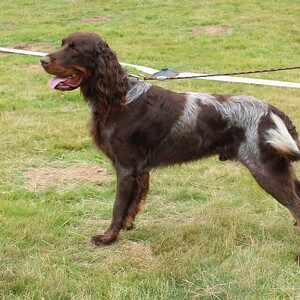
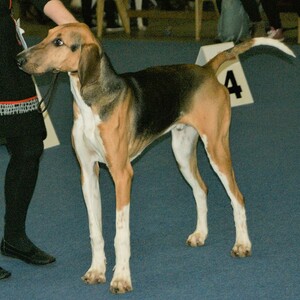
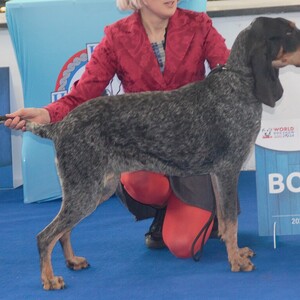
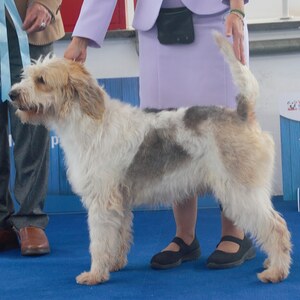
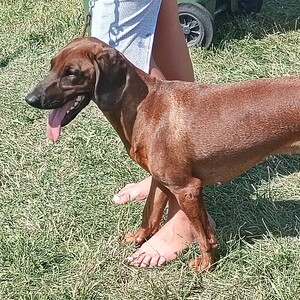
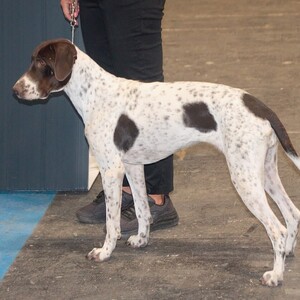
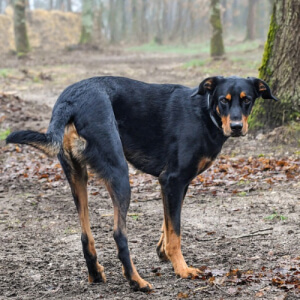
The Ariege Pointer is a large, lean, well-proportioned pointer, built for stamina in the field.
General appearance
- A strong, athletic body with a deep chest that gives room for the heart and lungs.
- A short, dense, fine coat.
- A long head with a long, slightly arched muzzle and long, folded, hanging ears.
- A tail of medium length; in some countries it is docked where this is legal.
- Amber or brown eyes, in harmony with the coat colour.
| Characteristic | Ariege Pointer |
|---|---|
| Size | Large (about 56-67 cm at the shoulder) |
| Weight | About 25-30 kg |
| Coat | Short, dense, fine |
| Muzzle | Long, slightly arched |
| Shedding tendency | Moderate |
| Build | Lean but strong |
The Ariege Pointer is a fine hunting dog, combining stamina, a good nose and intelligence.
Training and Socialization
The Ariege Pointer is intelligent and responsive, which makes it fairly easy to train, especially for hunting. However, it can be independent in the field, so training should be consistent.
Tips for effective training
- Early socialisation - Meeting different places, people and animals helps prevent shyness.
- Reward-based training - It responds very well to positive training with food and praise.
- Varied training - It gets bored quickly, so exercises should challenge both mind and body.
- Key commands - As a hunting dog, it must learn commands such as "wait", "leave it" and "come" to be safe in open country.
- No harsh methods - It is sensitive, and harsh training can make it anxious or fearful.
The Ariege Pointer can also do well in obedience and dog sports, but it needs consistency and mental stimulation.
Activity and Lifestyle Needs
As an active hunting dog, the Ariege Pointer needs regular exercise and enough space to use its energy.
| Activity | Recommended duration |
|---|---|
| Daily walks and runs | At least 60-90 min |
| Hunting or field training | A few hours a week |
| Interactive games | About 30 min |
| Obedience training | About 15 min/day |
Recommendations for a balanced lifestyle
- Not ideal for apartment life - It needs a lot of space and regular exercise to stay healthy.
- Needs company - It is very attached to its family and may become destructive if left alone for long periods.
- Good for active families - It suits owners who enjoy hiking, running or other outdoor activities.
- Protect from the cold - Its short coat gives little protection in very cold weather, so it should sleep indoors or in a warm shelter.
The Ariege Pointer suits people who spend a lot of time outdoors and can give it plenty of exercise.
Care and Health
The Ariege Pointer is easy to groom, but it needs regular care to prevent ear infections and injuries.
Fur and skin care
- Weekly brushing - The short coat needs little care, but brushing keeps the skin healthy.
- Baths only when needed - It should be washed only occasionally, for example after a muddy hunt.
- Ear and claw checks - Its long, hanging ears make it prone to ear infections, and claws should be trimmed regularly.
Common health problems
| Condition | Description | Common symptoms |
|---|---|---|
| Hip dysplasia | Abnormal development of the hip joint | Lameness, difficulty getting up |
| Ear infections (otitis) | Long, hanging ears can trap moisture | Scratching, discharge from the ear |
| Field injuries | Cuts, thorns and grass seeds in the paws, ears or eyes | Limping, head shaking, watery eyes |
Other aspects of care
- Regular veterinary checks - Important for monitoring the joints and general health.
- Protection from extreme temperatures - With its short coat, it does not tolerate extreme cold or heat well.
- Healthy weight - As a very active dog, it must be fed properly to avoid being too thin or overweight.
Diet and Nutrition
The Ariege Pointer is an active dog that needs a balanced diet with enough good-quality protein to support its energy.
Recommendations for a healthy diet
Choose a complete, balanced diet for the dog’s age, size and health. Plan home-prepared diets and supplements with a qualified veterinarian. Good protein sources in complete dog foods include chicken, fish and turkey.
| Food type | Daily Amount (Adults) | Frequency |
|---|---|---|
| Premium dry food | Individual amount; follow a complete diet’s guidance and veterinary advice | 2 meals/day |
| Home cooked food | Individual amount; follow a complete diet’s guidance and veterinary advice | 2 meals/day |
| Raw food: bacterial contamination is a concern | Individual amount; follow complete-food guidance and veterinary advice | 2 meals/day |
Forbidden foods
Chocolate, grapes and raisins, onions and xylitol - toxic to dogs. / Cooked bones - can splinter and cause intestinal blockage. / Fatty and processed foods - can cause digestive problems. / One large meal a day - increases the risk of bloat in deep-chested dogs.
The Ariege Pointer must be fed properly to support its active life, with portions adjusted to its level of activity.
Reproduction and Development
Breeding can involve health risks. Responsible breeders use appropriate health screening and veterinary advice rather than assuming that a breed is free of reproductive problems.
Physical and emotional maturity
- Physical maturity: It reaches adult size at about 12-18 months, but continues to build muscle until about 2 years.
- Emotional maturity: It stays active and playful, but usually becomes calmer after 2-3 years, when its hunting skills are fully developed.
Mating and Gestation
- Breeding decisions - A veterinarian should assess health, maturity and relevant screening. A fixed age alone does not establish that a dog should be bred.
- Duration of gestation: Approximately 58-68 days, usually about 63 days.
- Average number of puppies: Usually about 6-10 puppies.
Puppy care
- The first 3 weeks: Puppies depend completely on their mother and need a warm, safe place.
- Between 4-8 weeks: They begin to eat solid food and develop their first social skills.
- Moving to a new home - Timing depends on health, development and local requirements. Continue careful socialisation and veterinary care.
The Ariege Pointer grows quickly, so good food and suitable exercise are essential for healthy development.
Curiosities and Interesting Facts
- Saved from extinction - The breed almost disappeared in the 20th century and was revived by French breeders.
- A pointing dog - When it finds game, it freezes in a "point", showing the hunter where the bird is hiding.
- Stamina in the hills - It was developed for hunting in the hilly country near the Pyrenees and can work for hours on rough ground.
- Devoted to its owner - It is loyal and affectionate at home, but can be independent during the hunt.
- Rare abroad - Although valued by French hunters, it is little known in other countries.
- A quiet worker - Like other pointers, it usually works silently, unlike scent hounds that bark when they follow a trail.
Dog in Popular Culture
The Ariege Pointer is not famous worldwide, but it is part of the hunting tradition of south-western France.
The importance in French culture
- A hunting companion in southern France - For generations, it has been bred and used by local hunters in Ariège and nearby regions.
Ariege Pointer in the media
- Hunting books and magazines - It appears mainly in French books and magazines about pointing dogs and hunting.