Entlebucher Mountain DogCharacteristics, history, training and care
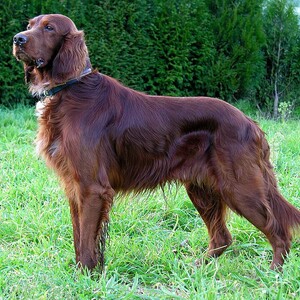
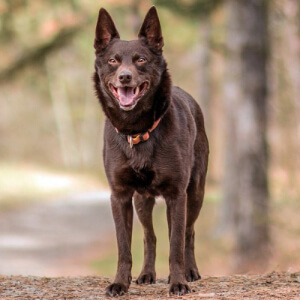
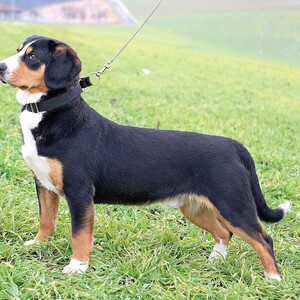
Entlebucher Mountain Dog. · Leuchtender Hund / Wikimedia Commons, CC BY-SA 3.0. Cropped and resized.
The Entlebucher is the smallest of the four Swiss mountain dogs (Sennenhund), a tricoloured, muscular and very energetic cattle dog. It comes from the Entlebuch valley, between the cantons of Lucerne and Bern. It is lively, self-assured and brave, devoted to its family and slightly suspicious of strangers.
Quick facts
| Common name | Entlebucher Mountain Dog (Entlebucher Sennenhund) |
| Scientific name | Canis lupus familiaris |
| Country of origin | Switzerland (Entlebuch) |
| Official recognition | FCI, definitively since 28 July 1954 (group 2, Swiss mountain and cattle dogs; standard no. 47); also recognised by the AKC |
| Lifespan | 11–13 years, according to the AKC |
| Size (males) | 44–50 cm at the withers (tolerance up to 52 cm); about 23–29 kg (AKC) |
| Size (females) | 42–48 cm at the withers (tolerance up to 50 cm); about 18–25 kg (AKC) |
| Coat type | Double: short, harsh, glossy topcoat, dense undercoat |
| Common colours | Tricolour: black with yellowish-tan markings and white |
| Energy level | Very high |
| Suited to an apartment? | It can adapt, if it gets at least an hour of exercise a day |
| Temperament | Lively, self-assured, brave, devoted, cheerful |
| Tendency to aggression | Low; slightly suspicious of strangers |
| Good with children | Average |
| Good with other animals | Very good with other dogs |
| Genetic predispositions | Entlebucher urinary syndrome, hip dysplasia, patellar luxation, eye diseases |
- Primary category:Dog breeds
- Explore this animal's categories:
History and origin
The FCI standard says the Entlebucher comes from the Entlebuch valley, in the cantons of Lucerne and Bern. The first description, under the name “Entlibucherhund”, dates from 1889, but for a long time no distinction was made between the cattle dogs of Appenzell and those of Entlebuch.
In 1913, four small cattle dogs with naturally short tails were shown at the Langenthal show to Professor Albert Heim, the great champion of the Swiss mountain dogs, and were entered in the Swiss stud book. Wikipedia says that after the First World War the breed seemed lost; the first club was founded in 1926, and in 1927 16 dogs were found, from which the breed was rebuilt.
How the breed developed
- 1889 – The first description, under the name “Entlibucherhund”.
- 1913 – Four dogs are shown to Albert Heim at Langenthal.
- 1926 – The first breed club is founded.
- 1927 – 16 dogs are found, from which the breed is rebuilt.
- 28 July 1954 – The FCI recognises the breed.
Breed rating
| Feature | Stars |
|---|---|
| Training and intelligence | ★★★☆☆ |
| Easy to train | ★★★☆☆ |
| Intelligence | ★★★★★ |
| Independence | ★★★★☆ |
| Stubbornness | ★★★★☆ |
| Behaviour and temperament | ★★★★☆ |
| Affectionate with family | ★★★★★ |
| Friendly with children | ★★★☆☆ |
| Good with other dogs | ★★★★★ |
| Good with cats and other animals | ★★★☆☆ |
| Loyalty | ★★★★★ |
| Tendency to be aggressive | ★★☆☆☆ |
| Tendency to bark | ★★★☆☆ |
| Needs and care | ★★★★☆ |
| Shedding | ★★★☆☆ |
| Needs frequent grooming | ★☆☆☆☆ |
| Activity and lifestyle | ★★★★☆ |
| Energy level | ★★★★★ |
| Daily exercise needs | ★★★★★ |
| Suited to apartment life | ★★★☆☆ |
| Health and longevity | ★★★★☆ |
| Life expectancy | ★★★★☆ |
| Predisposition to genetic diseases | ★★★☆☆ |
| Working abilities and uses | ★★★★★ |
| Good cattle and guard dog | ★★★★★ |
| Good companion dog | ★★★★☆ |
Indicative rating: 5 stars means the highest level. It is based on the ratings the American Kennel Club gives the breed and on the FCI standard.
Physical characteristics
The AKC describes it as a muscular, long-backed cattle dog with short, solid legs. Wikipedia says the female has a square body, while the male is longer. The tail may be long or naturally short.
General appearance
The head is slightly wedge-shaped, in harmony with the body. The expression is alert and friendly. The AKC says Entlebuchers are famous for their agility, balance and boundless enthusiasm.
| Feature | Entlebucher Mountain Dog |
|---|---|
| Size | Medium |
| Height at the withers | males: 44–50 cm; females: 42–48 cm |
| Weight | about 18–29 kg |
| Coat | Double, short, glossy |
| Colour | Tricolour |
| Tail | Long or naturally short |
The Entlebucher is tricolour: black, with yellowish-tan markings, as symmetrical as possible, above the eyes, on the cheeks, muzzle, neck, chest and legs, and with white on the face, chest and feet. A white tail tip is desirable.
Training and socialisation
The standard describes it as lively, spirited, self-assured and brave, good-natured and devoted to people it knows, slightly suspicious of strangers. As a guard dog, it “cannot be bribed”. It is cheerful and learns easily.
The AKC says it is a clever, versatile worker that richly repays the effort of training. Positive methods almost always give quick results. Early socialisation is extremely important, and training sessions should be fun and varied.
Tips for effective training
- Socialise it thoroughly as a puppy. The AKC says this is extremely important for this breed.
- Vary the exercises. Being very intelligent, it gets bored quickly.
- Give it a job. It loves having work to do alongside its owner.
- Tire it out properly. The AKC says “a tired dog is a good dog”.
Activity needs and lifestyle
The AKC says it is a fast, tough dog with very high energy that needs at least an hour of exercise a day. It enjoys dog sports done together with its owner: agility, obedience, herding and tracking.
| Activity | How often | Why it matters |
|---|---|---|
| Sustained exercise | at least an hour a day | Very high energy |
| Agility or obedience | several times a week | Mental activity |
| Herding | occasionally | Its core instinct |
Tips for a balanced life
- It suits a very active family.
- The yard must be well fenced.
- Do not leave it alone and bored for many hours.
Care and health
Coat and skin care
The AKC says the dense, short, glossy coat needs very little care: a wipe with a damp towel between baths. It does, however, shed quite a lot, so a shedding comb or a stiff-bristled brush helps. The nails should be trimmed monthly.
Common health problems
The AKC says most Entlebuchers are healthy, but the breed has a few predispositions:
| Condition | Description | Common symptoms |
|---|---|---|
| Entlebucher urinary syndrome | The ureter (the tube from the kidney to the bladder) is in the wrong position | Urine leakage, repeated urinary infections |
| Hip dysplasia | The hip joint forms incorrectly and, over time, arthritis develops | Limping, difficulty getting up or jumping, hip pain |
| Patellar luxation | The kneecap slips out of place | Suddenly holds a hind leg up for a few steps, then uses it again |
| Eye diseases | Inherited eye conditions | Poor vision, cloudy eyes |
Other care
- Trim the nails once a month.
- Check the ears weekly.
- Brush its teeth regularly.
Diet and nutrition
The AKC says a working dog needs different food from one that spends a lot of time indoors. Choose food according to age and activity level, with your vet's advice.
Tips for a healthy diet
The table gives a starting estimate, calculated with the formula from the Merck Veterinary Manual. The first two calorie columns show the calories per day for a healthy adult dog. The last column shows what this means in dry food with 3,500–4,000 kcal per kilogram.
| Dog's weight | Calories per day (neutered) | Calories per day (not neutered) | Dry food per day (approximate) |
|---|---|---|---|
| 18 kg | 980 kcal | 1,100 kcal | 240–310 g |
| 24 kg | 1,210 kcal | 1,370 kcal | 300–390 g |
| 29 kg | 1,400 kcal | 1,570 kcal | 350–450 g |
- Give it its food in two meals a day.
- Training treats count towards the daily portion.
- A dog is at the right weight when you can feel its ribs without pressing hard.
Foods to avoid
Some human foods are dangerous for dogs: chocolate, coffee, grapes and raisins, onions, garlic, xylitol (a sweetener used in chewing gum), macadamia nuts and alcohol.
Reproduction and development
Physical and emotional maturity
In dogs, sexual maturity usually comes between 6 and 12 months. Most breeds become adults at around 13–15 months.
Mating and pregnancy
Pregnancy lasts about 63 days, counted from ovulation. Mating a female on her first heat is not recommended. The FCI standard requires that only healthy dogs of typical breed appearance are used for breeding.
Caring for the puppies
In dogs, a litter has 5–6 puppies on average, and the number rises with the size of the breed. Socialisation starts in the first weeks: gentle handling, everyday noises and new people.
Interesting facts
- The smallest Sennenhund. It is the smallest of the four Swiss mountain dogs.
- Named after a valley. Entlebuch is a valley in the canton of Lucerne.
- A naturally short tail. Some dogs are born with a short tail, and the standard accepts both variants.
- Saved by 16 dogs. In 1927 only 16 dogs were found, from which the breed was rebuilt.
- An incorruptible guard. The standard says that, as a guard dog, it cannot be bribed.
Frequently asked questions
What are the four Swiss mountain dogs?
The Greater Swiss Mountain Dog, the Bernese Mountain Dog, the Appenzeller and the Entlebucher, the smallest of them.
How big does it get?
Males measure 44–50 cm, females 42–48 cm; they weigh about 18–29 kg.
How much exercise does it need?
The AKC says it needs at least an hour of exercise a day.
How long does it live?
The AKC gives 11–13 years.