Capuchin monkeyCebinae — habitat, diet and reproduction
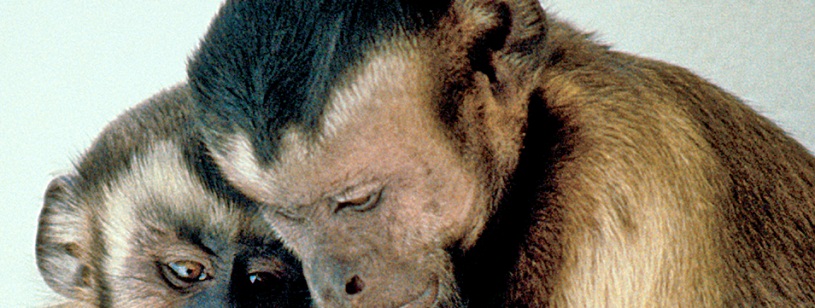
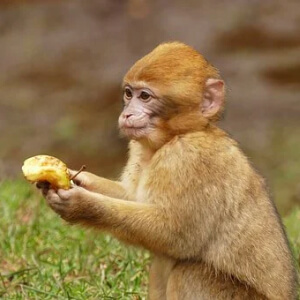
Robust capuchin monkey (Sapajus). · (Photo courtesy of Frans de Waal.) / CC BY 2.5 (https://creativecommons.org/licenses/by/2.5). Cropped and resized.
Capuchin monkeys are small, very intelligent monkeys from the forests of Central and South America. Some populations use stones as hammers to crack nuts and hard seeds. Their name comes from Capuchin friars, whose hoods resembled the dark fur on the monkeys’ heads.
Quick facts
| Common name | Capuchin monkey |
| Scientific name | Cebinae (genera Cebus and Sapajus) |
| Lifespan | Up to about 25 years in the wild; about 35 in captivity |
| Length | Body about 30–56 cm, plus a tail of similar length |
| Weight | About 1.4–4 kg |
| Diet | Omnivore: fruit, nuts, insects, eggs, small animals |
| Predators | Harpy eagles and other eagles, jaguars, large snakes |
| Conservation status | Varies: from Least Concern to Critically Endangered |
| Distribution | Central America and South America |
| Habitat | Rainforests, dry forests, wooded savannas |
| Family | Cebidae |
| Lifestyle | In groups, in trees |
Interesting facts
- In Brazil, capuchins have cracked nuts with stones for at least 3,000 years, according to tools found by archaeologists.
- They rub their fur with crushed leaves, insects or fruit, probably to repel parasites.
- Relative to body size, they have one of the largest brains among American monkeys.
- The tail can partly curl around branches for support.
Characteristics
Capuchins have a lithe body, strong limbs and a long furry tail. Fur is brown, cream or black, and many species have a dark “cap” and a pale face or shoulders.
Sapajus capuchins are sturdier with tufts on the head, while Cebus capuchins are slimmer with rounder heads.
Behaviour
They live in groups of 10–35 animals led by a dominant male and communicate with many calls and facial expressions.
They are curious and learn easily. Some groups use stones as hammer and anvil, others use sticks to extract insects from crevices, and youngsters learn by watching adults.
Habitat and distribution
Capuchins range from Honduras to northern Argentina, in humid rainforests, dry forests and wooded savannas.
They spend most of their time in trees but come to the ground for food or water.
Diet and feeding
Capuchins eat fruit, nuts, seeds, flowers and leaves, and catch insects, spiders, frogs, lizards, eggs and sometimes small birds or mammals.
They are skilled at finding hidden food, cracking hard fruit, peeling bark and searching leaf litter. By spreading seeds, they help forests regenerate.
Reproduction and life cycle
The female usually gives birth to one infant after about five to six months of pregnancy. The infant first rides on its mother’s back.
Other group members help with care. Capuchins grow slowly and mature after several years, giving them time to learn group traditions.
Name and history
The name comes from the Capuchin friars, who wore brown hooded robes. European explorers noticed the resemblance to the monkeys’ caps. Cappuccino coffee is also named after the colour of these robes.
Scientists now divide capuchins into two genera: Cebus (gracile capuchins) and Sapajus (robust capuchins).
Conservation and threats
Some capuchin species are still widespread, but others are endangered because of deforestation and hunting.
Capuchins are illegally sought as pets, and infants are often taken from killed mothers. As social, highly intelligent and long-lived animals, they are not suited to life in a home.
Frequently asked questions
How long does a capuchin live?
Up to about 25 years in the wild and about 35 years in captivity.
What do capuchins eat?
Fruit, nuts, seeds, insects, eggs and small animals.
Is a capuchin a good pet?
No. It needs its group, lives very long and can become aggressive; in many countries keeping one is banned or restricted.
Do capuchins use tools?
Yes. Some populations crack nuts with stones and use sticks to extract insects.