HavaneseCharacteristics, history, training and care
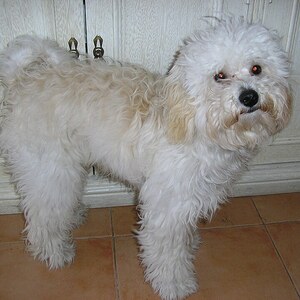
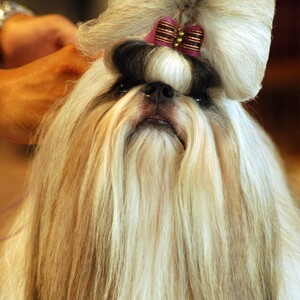
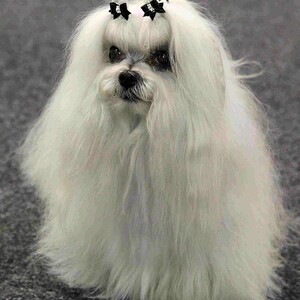
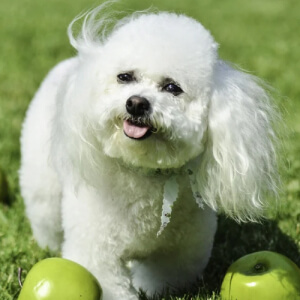
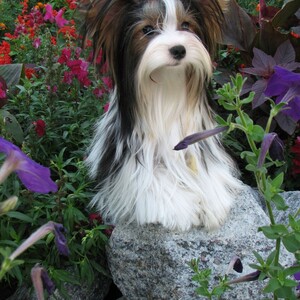
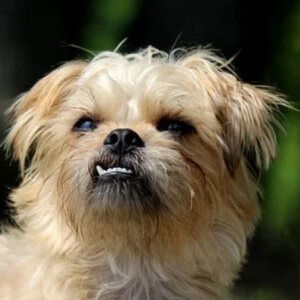
Havanese. · QHuge / Wikimedia Commons, CC BY 4.0. Cropped and resized.
The Havanese is a small bichon-type dog, sturdy and short-legged, with a very long, soft and often wavy coat. Wikipedia calls it the national dog of Cuba. It is extremely bright, affectionate, cheerful, playful and even a bit of a clown; it loves children and plays with them endlessly.
Quick facts
| Common name | Havanese (Bichon Havanais) |
| Scientific name | Canis lupus familiaris |
| Country of origin | Western Mediterranean basin; patronage: Cuba |
| Official recognition | FCI, definitively since 24 September 1963 (group 9, bichons and related breeds; standard no. 250); also recognised by the AKC |
| Lifespan | 14–16 years, according to the AKC |
| Size (males) | 23–27 cm at the withers (tolerance 21–29 cm); about 3–6 kg (AKC) |
| Size (females) | 23–27 cm at the withers (tolerance 21–29 cm) |
| Coat type | Very long (12–18 cm), soft, flat or wavy; undercoat sparse or absent |
| Common colours | Fawn, black, Havana brown, tobacco, reddish brown, rarely pure white; patches and tan markings |
| Energy level | Moderate |
| Suited to an apartment? | Yes |
| Temperament | Very bright, affectionate, cheerful, playful, a bit of a clown |
| Tendency to aggression | Very low |
| Good with children | Very good |
| Good with other animals | Very good |
| Genetic predispositions | Eye diseases, luxating patella, deafness, chondrodysplasia, Legg-Calvé-Perthes disease, heart murmurs |
History and origin
The FCI standard says the breed comes from the western Mediterranean and developed along the coasts of Spain and Italy. The dogs were probably brought to Cuba early on by Italian ship captains. The most common colour, “tobacco” brown, gave rise to the legend that the breed originated in Havana.
Political events led to the total disappearance of the old Havanese lines in Cuba; a few dogs were taken out of the country, and their descendants survived in the United States. Wikipedia says the breed developed from the now extinct Blanquito de la Habana (“little white dog of Havana”), crossed with other bichons, including the poodle.
How the breed developed
- Centuries ago – Mediterranean bichons reach Cuba with Italian sailors.
- 20th century – The old lines disappear from Cuba; a few dogs reach the United States.
- 24 September 1963 – The FCI recognises the breed.
- 31 October 2016 – The current FCI standard is published.
Breed rating
| Feature | Stars |
|---|---|
| Training and intelligence | ★★★★☆ |
| Easy to train | ★★★★☆ |
| Intelligence | ★★★★★ |
| Independence | ★★☆☆☆ |
| Stubbornness | ★★☆☆☆ |
| Behaviour and temperament | ★★★★★ |
| Affectionate with family | ★★★★★ |
| Friendly with children | ★★★★★ |
| Good with other dogs | ★★★★★ |
| Good with cats and other animals | ★★★★☆ |
| Loyalty | ★★★★★ |
| Tendency to be aggressive | ★☆☆☆☆ |
| Tendency to bark | ★★★★☆ |
| Needs and care | ★★★★☆ |
| Shedding | ★★☆☆☆ |
| Needs frequent grooming | ★★★★☆ |
| Activity and lifestyle | ★★★★☆ |
| Energy level | ★★★☆☆ |
| Daily exercise needs | ★★☆☆☆ |
| Suited to apartment life | ★★★★★ |
| Health and longevity | ★★★★★ |
| Life expectancy | ★★★★★ |
| Predisposition to genetic diseases | ★★★☆☆ |
| Working abilities and uses | ★★★☆☆ |
| Good watchdog | ★★★★☆ |
| Good companion dog | ★★★★★ |
Indicative rating: 5 stars means the highest level. It is based on the ratings the American Kennel Club gives the breed and on the FCI standard.
Physical characteristics
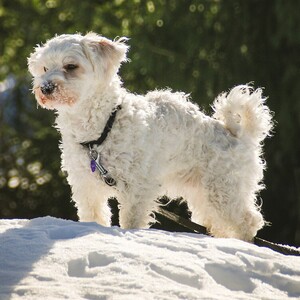
The standard describes it as a small, sturdy, short-legged dog with a long, abundant coat, soft and preferably wavy. Its movement is lively and elastic. The body is slightly longer than it is tall.
General appearance
The AKC says it has a tail curled over its back and a gorgeous silky coat in many colours. Some owners cord the coat, as in the Puli, while others clip it short. The standard forbids trimming for shows, except for the hair on the feet, forehead and muzzle.
| Feature | Havanese |
|---|---|
| Size | Dwarf |
| Height at the withers | 23–27 cm |
| Weight | about 3–6 kg |
| Coat | Very long, soft, wavy |
| Tail | Curled over the back |
| Movement | Lively and elastic |
The standard accepts: rarely pure white, fawn in its different shades, black, Havana brown, tobacco colour, reddish brown, with patches in these colours and tan markings in all shades.
Training and socialisation
The standard describes it as exceptionally bright, easily trained as a watchdog, affectionate, cheerful, amiable, charming, playful and even a bit of a clown. It loves children and plays with them endlessly.
The AKC says it is very intelligent and eager to please and trains easily, but only with positive methods. It is sensitive, so it must not be scolded harshly. Early socialisation is very important.
Tips for effective training
- Use only positive methods. The AKC says it is sensitive.
- Do not scold it harshly. It is easily frightened.
- Socialise it young. New places and people, always in pleasant experiences.
- Do not leave it alone for long. It is happy only when someone is with it.
Activity needs and lifestyle
The AKC says it has moderate exercise needs: a brisk daily walk or play in the garden with its owner. Even playing around the house can be enough. It must never be overworked: if it is panting and barely keeping up, it is time to go home.
| Activity | How often | Why it matters |
|---|---|---|
| Brisk walk | daily | Moderate exercise |
| Play indoors or in the garden | daily | It loves to play |
| Tricks and games | daily | It learns quickly |
Tips for a balanced life
- It suits families with children very well.
- It is well suited to flat life.
- Keep it close to the family.
Care and health
Coat and skin care
The AKC says the long, silky coat needs daily care to prevent mats, for example by gently combing it with the dog in your lap. Many owners choose a short clip to cut grooming time. It should be bathed only when needed.
Common health problems
The AKC says Havanese are generally healthy and fairly long-lived, but they can be prone to:
| Condition | Description | Common symptoms |
|---|---|---|
| Eye diseases | Inherited eye conditions | Poor vision, cloudy eyes |
| Patellar luxation | The kneecap slips out of place | Suddenly holds a hind leg up for a few steps, then uses it again |
| Congenital deafness | Hereditary deafness | Does not react to sounds |
| Legg-Calvé-Perthes disease | The head of the femur deteriorates from a lack of blood supply | Limping, hip pain |
Other care
- Brush its teeth regularly.
- Clean the area around the eyes.
- Trim the nails regularly.
Diet and nutrition
The AKC says some Havanese put on weight easily, so calories and weight should be watched. Treats should be given in moderation.
Tips for a healthy diet
The table gives a starting estimate, calculated with the formula from the Merck Veterinary Manual. The first two calorie columns show the calories per day for a healthy adult dog. The last column shows what this means in dry food with 3,500–4,000 kcal per kilogram.
| Dog's weight | Calories per day (neutered) | Calories per day (not neutered) | Dry food per day (approximate) |
|---|---|---|---|
| 3 kg | 260 kcal | 290 kcal | 65–83 g |
| 4.5 kg | 350 kcal | 390 kcal | 88–111 g |
| 6 kg | 430 kcal | 480 kcal | 110–140 g |
- Feed puppies several times a day.
- Choose small kibble suited to toy breeds.
- Feel the ribs under the coat: you should feel them without pressing hard.
Foods to avoid
Some human foods are dangerous for dogs: chocolate, coffee, grapes and raisins, onions, garlic, xylitol (a sweetener used in chewing gum), macadamia nuts and alcohol.
Reproduction and development
Physical and emotional maturity
In dogs, sexual maturity usually comes between 6 and 12 months. Small breeds become adults faster than large ones, usually at around one year.
Mating and pregnancy
Pregnancy lasts about 63 days, counted from ovulation. Mating a female on her first heat is not recommended. The FCI standard requires that only healthy dogs of typical breed appearance are used for breeding.
Caring for the puppies
In small breeds, a litter has 3–4 puppies on average. The puppies are very small and fragile in the first weeks, so they must be kept warm and handled with care. Socialisation starts early: gentle handling, everyday noises and new people.
Interesting facts
- The national dog of Cuba. That is what Wikipedia calls it.
- The tobacco colour legend. The “tobacco” brown colour gave rise to the legend that it comes from Havana.
- Saved in the United States. After the lines in Cuba disappeared, the breed survived in the United States.
- A bit of a clown. The standard describes it in exactly those words.
- A corded coat. Some owners cord its coat, as in the Puli.
In popular culture
The national dog of Cuba
Wikipedia says the Havanese is the national dog of Cuba and developed from the little white dog of Havana (“Blanquito de la Habana”), now extinct.
Frequently asked questions
Is the Havanese from Cuba?
The standard says it comes from the western Mediterranean and reached Cuba early on; Wikipedia calls it the national dog of Cuba.
How big does it get?
It measures 23–27 cm at the withers and weighs about 3–6 kg.
Is it good with children?
Yes, very good: the standard says it loves children and plays with them endlessly.
How long does it live?
The AKC gives 14–16 years.