Small MünsterländerCharacteristics, history, training and care
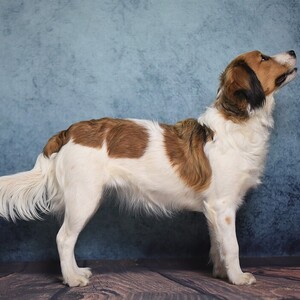
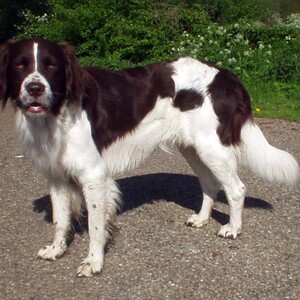
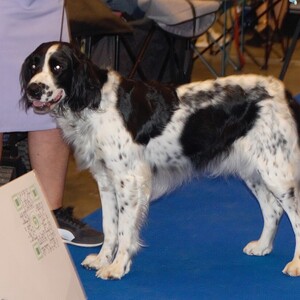
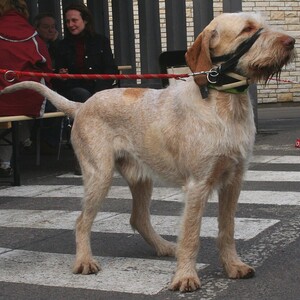
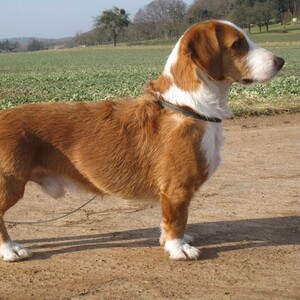
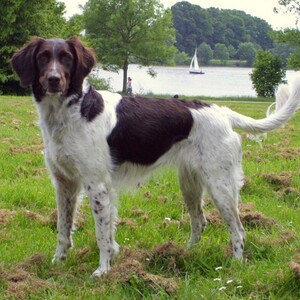
Small Münsterländer. · Caronna / Wikimedia Commons, CC BY 2.5. Cropped and resized.
The Small Münsterländer (Kleiner Münsterländer) is a spaniel-type German pointing dog from Münsterland, used in the field, in the forest and in water. The FCI standard describes it as intelligent and able to learn, full of temperament but well balanced, alert and friendly with people, suited to family life and very attached to its owner, with a keen and persevering hunting instinct.
Quick facts
| Common name | Small Münsterländer (Kleiner Münsterländer) |
| Scientific name | Canis lupus familiaris |
| Country of origin | Germany |
| Official recognition | FCI, definitively since 14 February 1955 (group 7, pointing dogs; standard no. 102); the AKC lists it in the Foundation Stock Service |
| Lifespan | 12–14 years, according to the AKC |
| Size (males) | 54 cm at the withers (±2 cm); 18–27 kg according to the AKC |
| Size (females) | 52 cm at the withers (±2 cm) |
| Coat type | Dense, of medium length, straight or slightly wavy, waterproof |
| Common colours | Brown and white, brown roan with brown patches |
| Energy level | High |
| Suited to an apartment? | No |
| Temperament | Intelligent, balanced, friendly, attached to its owner |
| Tendency to aggression | Low |
| Good with children | Good |
| Good with other animals | Moderate; hunting instinct |
| Genetic predispositions | No known breed-specific diseases; hip dysplasia, as in medium-sized breeds |
- Primary category:Dog breeds
- Explore this animal's categories:
History and origin
The FCI standard says that breeding in Münsterland, in northern Germany, has been documented since around 1870, and that the breed carries the blood of flushing and pointing dogs hundreds of years old. In 1912 an association for Kleine Münsterländer (Heidewachtelhunde) dogs was founded in Germany to preserve the breed as an independent hunting breed.
In 1921, Dr Dr Friedrich Jungklaus wrote the first standard. Wikipedia says that, despite the name, the Large Münsterländer comes from different dogs and is not closely related to it.
How the breed developed
- Around 1870 – Breeding in Münsterland is documented.
- 1912 – The breed association is founded.
- 1921 – The first standard, written by Friedrich Jungklaus.
- 14 February 1955 – The FCI recognises the breed.
Breed rating
| Feature | Stars |
|---|---|
| Training and intelligence | ★★★☆☆ |
| Easy to train | ★★★★★ |
| Intelligence | ★★★★☆ |
| Independence | ★★★★☆ |
| Stubbornness | ★★★★☆ |
| Behaviour and temperament | ★★★☆☆ |
| Affectionate with family | ★★★★☆ |
| Friendly with children | ★★★★★ |
| Good with other dogs | ★★★☆☆ |
| Good with cats and other animals | ★☆☆☆☆ |
| Loyalty | ★★★★☆ |
| Tendency to be aggressive | ★★★☆☆ |
| Tendency to bark | ★★★★☆ |
| Needs and care | ★★★★☆ |
| Shedding | ★★★★☆ |
| Needs frequent grooming | ★★★☆☆ |
| Activity and lifestyle | ★★★★★ |
| Energy level | ★★★★☆ |
| Daily exercise needs | ★★★★☆ |
| Suited to apartment life | ★★★☆☆ |
| Health and longevity | ★★★★☆ |
| Life expectancy | ★★★☆☆ |
| Predisposition to genetic diseases | ★★☆☆☆ |
| Working abilities and uses | ★★★☆☆ |
| Good hunting dog | ★★★★☆ |
| Good companion dog | ★★★★☆ |
Indicative rating: 5 stars means the highest level. It is based on the ratings the American Kennel Club gives the breed and on the FCI standard.
Physical characteristics
The standard describes it as a medium-sized dog with a strong, harmonious build. The AKC says it is a versatile hunter and a natural retriever, with a steady point, a strong desire to go into water and a good ability to track wounded game.
General appearance
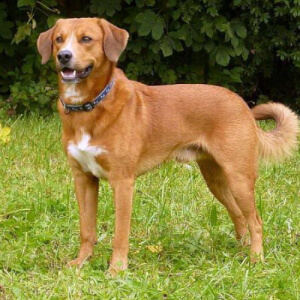
The coat is dense, of medium length, straight or slightly wavy, close-lying and waterproof, protecting it from the weather, rough ground and injuries. The front legs are feathered, the hind legs have “trousers”, and the tail has a long flag with a white tip.
| Feature | Small Münsterländer |
|---|---|
| Size | Medium |
| Height at the withers | males: 54 cm; females: 52 cm (±2 cm) |
| Weight | 18–27 kg (AKC) |
| Coat | Medium, feathered |
| Tail | Long flag with a white tip |
| Type | Pointing dog |
The standard accepts brown and white and brown roan, with brown patches, a brown saddle or brown ticking; a white blaze is permitted. Tan markings on the muzzle, eyes, ears, tail and legs are permitted and are called “Jungklaus markings”.
Training and socialisation
The standard describes it as intelligent and able to learn, full of temperament but well balanced, alert and friendly with people, with a good team spirit. The AKC gives it the top score for ease of training.
The AKC says it matures slowly: only at around two years old does it become mentally adult, so the owner must be ready for at least a year with a strong dog with “the mind of a teenager”.
Tips for effective training
- Be patient. It matures at around two years old.
- Give it work. It was bred for hunting.
- Use rewards. It learns easily.
- Let it swim. It loves water.
Activity needs and lifestyle
The AKC says it is a wonderful family dog, but it needs frequent exercise and stimulation. It was bred to hunt, point, retrieve and track game, and it is happiest doing so.
| Activity | How often | Why it matters |
|---|---|---|
| Running or long walks | daily | Energy |
| Retrieving and swimming | several times a week | Instinct |
| Hunting or tracking | weekly | Work |
Tips for a balanced life
- Suits hunters and active families.
- Brush it more often in spring and autumn.
- Check the ears after swimming.
Care and health
Coat and skin care
The AKC says occasional brushing and the odd bath keep its coat looking good. It moults seasonally, in late spring and early autumn, when it needs brushing more often. The nails are trimmed regularly.
Common health problems
The AKC says the vast majority of these dogs are healthy, and breeders in the United States and Europe have worked hard to keep the breed healthy. As with any active dog, it is worth watching for:
| Condition | Description | Common symptoms |
|---|---|---|
| Hip dysplasia | The hip joint forms incorrectly and, over time, arthritis develops | Limping, difficulty getting up or jumping, hip pain |
| Ear infections | Infections of the ears, especially after swimming | Shakes its head, unpleasant smell |
Other care
- Ask for the parents' hip tests.
- Dry its ears after swimming.
- Trim the nails regularly.
Diet and nutrition
The AKC recommends a food suited to each life stage; formulas for sporting dogs have the protein and fat an active breed needs.
Tips for a healthy diet
The table gives a starting estimate, calculated with the formula from the Merck Veterinary Manual. The first two calorie columns show the calories per day for a healthy adult dog. The last column shows what this means in dry food with 3,500–4,000 kcal per kilogram.
| Dog's weight | Calories per day (neutered) | Calories per day (not neutered) | Dry food per day (approximate) |
|---|---|---|---|
| 18 kg | 980 kcal | 1,100 kcal | 240–310 g |
| 22 kg | 1,140 kcal | 1,280 kcal | 280–370 g |
| 27 kg | 1,330 kcal | 1,490 kcal | 330–430 g |
- Adjust the portion to its level of effort.
- Do not let it run right after a meal.
- A dog is at the right weight when you can feel its ribs under the coat without pressing hard.
Foods to avoid
Some human foods are dangerous for dogs: chocolate, coffee, grapes and raisins, onions, garlic, xylitol (a sweetener used in chewing gum), macadamia nuts and alcohol.
Reproduction and development
Physical and emotional maturity
In dogs, sexual maturity usually comes between 6 and 12 months. Most breeds become adults at around 13–15 months.
Mating and pregnancy
Pregnancy lasts about 63 days, counted from ovulation. Mating a female on her first heat is not recommended. The FCI standard requires that only healthy dogs of typical breed appearance are used for breeding.
Caring for the puppies
In dogs, a litter has 5–6 puppies on average, and the number rises with the size of the breed. Socialisation starts in the first weeks: gentle handling, everyday noises and new people.
Interesting facts
- Not related to the large one. The Large Münsterländer comes from different dogs.
- “Jungklaus markings”. The tan markings are named after the author of the standard.
- It matures late. Only at around two years old, says the AKC.
- It loves water. It has a strong desire to go into water.
- Heidewachtel. The breed's old German name.
Frequently asked questions
Is it a good family dog?
Yes, the standard says it is suited to family life.
Is it related to the Large Münsterländer?
No; they come from different dogs.
How big does it get?
Males measure around 54 cm, females 52 cm.
How long does it live?
The AKC gives 12–14 years.