Barbado da TerceiraCharacteristics, history, training and care
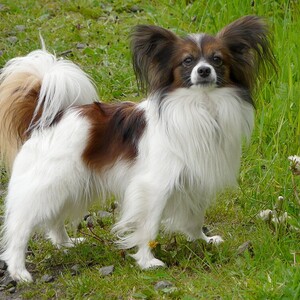
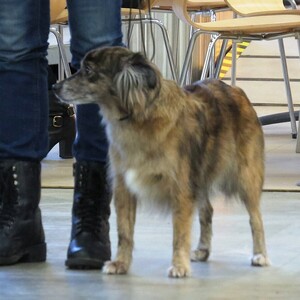
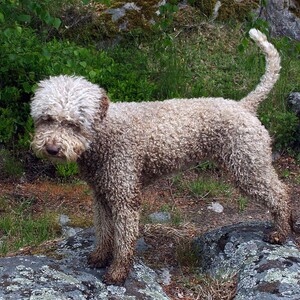
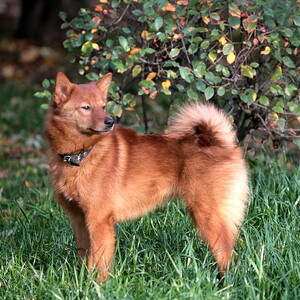
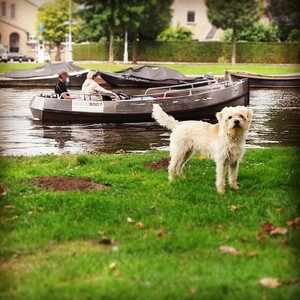
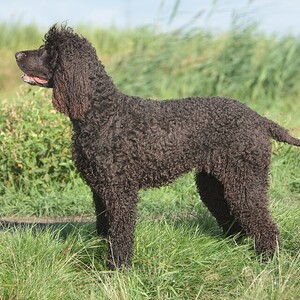
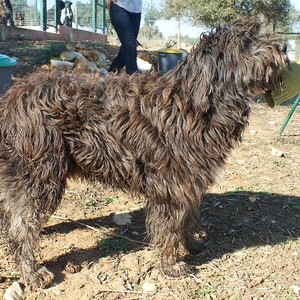
Barbado da Terceira. · Andre Heuzer / Wikimedia Commons, CC BY-SA 3.0. Cropped and resized.
The Barbado da Terceira is a medium-sized Portuguese herding and guard dog from Terceira Island in the Azores archipelago. The AKC describes it as sturdy and athletic, confident, lively and clever, a primitive dog that has kept its instincts: prey drive, high energy, independence, territoriality and a vocal nature. It is not recognised by the FCI; it was recognised in Portugal in 2004.
Quick facts
| Common name | Barbado da Terceira |
| Scientific name | Canis lupus familiaris |
| Country of origin | Portugal (Azores) |
| Official recognition | Not recognised by the FCI; recognised in Portugal in 2004; the AKC lists it in its Foundation Stock Service |
| Lifespan | 12–14 years, according to the AKC |
| Size (males) | 52–56 cm at the withers; 25–27 kg according to the AKC |
| Size (females) | 48–53 cm at the withers; 21–26 kg according to the AKC |
| Coat type | Double, long |
| Common colours | Various |
| Energy level | Very high |
| Suited to an apartment? | No |
| Temperament | Confident, lively, clever, protective, independent |
| Tendency to aggression | Moderate; territorial and protective |
| Good with children | Moderate |
| Good with other animals | Moderate; strong prey drive |
| Genetic predispositions | Hip problems rare; MDR1 and CDDY carriers with no reported cases |
- Primary category:Dog breeds
- Explore this animal's categories:
History and origin
According to Wikipedia, the breed descends from dogs brought to the Azores by settlers and visitors from the start of the islands' colonisation in the 15th century, especially dogs that were good at driving cattle. It was used both with herds and as a guard dog.
It was recognised in 2004 by the Portuguese kennel club and Portugal's Directorate-General for Veterinary Services, after a collaboration with the University of the Azores. A census in 2005 found 222 dogs. There is a small number of dogs in the United States.
How the breed developed
- 15th century – Dogs are brought to the Azores by settlers.
- 2004 – Recognised in Portugal.
- 2005 – Census: 222 dogs.
Breed rating
| Feature | Stars |
|---|---|
| Training and intelligence | ★★★★★ |
| Easy to train | ★★★★★ |
| Intelligence | ★★★☆☆ |
| Independence | ★★★☆☆ |
| Stubbornness | ★★★★★ |
| Behaviour and temperament | ★★★☆☆ |
| Affectionate with family | ★★★★★ |
| Friendly with children | ★★★★★ |
| Good with other dogs | ★★★★☆ |
| Good with cats and other animals | ★☆☆☆☆ |
| Loyalty | ★★★★★ |
| Tendency to be aggressive | ★☆☆☆☆ |
| Tendency to bark | ★★★★☆ |
| Needs and care | ★★★☆☆ |
| Shedding | ★★★★★ |
| Needs frequent grooming | ★★★☆☆ |
| Activity and lifestyle | ★★★★★ |
| Energy level | ★★★★★ |
| Daily exercise needs | ★★★★★ |
| Suited to apartment life | ★★★★☆ |
| Health and longevity | ★★★★★ |
| Life expectancy | ★★★★☆ |
| Predisposition to genetic diseases | ★★☆☆☆ |
| Working abilities and uses | ★★☆☆☆ |
| Good herding dog | ★★★★★ |
| Good companion dog | ★★★★☆ |
Indicative rating: 5 stars means the highest level. It is based on the ratings the American Kennel Club gives the breed; the breed is not recognised by the FCI.
Physical characteristics
The AKC describes it as sturdy and athletic, with muscles that give it speed and stamina and strong bones and joints, suited to an active life and to sports such as agility, herding and flyball.
General appearance
It has a double coat that helps it adapt to different weather. As its name (“barbado”) suggests, it has a beard.
| Feature | Barbado da Terceira |
|---|---|
| Size | Medium |
| Height at the withers | males: 52–56 cm; females: 48–53 cm |
| Weight | 21–27 kg (AKC) |
| Coat | Double, long |
| Head | Bearded |
| Type | Herding dog |
The coat comes in a variety of colours.
Training and socialisation
The AKC says it is a primitive dog with a strong prey drive, high energy, independent, intelligent, territorial and protective, with a vocal, expressive nature. It gives it top marks for ease of training.
The AKC warns that it is not for everyone: it needs experienced owners who can give it early socialisation, training, activity and mental stimulation.
Tips for effective training
- Socialise it early. Surfaces, noises, strangers.
- Give it a job. Ideally, a herd.
- Do not choose it as a first dog. It calls for experience.
- Keep its mind busy. The AKC gives it 5 out of 5 for stimulation needs.
Activity needs and lifestyle
The AKC says it is happiest with a cow to herd, but failing that, a ball or a bag blowing in the wind will do. It gladly joins its owner on walks, hikes or runs, and agility and herding classes are good substitutes.
| Activity | How often | Why it matters |
|---|---|---|
| Running or hiking | daily | Energy |
| Herding or agility | weekly | Instinct |
| Ball games | daily | A busy mind |
Tips for a balanced life
- Suited to experienced owners.
- Do not shave it.
- Brush it weekly.
Care and health
Coat and skin care
The AKC recommends a bath every two months or as needed, brushing once every one to two weeks, and avoiding shaving, which can ruin the coat for good; if desired, the hair can be scissored to 2.5–4 cm.
Common health problems
The AKC says hip problems are rare. Some dogs carry the MDR1 and CDDY mutations, but no effects have been reported. Things to watch:
| Condition | Description | Common symptoms |
|---|---|---|
| Hip dysplasia | The hip joint forms incorrectly and, over time, arthritis develops | Limping, difficulty getting up or jumping, hip pain |
| MDR1 sensitivity | Some dogs are carriers | Tell the vet before any treatment |
Other care
- Ask for the parents' hip test (PennHIP).
- Brush the coat regularly.
- Go for yearly check-ups.
Diet and nutrition
An active herding dog needs good-quality food, matched to its workload.
Tips for a healthy diet
The table gives a starting estimate, calculated with the formula from the Merck Veterinary Manual. The first two calorie columns show the calories per day for a healthy adult dog. The last column shows what this means in dry food with 3,500–4,000 kcal per kilogram.
| Dog's weight | Calories per day (neutered) | Calories per day (not neutered) | Dry food per day (approximate) |
|---|---|---|---|
| 21 kg | 1,100 kcal | 1,240 kcal | 280–350 g |
| 24 kg | 1,210 kcal | 1,370 kcal | 300–390 g |
| 27 kg | 1,330 kcal | 1,490 kcal | 330–430 g |
- Adjust the portion to its level of effort.
- Do not let it run right after a meal.
- A dog is at the right weight when you can feel its ribs under the coat without pressing hard.
Foods to avoid
Some human foods are dangerous for dogs: chocolate, coffee, grapes and raisins, onions, garlic, xylitol (a sweetener used in chewing gum), macadamia nuts and alcohol.
Reproduction and development
Physical and emotional maturity
In dogs, sexual maturity usually comes between 6 and 12 months. Most breeds become adults at around 13–15 months.
Mating and pregnancy
Pregnancy lasts about 63 days, counted from ovulation. Mating a female on her first heat is not recommended. Only healthy dogs of typical breed appearance should be used for breeding.
Caring for the puppies
In dogs, a litter has 5–6 puppies on average, and the number rises with the size of the breed. Socialisation starts in the first weeks: gentle handling, everyday noises and new people.
Interesting facts
- The bearded dog. “Barbado” means bearded.
- From the Azores. Terceira Island, in the Atlantic.
- Only 222 in 2005. That is how many were counted.
- It herds cows too. It was used mainly with cattle.
- It is not shaved. Shaving can ruin its coat.
Frequently asked questions
Is it recognised by the FCI?
No; it has been recognised in Portugal since 2004.
Is it good for beginners?
No; the AKC says it needs experienced owners.
Does it need a lot of exercise?
Yes, a great deal.
How long does it live?
The AKC gives 12–14 years.